

Peg Pricing Explained: Plans, Features & Review
Most influencer tools race to advertise the biggest database; Peg went the other way and built its reputation on a deliberately curated roster. Billing itself as an "anti-marketplace," it leans on vetted YouTube and Instagram creators, brand-safety scoring, and a collaboration-friendly workflow aimed at marketing teams that care more about fit than headcount. That quality-first stance is genuinely useful, but it also means a smaller talent pool, quote-only pricing, and a multi-month commitment that not every brand wants to sign up for. Marketers weighing it up need to know what it actually costs and where it falls short.
In this article, we break down Peg pricing, key features, reviews, and limitations for brands to consider.
Peg Pricing
Peg doesn't publish a rate card. It sells subscription access on custom terms, quoted after a conversation and priced by company size and expected usage, with contracts typically running on 6 or 12-month cycles. For teams that aren't ready to lock in half a year, there's a project-based option that grants one-off test access at a custom price. Creators join for free, and Peg charges a 5% finder's fee when it directly sources an influencer who ends up signing a deal, so part of the cost model is success-based rather than purely subscription.
The upside is a package sized to your program; the trade-off is that you can't gauge the spend or compare it against self-serve tools without booking a demo first.
Free Trial
Peg doesn't offer a self-serve free trial. Evaluating the platform means requesting a demo, where the team walks through discovery, vetting, and campaign tools against your brief rather than handing over open access to test on your own.
Contract
Peg runs on subscription contracts, usually 6 or 12 months, with terms agreed during the sales process. A shorter project-based arrangement exists for one-off tests, but the standard commitment is multi-month, which shapes who the platform realistically suits.
Peg Overview
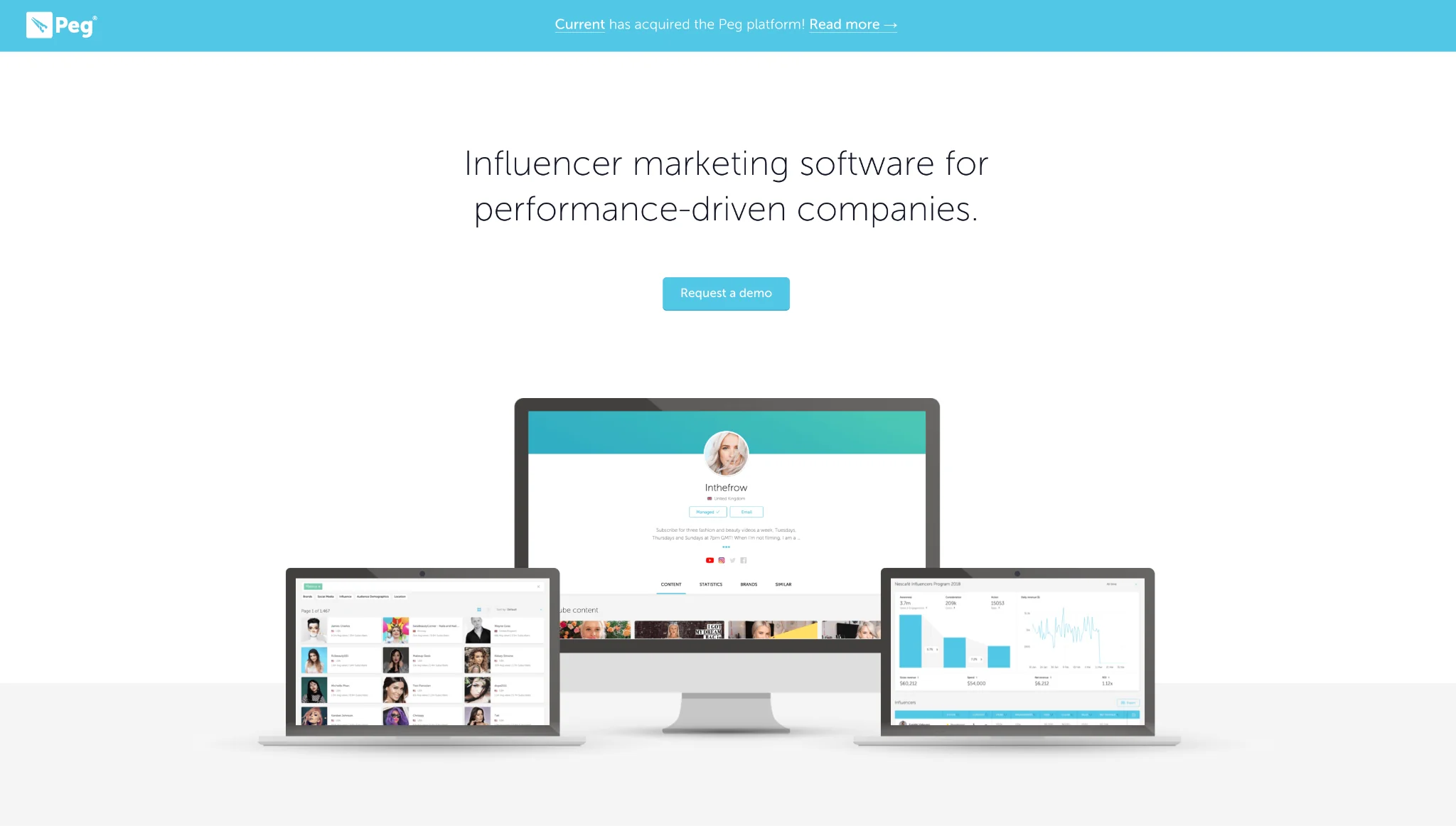
Peg is a UK-founded influencer marketing platform that helps brands and agencies discover, vet, and collaborate with creators on YouTube and Instagram. Rather than chasing volume, it curates a roster of roughly 33,000 creators and layers on tools built for careful selection, most notably brand-safety scoring and sentiment tracking, so teams can judge personality, values, and reputational risk alongside reach and engagement. Around it sits a full campaign workflow, from search and shortlisting through messaging and reporting, designed for marketing teams that want to run partnerships collaboratively. Its focus on vetted, quality-first influencer discovery makes it a natural fit for brands where creator reputation carries real weight.
Key Features
Curated Creator Discovery
Peg's creator discovery searches a hand-curated roster of around 33,000 YouTube and Instagram creators, filtering by keyword, audience demographics, brand affinity, and engagement, with the emphasis on a vetted shortlist rather than an endless database.
Safety Score
An automated content-analysis system assigns each creator a family-friendliness rating, flagging risky language and themes so brands can screen for reputational fit before they ever reach out.
Backlash Meter
Peg tracks public sentiment toward a creator over time, giving teams an early read on whether an influencer's audience perception is trending positively or heading toward controversy.
Partnership Tracking
The platform surfaces a creator's previous brand collaborations, helping brands spot conflicts of interest and understand who a potential partner has already worked with.
Team Collaboration Tools
Shared shortlists, internal notes, pitch-deck creation, and team messaging let larger marketing organizations evaluate and sign off on creators together rather than passing spreadsheets around.
Email-Integrated Messaging
Messages sync between the platform and email, so outreach and replies stay in one thread and conversations don't get lost between tools.
Campaign Management and Reporting
A search-report-retarget workflow supports running campaigns end to end, with performance metrics that lean toward bottom-of-funnel results rather than vanity numbers.
Best For
Peg fits medium and large brands and agencies that prioritize creator quality, brand safety, and reputational fit over sheer database size, particularly those running YouTube and Instagram campaigns where a creator's values and audience sentiment matter. It suits teams that evaluate partnerships collaboratively and are comfortable with a multi-month commitment in exchange for a curated, carefully vetted roster. Brands that need multi-platform reach across TikTok and beyond, a very large discovery pool, or transparent self-serve pricing will likely find a broader platform a better match.
Reviews
4.7/5.0 (Influencer Marketing Hub)
Peg is well regarded for its vetting-first approach and clean, collaboration-friendly interface, with reviewers highlighting the Safety Score and ease of use as standout strengths for teams that care about who they partner with. Praise tends to center on quality of matches over quantity. The most common criticisms are the relatively small talent pool compared with mass-market databases, the historically narrow platform focus, and the lack of pricing transparency, with some users also noting occasional platform glitches and support that can be slow to reach.
Peg Standout Features
Automated Brand-Safety Scoring
Peg's Safety Score is its signature feature: automated analysis rates each creator's content for family-friendliness and flags risky themes, giving brands a repeatable way to screen for reputational fit before committing budget.
Sentiment-Based Backlash Meter
By tracking how public sentiment toward a creator shifts over time, the Backlash Meter helps teams avoid partners whose audience perception is souring, a genuinely differentiating layer most discovery tools don't offer.
Curation Over Volume
Where most platforms compete on database size, Peg's deliberately vetted roster and "anti-marketplace" positioning are the point, appealing to brands that would rather choose from a screened shortlist than sift through millions of profiles.
Peg Limitations
Small Talent Pool
A curated roster of roughly 33,000 creators is a fraction of what mass-market databases offer, so brands needing breadth, long-tail niches, or high-volume creator sourcing may find the selection limiting.
Narrow Platform Coverage
Peg centers on YouTube and Instagram, so teams running TikTok, or wanting a single tool that spans many networks at once, will need to look elsewhere for full multi-platform coverage.
Opaque, Commitment-Heavy Pricing
With quote-only pricing, no public tiers, and standard contracts running 6 to 12 months, brands can't gauge cost or ease in gradually without engaging sales and committing to a multi-month term.
No Self-Serve Trial
There's no free trial to test the platform independently; evaluation runs through a sales-led demo, which slows hands-on assessment for teams that prefer to try before they buy.


Is Peg Worth It?
For brands that put creator quality and brand safety first, Peg can be well worth it: its curated roster, Safety Score, and Backlash Meter are purpose-built for careful, reputation-conscious selection on YouTube and Instagram. It's a weaker fit for teams that need broad multi-platform reach, a very large discovery database, transparent self-serve pricing, or the freedom to test without a multi-month contract. If those needs describe your program, these alternatives are worth comparing:
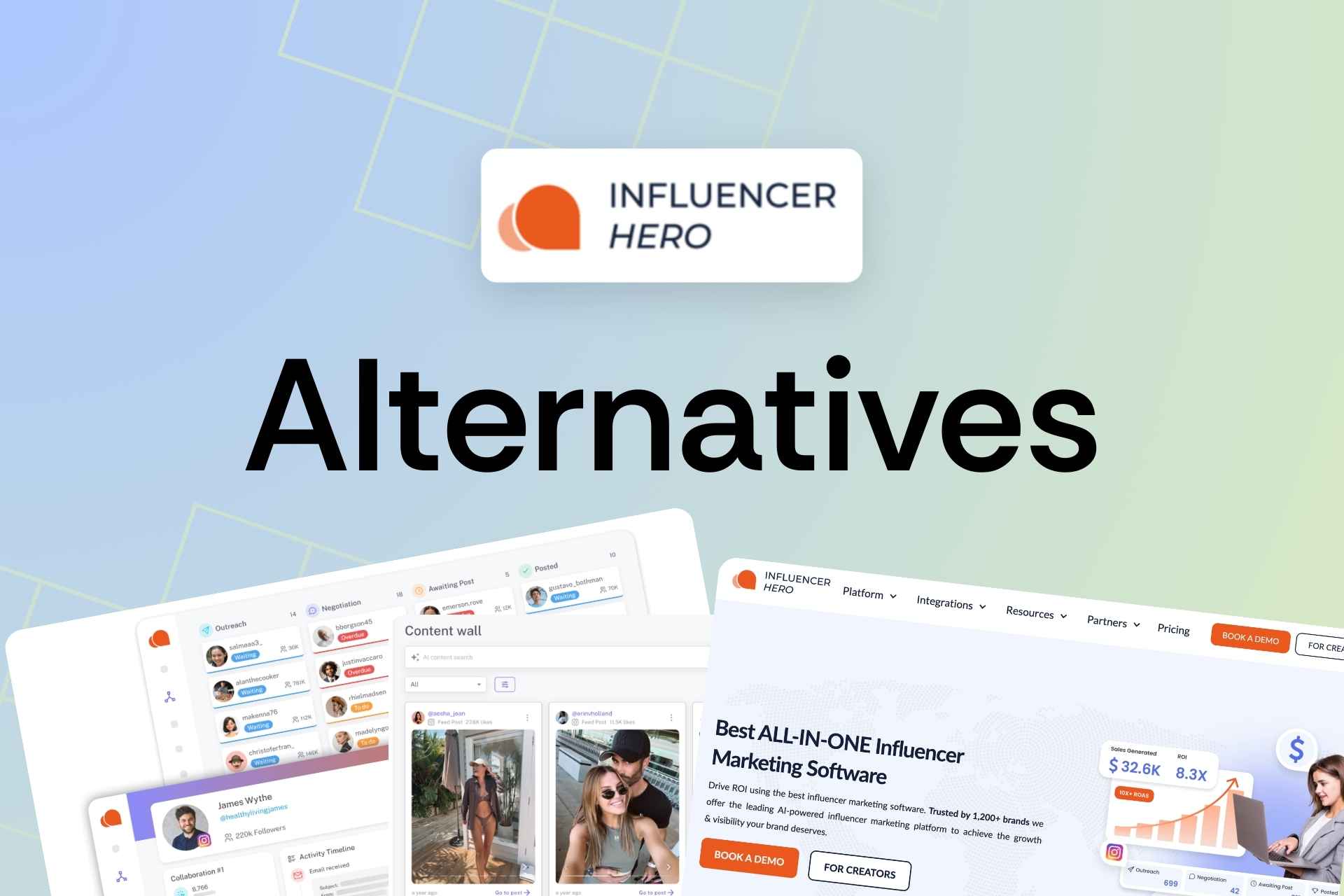
- Influencer Hero - An all-in-one platform pairing advanced discovery with fake-follower detection, automated outreach, a visual CRM, influencer gifting, affiliate tracking, and ROI reporting across eight networks, with transparent public pricing.
- Afluencer - A marketplace that connects brands directly with influencers and UGC creators actively seeking collaborations, an easy way to source and message talent without long lock-ins.
- Modash - A discovery-first tool with a very large global creator database and detailed audience analytics, strong for brands that want breadth and rigorous vetting at scale.
- HypeAuditor - Known for deep AI-driven audience quality and fraud analysis across Instagram, YouTube, and TikTok, ideal for teams that lead with authenticity checks.
- Heepsy - An affordable, search-heavy platform for filtering influencers by location, engagement rate, and audience data, useful for smaller teams that want quick, self-serve discovery.
Final Thoughts
Peg carved out a clear niche by betting on curation and brand safety rather than raw scale, and for reputation-sensitive brands that live on YouTube and Instagram, that focus is a real asset. The call comes down to whether you value that vetted, quality-first approach or need broader reach, a bigger database, and pricing you can see upfront.