

#paid Alternatives: Best Influencer Marketing Platforms
Influencer marketing software has become essential for teams that need to scale creator discovery, streamline outreach, manage campaigns, and track performance in a more structured way, especially as influencer programs move closer to revenue attribution and paid media. #paid is a well-known platform in this space, particularly valued for its curated creator matching, campaign support, and ability to turn creator content into paid ads; however, it may not suit every workflow.
Common feedback highlights three recurring limitations: limited pricing transparency, which makes budgeting and comparison harder; restricted control over influencer discovery due to its opt-in, pitch-based model; and less depth in reporting for teams that need granular performance insights or attribution. As a result, many marketers actively search for #paid alternatives that offer more flexibility, deeper analytics, or stronger eCommerce integrations depending on their goals.
In this guide, we’ll compare the best influencer marketing software options available today, including Influencer Hero, Upfluence, Aspire, SARAL, CreatorIQ, Sprout Social, GRIN, Modash, Influencity, and IZEA.
Criteria for Suggesting Platform Alternatives
Core Features
Evaluation of each platform’s essential capabilities, including influencer discovery, outreach, CRM, campaign reporting, gifting, UGC and content collection, affiliate tracking and payments, storefronts, application pages, and AI-powered tools.
Supported Social Media Platforms
Assessment of how well each platform integrates with major social networks such as Instagram, YouTube, TikTok, Facebook, Pinterest, and many more
Pricing & Contract Flexibility
Comparison of pricing models, subscription costs, and contract requirements to help brands choose solutions that match their budget and scalability needs.
Standout & Differentiating Features
Highlighting unique or innovative functionalities that set each platform apart, such as real-time tracking dashboards, creator benchmarking, TikTok email discovery, or advanced automation tools.
Customer Reviews & User Satisfaction
Analysis of verified user feedback from credible platforms like G2, TrustRadius, Capterra, focusing on usability, reliability, value for money, customer support, and real-world performance.
#paid Overview

#paid is a creator marketing platform designed to help brands and agencies execute end-to-end influencer campaigns with a strong focus on creative quality and paid media performance. Rather than operating as a traditional influencer database, #paid positions itself as a curated marketplace—connecting brands with opted-in creators who pitch ideas for campaigns. The platform combines campaign management, creator sourcing, and content licensing with strategic support, making it particularly attractive to teams looking to scale creator-led advertising, not just organic influencer collaborations.
Key Features
• Curated creator matching: Instead of cold outreach, #paid connects brands with vetted, opted-in creators who submit campaign pitches and creative concepts. This reduces outreach friction and improves alignment from the start.
• End-to-end campaign management: Manage everything from creator selection and briefing to approvals, timelines, and delivery within a centralized platform.
• Hands-on strategy support: Dedicated strategists assist with campaign planning, creator selection, and optimization—adding a managed-service layer on top of the software.
• Content approval workflows: Review and approve content, captions, and creative assets before they go live to ensure brand alignment and compliance.
• Creator licensing & paid amplification: License creator content and handles for paid ads across platforms, enabling brands to turn influencer content into high-performing paid media assets.
• Performance analytics & brand lift: Track campaign performance with insights into engagement, reach, sentiment, and brand lift, along with post-campaign recommendations.
• Budget and ROI tracking: Monitor spend, conversions, and campaign outcomes from a single dashboard, helping teams tie influencer efforts to measurable results.
Platform Coverage
Instagram, TikTok, YouTube, Facebook (Meta), Pinterest, and Snapchat
Pricing
#paid does not offer fully transparent pricing on its website, and most enterprise deals are customized through sales conversations. However, publicly available data suggests the following structure:
• Just Content: ~$499/month (or ~$449/month annually)
• Grow: ~$699/month (or ~$629/month annually)
• Advanced: ~$999/month (or ~$899/month annually)
• Enterprise: ~$2,499/month (annual billing)
Some listings also indicate custom pricing models depending on campaign scale, with no free trial available. Most mid-to-large brands engage through tailored contracts.
Reviews
4.7 / 5.0 (G2)
#paid Standout Features
• Creator Licensing for Paid Ads:
One of #paid’s biggest differentiators is its ability to license both creator content and creator handles for paid social. This allows brands to run ads directly from creator accounts, significantly improving performance compared to traditional brand ads.
• Pitch-Based Creator Marketplace:
Instead of browsing static profiles, brands receive campaign-specific pitches from creators. This ensures higher intent, better creative alignment, and less time spent vetting irrelevant profiles.
• Strategic Campaign Layer (Not Just Software):
#paid blends SaaS with managed services. Its in-house strategists help guide campaign direction, creator selection, and optimization—something many purely self-serve platforms lack.
Limitations (Why Users Look for #paid Alternatives)
Limited pricing transparency
The lack of clear, standardized pricing makes it harder for teams to quickly compare #paid against competitors or estimate total costs upfront.
Less control over discovery
Because the platform relies on creator opt-in and pitching, brands looking for full database access and manual prospecting may find it restrictive.
Reporting depth can feel limited for advanced teams
Some users feel analytics don’t go as deep as needed for highly performance-driven campaigns or complex attribution models.
Not ideal for high-volume outreach workflows
Teams that rely on bulk outreach, automation, or managing thousands of creators simultaneously may find the curated, pitch-based model slower and less scalable.
10 Best Influencer Marketing Platform Alternatives
| TOOL | REVIEWS | BEST FOR | TRIAL INFO | PRICING | ||
|---|---|---|---|---|---|---|
1 |

|
⭐ | Influencer CRM & automation | Book Demo | Pricing | Website |
2 |

|
⭐ | Influencer discovery | Book Demo | Pricing | Website |
3 |

|
⭐ | Influencer partnerships | Book Demo | Pricing | Website |
4 |

|
⭐ | Influencer outreach | Book Demo | Pricing | Website |
5 |

|
⭐ | Enterprise influencer marketing | Book Demo | Pricing | Website |
6 |
|
⭐ | Influencer marketing & Social media analytics | Book Demo | Pricing | Website |
7 |

|
⭐ | DTC creator management | Book Demo | Pricing | Website |
8 |

|
⭐ | Influencer discovery | Book Demo | Pricing | Website |
9 |

|
⭐ | Campaign management | Book Demo | Pricing | Website |
10 |

|
⭐ | Influencer marketplace | Book Demo | Pricing | Website |
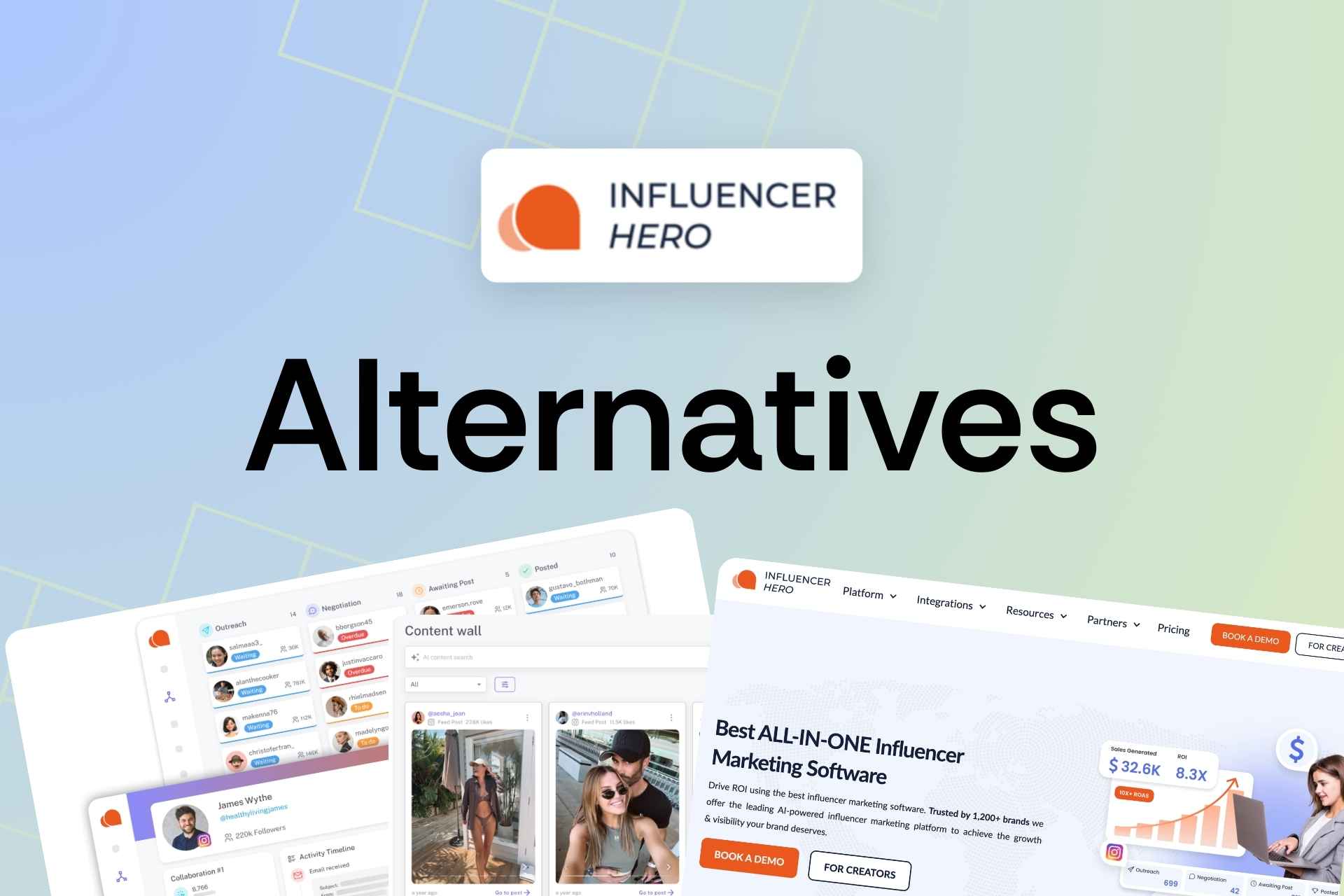
Influencer Hero

Influencer Hero is an all-in-one influencer marketing platform built for brands and agencies that want to manage creator discovery, outreach, CRM, gifting, affiliate tracking, influencer payouts, and reporting in one system. Its positioning is especially strong for DTC and eCommerce teams that want clearer ROI tracking without jumping straight into enterprise-priced software.
Key Features
• Influencer discovery and filtering: Influencer Hero helps brands find creators across major social channels with filters for audience fit, engagement, and campaign relevance. Its Chrome extension also lets teams pull creator analytics while browsing social platforms.
• AI-powered outreach: The platform supports drip campaigns, automated follow-ups, and AI-assisted personalization based on a creator’s recent content, which is useful for scaling outreach without making it feel generic.
• CRM and workflow management: Influencer Hero centralizes campaign stages, creator records, communications, deliverables, and relationship notes inside a structured CRM, making it easier to manage larger creator rosters.
• Affiliate tracking and payouts: It supports creator-specific links, discount codes, commission tracking, and payouts tied to Shopify, WooCommerce, and other eCommerce workflows.
• UGC and content collection: The platform automatically captures creator posts and stores them for reuse, which is valuable for brands repurposing influencer content into paid and owned channels.
• Reporting and ROI measurement: Influencer Hero emphasizes performance reporting tied to clicks, conversions, sales, and campaign outcomes rather than just vanity metrics.
Platform Coverage
Instagram, TikTok, YouTube, Facebook, Pinterest, Snapchat, X, and Twitch
Pricing
Influencer Hero offers flexible pricing based on outreach volume, and you can have unlimited creators in your CRM with Influencer Hero:
• Standard — $649/month (up to 1,000 reachouts/month)
• Pro — $1,049/month (up to 5,000 reachouts/month)
• Business — $2,490/month (up to 10,000 reachouts/month)
• Custom / Agency — Tailored pricing
Reviews
5.0/5.0 (Capterra)
Standout Features
• AI outreach with hyper-personalization: Influencer Hero’s outreach tool uses recent creator content to generate more personalized messages and automate follow-up sequences, which is a practical differentiator for teams running high-volume campaigns.
• Chrome extension for live creator vetting: The extension lets marketers review creator analytics directly on Instagram, TikTok, and YouTube, reducing friction between discovery and list building.
• Advanced CRM Automations & Integrations: Influencer Hero’s CRM connects with hundreds of platforms, allowing teams to integrate AI-driven workflows with tools like DocuSign, GoAffPro, Klaviyo, Slack, Zapier, and more. This enables automated contracts, affiliate tracking, email flows, internal alerts, and cross-platform data sync.
#paid vs Influencer Hero
#paid is a curated creator marketplace with stronger emphasis on opted-in matching, creator pitches, and licensed creator media, while Influencer Hero is more workflow-heavy and better suited to brands that want hands-on CRM, automated outreach, and affiliate-style tracking. #paid leans into strategic matching and creator licensing for paid ads, whereas Influencer Hero gives brands more direct control over outreach, relationship management, and eCommerce-linked ROI. For teams prioritizing scale and operational control, Influencer Hero is usually the more flexible option; for teams prioritizing curated matches and creator-handle amplification, #paid stands out more.
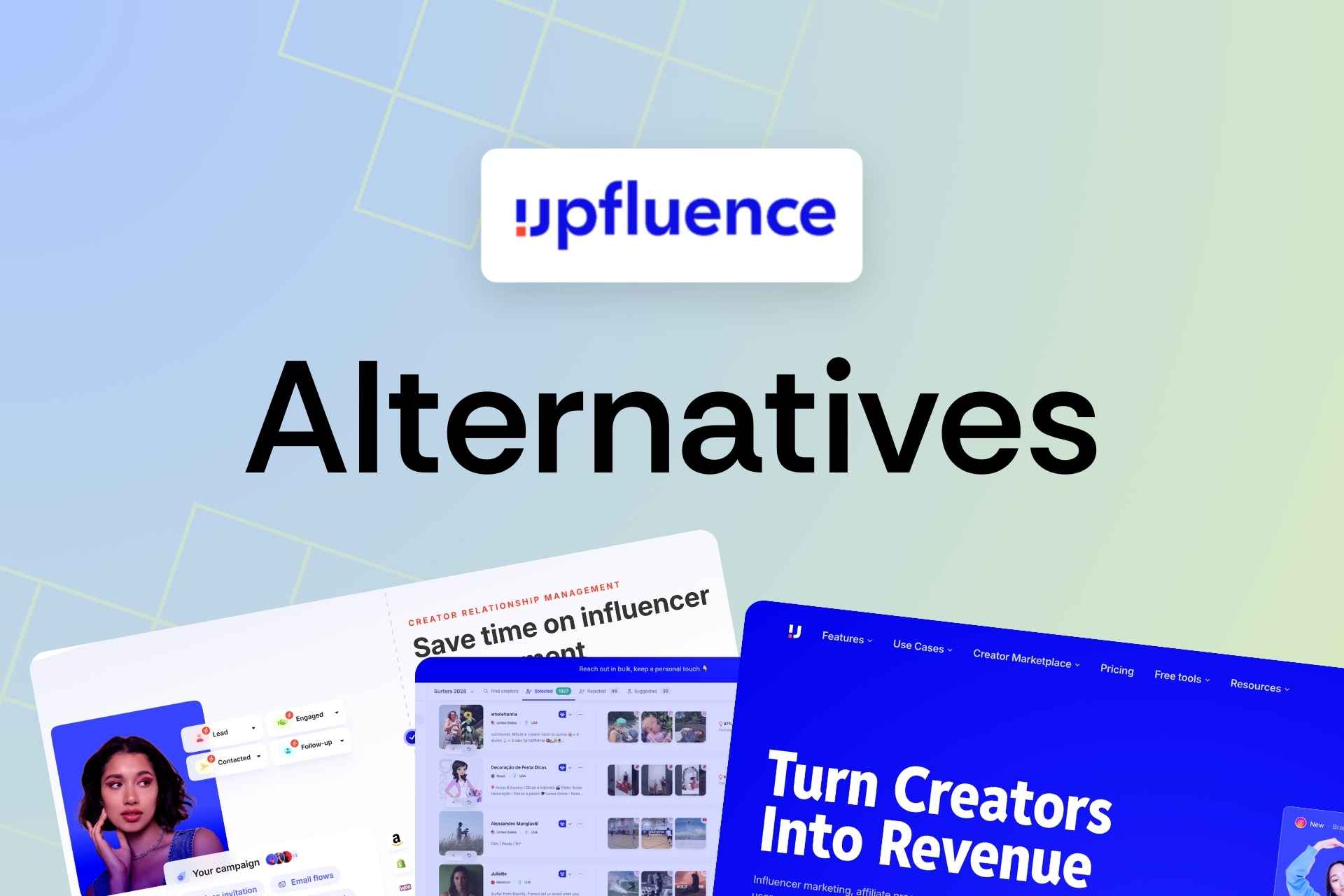
Upfluence
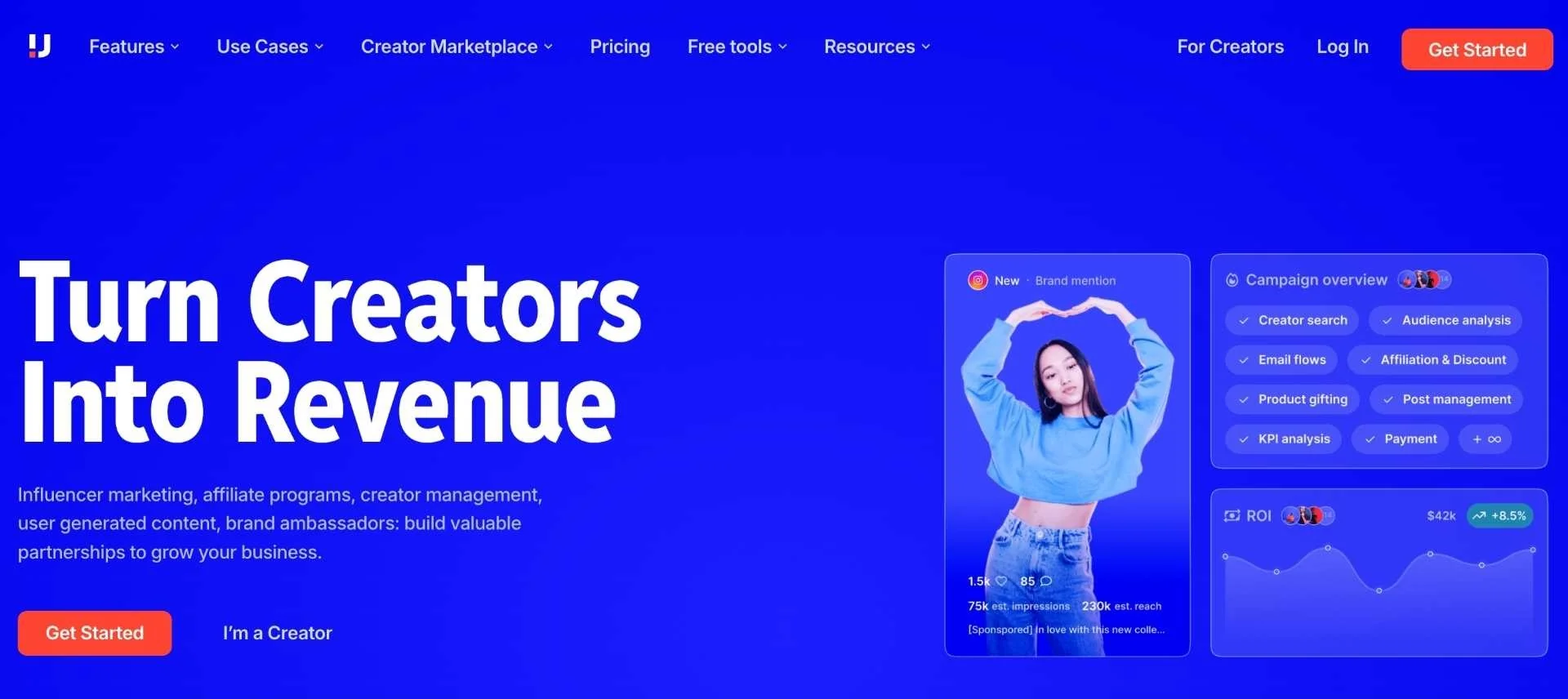
Upfluence is an influencer and affiliate marketing platform built primarily for eCommerce brands that want to connect creator campaigns directly to sales. It combines creator discovery, outreach, CRM, affiliate tracking, gifting, and payouts, and is particularly strong for Shopify- and Amazon-focused programs.
Key Features
• Large creator discovery database: Upfluence’s pricing page highlights a database of 14M+ creators, while its platform materials emphasize advanced filtering by niche, audience, location, and performance.
• AI-assisted outreach with Jaice AI: Upfluence uses Jaice AI for campaign creation, bulk outreach, and email personalization, helping brands automate creator recruitment at scale.
• Recruitment pages and creator marketplace: Brands can build recruitment pages and, on higher tiers, publish programs for inbound creator applications.
• CRM and campaign execution: The platform includes CRM tools, affiliate workflows, product shipping, campaign launching, and creator organization in one system.
• eCommerce integrations: Upfluence integrates with Shopify, WooCommerce, Magento, BigCommerce, and Amazon, allowing brands to connect creator activity to store performance.
• Sales analytics and payouts: Higher tiers support sales dashboards, affiliate tracking, secure budget workflows, tax handling, and multi-currency payments through Upfluence Pay.
• Social listening: The platform includes social listening streams to help identify brand mentions, relevant conversations, and creator opportunities.
Platform Coverage
Instagram, TikTok, YouTube, Facebook, Twitch, Pinterest, and blogs.
Pricing
On average plans start around $2,000/month ($24,000 yearly)
Reviews
4.3 / 5.0 (Capterra)
Standout Features
• Customer-to-creator matching: Upfluence can match brand customer and CRM data against its creator database, helping brands identify customers who are already creators or advocates. That is one of its strongest differentiators for eCommerce-led influencer programs.
• Deep store integrations, especially Amazon and Shopify: Upfluence is unusually strong for brands that want influencer, affiliate, and marketplace sales tracked inside one environment.
• Jaice AI across search, outreach, and campaign setup: The current product packaging puts AI not just in messaging but also in campaign creation and creator program management.
#paid vs Upfluence
#paid is more creator-marketplace-driven and content-led, with stronger emphasis on curated matching and licensing creator content for paid media. Upfluence is more operational and commerce-driven: it gives brands broader database access, more outbound control, and tighter integrations with Shopify, Amazon, and affiliate workflows. In practice, #paid is better suited to brands prioritizing creative quality and creator-handle ads, while Upfluence is stronger for brands prioritizing outbound recruiting, sales attribution, and eCommerce ROI.
Aspire
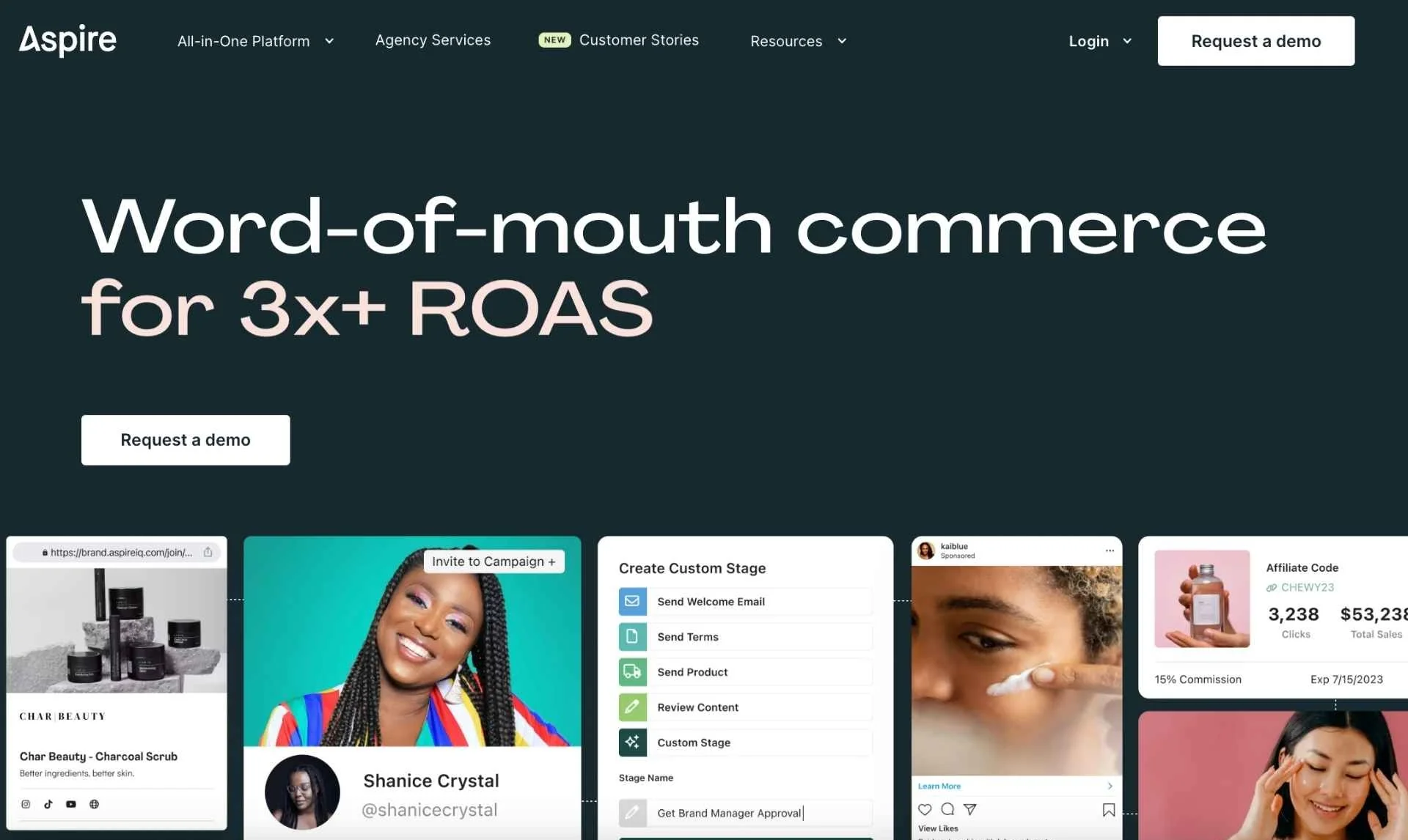
Aspire is an influencer marketing platform built for eCommerce brands that want to discover creators, manage campaigns, collect content, handle gifting, and tie creator activity back to revenue. Its strongest market position comes from combining a large inbound marketplace with first-party social platform relationships and workflow automation.
Key Features
• Creator marketplace and application pages: Aspire lets brands create branded application pages and tap into an inbound creator marketplace with 1M+ creators, which can reduce reliance on pure outbound prospecting.
• First-party platform data: Aspire highlights first-party integrations with Instagram, TikTok, and Pinterest, which helps brands access more reliable performance and audience data than scrape-based tools.
• Workflow automation: The platform supports briefs, contracts, bulk actions, automated follow-ups, approvals, and structured campaign stages to keep creator programs moving.
• Gifting and Shopify sync: Aspire integrates with Shopify so creators can select products, brands can approve shipments, and fulfillment status stays connected to the campaign workflow.
• Sales and affiliate tracking: It supports creator stores, promo codes, affiliate links, commission tracking, and conversion reporting tied to store performance.
• Content approvals and UGC: Aspire stores campaign content and usage rights and supports content review flows for brands repurposing creator assets.
• Support layer: Aspire also differentiates on implementation and customer success support rather than leaving teams entirely self-serve.
Platform Coverage
Instagram, TikTok, Pinterest, YouTube, and Facebook
Pricing
Aspire starts with tiered pricing and can be customized, with a mid-tier quote of about $2,300/month for a use case involving multiple team members and up to 500 creators in CRM.
Reviews
4.0 /5.0 (Capterra)
Standout Features
• First-party integrations with Instagram, TikTok, and Pinterest: This is one of Aspire’s clearest differentiators because it improves data trust and platform-level visibility.
• Large inbound creator marketplace: Aspire’s marketplace can fill campaign rosters with creators who apply directly, which is especially useful for brands running ambassador, seeding, and UGC-heavy programs.
• Strong support plus workflow automation: Aspire pairs automation with higher-touch onboarding and customer success, which helps smaller teams scale programs faster.
#paid vs Aspire
#paid is more curated and marketplace-led around creator pitches, creative matching, and licensed creator media, while Aspire is more process-heavy and built for brands that want inbound creators, gifting workflows, and direct eCommerce attribution. #paid tends to be stronger for creator-led paid amplification and strategic campaign support; Aspire is stronger for brands that want a broader all-in-one operating system with marketplace applications, Shopify workflows, and first-party data integrations. If a team values opt-in matching and creator licensing, #paid has the edge; if it values inbound scale and commerce operations, Aspire is usually the better fit.
SARAL

SARAL is an influencer marketing platform built for consumer and DTC brands that want a simpler, more operator-friendly way to run influencer and affiliate programs. Its positioning is less enterprise software and more “InfluencerOS” for brands that want discovery, outreach, relationship management, performance tracking, and payments in one place.
Key Features
• Discovery across public creator profiles: SARAL indexes public creators and supports keyword search, filters, audience insights, authenticity metrics, and AI-powered lookalike recommendations.
• Outreach automation: The platform is designed to simplify high-volume creator outreach, including email-based workflows and automated follow-ups.
• Relationship management: SARAL keeps creator records, communication history, tags, and campaign stages in one place so teams can manage ongoing partnerships rather than one-off activations.
• Affiliate and sales tracking: SARAL connects to Shopify and WooCommerce for affiliate links, gifting, campaign management, and performance reporting tied to store data.
• Payments: SARAL supports PayPal-linked creator payments, payout automations, and payment exports for teams handling rewards and commissions at scale.
• Social listening and UGC tracking: SARAL also positions social listening as part of its stack so brands can monitor mentions and creator-generated content more easily.
• Support and consulting: A notable part of SARAL’s positioning is ongoing strategy support, onboarding, and direct access to the team alongside the software.
Platform Coverage
Instagram, TikTok, and YouTube.
Pricing
There are different plans:
• Starter: $3.6k/quarter
• Business: $4.5k/quarter
• Professional: $7.5k/quarter
Reviews
4.7/5.0 (G2)
Standout Features
• Public-profile discovery plus LookalikesAI: SARAL’s discovery product does not depend on creator sign-up, and its AI lookalike feature helps teams scale lists faster from their best existing creators.
• Operator-friendly simplicity: SARAL is intentionally positioned as easier to learn and faster to deploy than heavier enterprise tools, which is a meaningful differentiator for lean DTC teams.
• Software plus strategy support: The platform bundles software with hands-on success support, onboarding, and consultative help, which is unusual at its price tier.
#paid vs SARAL
#paid and SARAL solve different problems. #paid is a curated marketplace centered on opted-in creator matches, campaign pitches, and licensed content for paid media, while SARAL is a more hands-on operating system for brands that want to discover public creators, automate outreach, and manage affiliate-style workflows themselves. #paid is stronger for brands that want creative curation and creator licensing; SARAL is stronger for DTC teams that want process control, simplicity, and predictable operator workflows tied to store performance.
CreatorIQ
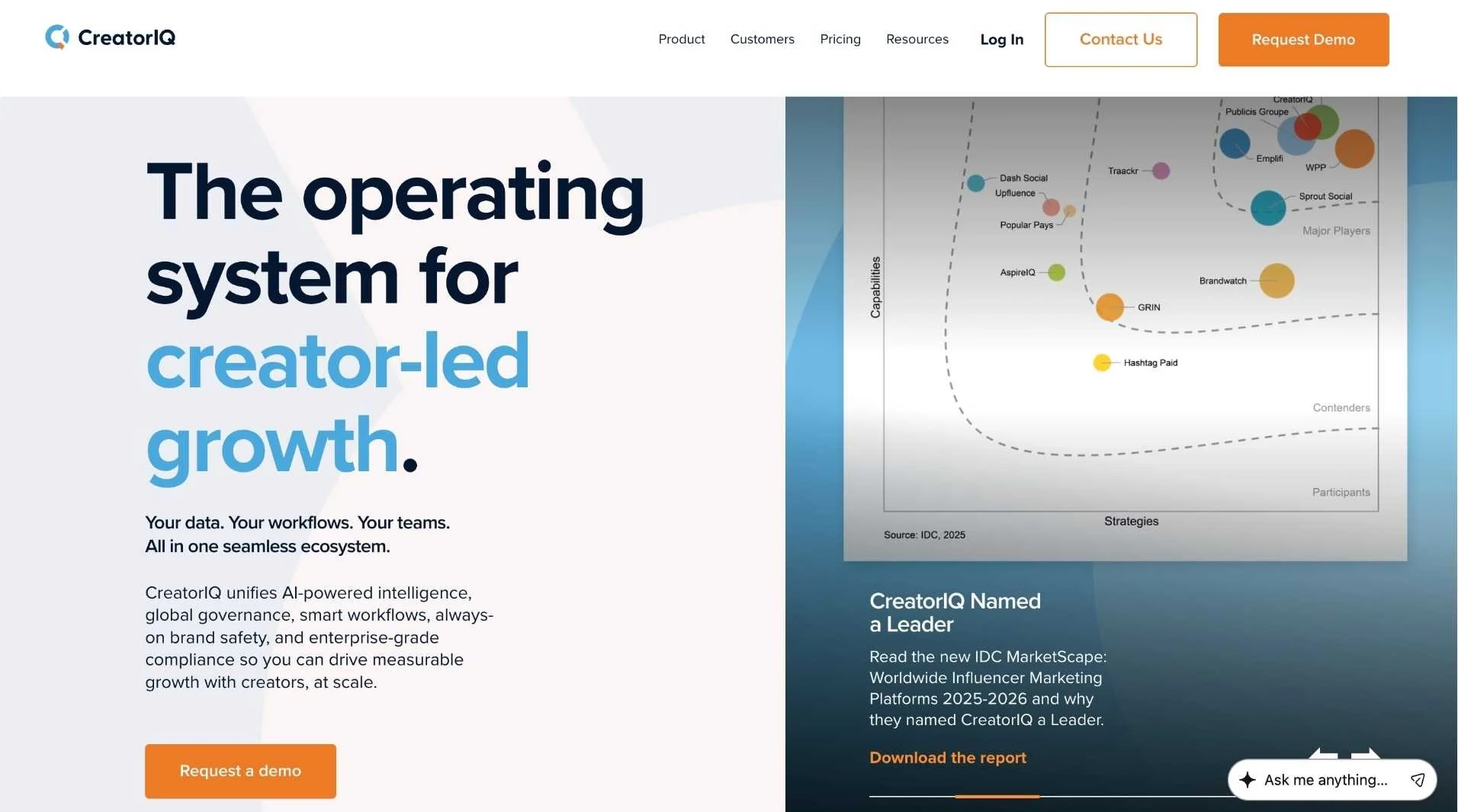
CreatorIQ is an enterprise creator marketing platform designed for large brands that need governance, cross-team collaboration, deep data integrations, and structured reporting at scale. Its positioning is less about lightweight outreach and more about becoming the system of record for global creator programs.
Key Features
• Large-scale creator discovery: CreatorIQ supports search, recommendations, and in-depth creator vetting with data fields designed for large programs and cross-market campaign planning.
• Centralized creator management: The platform stores partnership history, communication context, performance, and relationship data in a unified system for global teams.
• Campaign execution and approvals: CreatorIQ supports campaign setup, forecasting, and control workflows, helping large teams manage activations with more structure and compliance.
• API and business intelligence connectivity: One of CreatorIQ’s biggest strengths is its API-based approach to unifying creator data with other internal systems and reporting environments.
• Creator payments and compliance: CreatorIQ has invested heavily in payment infrastructure, including global payments, onboarding, and compliance processes designed for enterprise-scale creator programs.
• AI-native direction: The newer CreatorIQ positioning emphasizes AI-driven intelligence, governance, and content-first insights for the next phase of creator-led growth.
Platform Coverage
Instagram, YouTube, TikTok, Facebook, Twitter, Pinterest, and more.
Pricing
• Basic Plan: Starts at $35,000/year. Includes 1,000 contact creators per month
• Standard Plan: Starts at $50,000/year. Includes 2,500 contact creators per month
• Professional Plan: Starts at $90,000/year. Includes 5,000 contact creators per month
• Enterprise Plan: Starts at $200,000/year. Includes 7,500 contact creators per month
Reviews
4.4 / 5.0 (Capterra)
Standout Features
• Enterprise-grade data infrastructure: CreatorIQ’s API and BI integrations make it a strong fit for organizations that need creator data connected to broader reporting, compliance, and internal systems.
• Global payments and compliance tooling: CreatorIQ’s recent payment positioning is a major differentiator for multinational teams that need scalable payouts, controls, and audit readiness.
• The new AI-native CreatorIQ: The platform’s current product direction focuses on AI-driven intelligence, governance, and content-led insights, which marks an important evolution beyond legacy influencer dashboards.
#paid vs CreatorIQ
#paid is more campaign-curation-focused and better known for marketplace-style matching and creator licensing for paid media, while CreatorIQ is built for enterprise governance, data unification, and global creator operations. #paid is generally the better fit for brands that want a more guided creator marketplace and fast access to creator-led media, whereas CreatorIQ is the better fit for large organizations that need deep approvals, payments, compliance, and system-level reporting. In short, #paid is more campaign-first; CreatorIQ is more infrastructure-first.


Sprout Social

Sprout Social Influencer Marketing, formerly Tagger Media, is Sprout’s enterprise influencer marketing platform built to help brands discover creators, vet brand fit, manage campaigns, and report on performance in one system. Its current positioning centers on AI-assisted creator discovery, campaign workflow management, and analytics depth, making it a stronger fit for teams that care as much about reporting and governance as outreach.
Key Features
• AI-powered creator discovery: Sprout uses AI-driven search and topic-led discovery to help brands identify creators based on audience and content relevance, not just surface-level keywords. Its newer product direction also emphasizes faster discovery and vetting through AI.
• Brand Fit Score: One of Sprout’s most distinctive features is Brand Fit Score, which quantifies how well a creator’s content and audience align with a brand’s priorities. That reduces manual vetting and helps teams approve partners faster.
• Brand safety monitoring: Sprout pairs discovery with brand safety tools so teams can screen for risky creator content and reduce reputational risk before launching a partnership.
• Campaign workflow management: The platform is built to manage campaigns from outreach and contracts through content approvals, deliverables, spend, and reporting, which is especially useful for larger cross-functional teams.
• Content approval workflows: Creators can submit content for review before it goes live, helping brands maintain message consistency and compliance. This is one of the capabilities repeatedly highlighted in both product materials and user feedback.
• Competitive benchmarking and reporting: Sprout is particularly strong in analytics, with earned media value, creator benchmarking, performance reporting, and export-ready dashboards that support stakeholder reporting.
• Commerce and payout integrations: In the evaluated materials, Sprout supports Shopify-based gifting workflows and PayPal-enabled affiliate commissions, which broadens it beyond pure discovery and reporting.
Platform Coverage
Instagram, YouTube, Facebook, TikTok, and X (Twitter)
Pricing
Starts around $1,600/month per user plus $600 per extra user.
Reviews
4.5 / 5.0 (Capterra)
Standout Features
• Brand Fit Score: This is one of Sprout’s clearest differentiators because it turns creator-brand alignment into a measurable signal instead of a manual judgment call.
• Brand safety plus creator vetting: Sprout combines fit scoring with brand safety analysis, which is especially useful for larger brands with stricter approval requirements.
• Deep reporting and benchmarking: The platform stands out for EMV reporting, competitive benchmarking, and exportable dashboards that make it easier to justify influencer spend internally.
#paid vs Sprout Social
#paid is more creator-marketplace-led, with a stronger focus on curated matches, creator pitches, and licensing creator content for paid media. Sprout Social is more analytics- and governance-heavy, with stronger emphasis on brand fit scoring, brand safety, and executive-friendly reporting. For brands that want a guided marketplace and creator-handle amplification, #paid feels more purpose-built; for teams that want deeper vetting and reporting discipline, Sprout Social is usually the stronger fit.
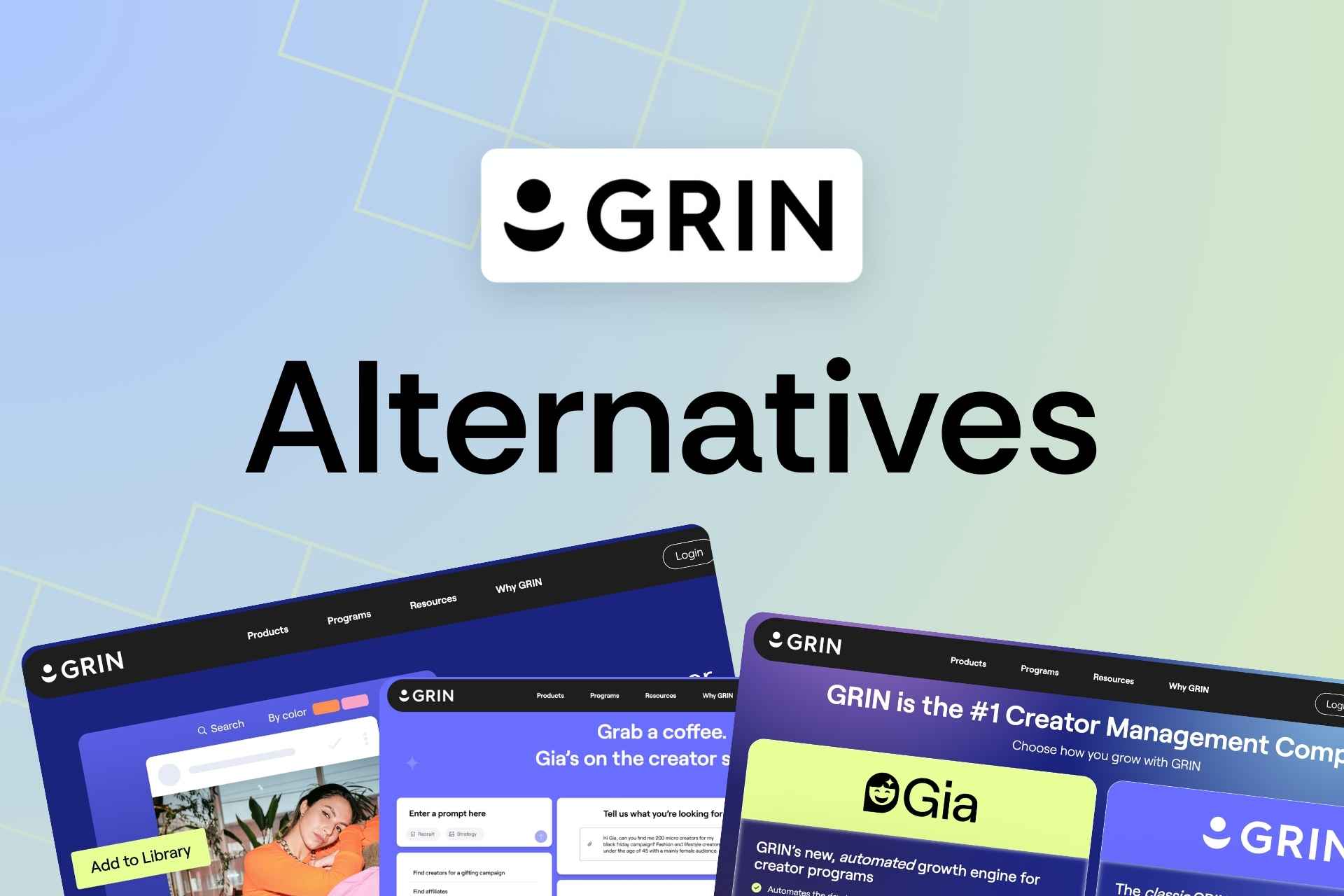
GRIN
GRIN is a creator management platform built primarily for eCommerce and DTC brands that want to run influencer programs tied closely to gifting, affiliate revenue, content collection, and repeat partnerships. Its positioning is less about curated marketplace matching and more about giving brands a full operating system for creator relationship management.
Key Features
• Creator discovery and recruitment: GRIN supports creator discovery, social listening, and recruitment workflows, giving brands multiple ways to find partners rather than relying on a single marketplace model.
• Relationship management CRM: A core strength of GRIN is creator relationship management, including outreach, status tracking, collaboration history, and centralized records for long-term programs.
• Integrated gifting workflows: GRIN is built for product seeding and commerce-led collaborations, with integrations that connect creator selection, product choice, fulfillment, and performance tracking.
• Content management and UGC library: The platform stores creator content in a searchable library so brands can organize assets for reuse across email, social, and paid channels.
• Creator payments: GRIN includes creator payment automation, which helps keep payouts and campaign execution inside one workflow rather than split across finance tools.
• Affiliate tracking: GRIN supports codes, commissions, and conversion measurement, making it especially attractive to brands that care about revenue-linked creator programs.
• AI support via Gia: GRIN has recently put more emphasis on Gia, its AI assistant, to help teams with discovery, recommendations, and workflow efficiency.
Platform Coverage
Facebook, Instagram, TikTok, X, Pinterest, YouTube, and Twitch
Pricing
Annual pricing starts at $25,000/year (approx. $2,050/month)
Reviews
4.5/5.0 (G2)
Standout Features
• eCommerce-native creator management: GRIN’s strongest differentiator is how tightly it connects creator workflows to seeding, storefront-style product choice, affiliate tracking, and commerce reporting.
• Creator portals with rights capture: GRIN lets creators review briefs, choose products, and accept media rights within the workflow, which reduces a lot of manual back-and-forth.
• Gia AI assistant: GRIN’s newer AI layer is designed to speed up creator discovery and day-to-day campaign management rather than just surface static analytics.
#paid vs GRIN
#paid is better known for curated creator matching and paid media licensing, while GRIN is better suited to brands that want to operationalize long-term creator programs tied to gifting, affiliate tracking, and UGC collection. #paid feels more campaign- and marketplace-oriented; GRIN feels more CRM- and eCommerce-oriented. For DTC brands that want tighter control over products, creators, and revenue attribution, GRIN is usually the more operational choice.
Modash

Modash is an influencer marketing platform built around discovery, outreach, tracking, and payouts for Shopify-focused brands. Its biggest appeal is simplicity: it gives brands access to a very large public creator dataset and connects discovery directly to relationship management, campaign tracking, gifting, and affiliate payments.
Key Features
• Large public creator database: Modash says its discovery engine includes 350M+ creator profiles across Instagram, TikTok, and YouTube, using public profile data rather than requiring creator opt-in.
• Advanced influencer discovery: Brands can search creators using hashtags, captions, audience filters, performance data, and lookalike logic, which makes Modash especially strong for lean teams focused on search quality.
• AI-assisted creator search: Modash supports AI-powered discovery, including text-prompt and image-based creator search, which is a notable differentiator in discovery-heavy workflows.
• Outreach and CRM: The platform includes creator email unlocking, relationship tracking, statuses, and Gmail/Outlook-connected communication workflows.
• Campaign tracking: Modash tracks creator content, mentions, hashtags, engagement, reach, and affiliate activity in real time.
• Shopify gifting and affiliate management: Shopify integration supports gifting, discount codes, tracking links, and affiliate workflows, which makes the platform especially useful for commerce-led campaigns.
• Creator payments: Modash includes creator payments and payout automation, with fee-free payout thresholds depending on plan.
Platform Coverage
Modash supports influencer marketing on platforms such as Instagram, YouTube, and TikTok, providing comprehensive campaign tracking and influencer management tools.
Pricing
• Essentials: $199/month (paid annually)
• Performance: $499/month (paid annually)
• Custom Enterprise: Contact for pricing
Reviews
4.9 / 5.0 (Capterra)
Standout Features
• AI and image-based creator discovery: Modash’s text-prompt and visual-search style discovery is one of its clearest differentiators, especially for brands that search by aesthetic or content vibe.
• 350M+ public-profile database: Its non-opt-in database gives brands much broader search reach than closed creator marketplaces.
• Shopify-native gifting and affiliate workflows: Modash is especially strong for brands that want gifting, code tracking, and creator payouts connected directly to Shopify.
#paid vs Modash
#paid and Modash sit at opposite ends of the workflow spectrum. #paid is curated, pitch-based, and built around creator matching plus licensed paid amplification, while Modash is open-database, search-led, and built for brands that want direct control over discovery, outreach, and Shopify-linked tracking. #paid is stronger for guided campaigns and creator-handle ads; Modash is stronger for fast discovery at scale and cost-efficient operator control.
Influencity

Influencity is an end-to-end influencer marketing platform that combines creator discovery, relationship management, campaign execution, reporting, social listening, and social media management in one broader suite. It is positioned as a flexible platform for brands and agencies that want both influencer-specific workflows and adjacent social tools without moving into the highest enterprise price brackets.
Key Features
• Creator discovery at scale: Influencity promotes access to a very large creator database, with Capterra listing 200M+ influencers and the official site now emphasizing 350M creators searchable through the platform.
• Influencer relationship management: The platform includes a built-in IRM with contact records, custom fields, communication history, and automated email tracking.
• Campaign management: Influencity covers recruitment, outreach, campaign management, seeding, payments, and results measurement within the same system.
• Reporting and analysis: It offers campaign reports, audience analytics, and broader performance measurement aimed at proving campaign impact.
• Social listening and monitoring: Influencity is broader than many influencer-only tools because it also includes monitoring, competitor analysis, and market research functions.
• Seeding and payments: The official platform materials include influencer seeding and payments as part of the product stack, which makes it more complete than pure discovery software.
• Automated outreach support: The platform includes automated email tracking and outreach support, which helps teams manage more outbound-heavy workflows.
Platform Coverage
Instagram, TikTok, YouTube, and X/Twitter
Pricing
• Professional Plan: $318/month or $3,816/year
• Business Plan: $798/month or $9,576/year
• Enterprise Plan: Custom pricing
• Auto-Tracker Add-On: $660/year (for 50 influencers)
Reviews
4.3 / 5.0 (G2)
Standout Features
• Broader suite beyond influencer marketing: Influencity combines influencer workflows with social media management and social listening, which is unusual in its pricing tier.
• Strong IRM and communication tracking: Its relationship management and automated email-tracking capabilities make it more operational than discovery-only competitors.
• Large searchable creator base with flexible plans: The platform balances large-scale discovery with more accessible entry pricing than many enterprise tools.
#paid vs Influencity
#paid is more specialized around curated creator matching, campaign pitching, and creator licensing for paid media, while Influencity is broader and more software-led, with stronger emphasis on searchable discovery, relationship management, and adjacent social tools. #paid is usually better for brands that want guided campaign execution and creator-led media amplification; Influencity is better for teams that want more direct operator control and a wider suite that includes listening and social management.
IZEA

IZEA is one of the longest-standing influencer marketing platforms, offering a combination of influencer discovery, content collaboration, and marketplace-driven campaign execution. Positioned as both a creator marketplace and a workflow platform, IZEA helps brands connect with influencers, manage campaigns, and purchase creator content at scale through its ecosystem, including IZEA Flex and its Creator Marketplace.
Key Features
• Creator marketplace (IZEA Marketplace): IZEA allows brands to browse and purchase content directly from creators who list pre-priced offerings (e.g., sponsored posts, videos), which simplifies campaign sourcing and reduces negotiation time.
• Influencer discovery and search: Through IZEA Flex, brands can search for influencers using filters like audience demographics, engagement, niche, and platform performance metrics.
• Campaign management workflows: IZEA provides tools for briefing, contracting, approvals, communication, and campaign tracking in one centralized platform.
• Content collaboration tools: Brands can manage deliverables, review content, provide feedback, and approve posts before publishing, ensuring brand alignment.
• Payments and compliance: IZEA handles influencer payments, contracts, and tax documentation, which is especially useful for teams managing multiple creators at scale.
• Reporting and analytics: The platform includes campaign performance tracking, engagement metrics, and ROI reporting to measure effectiveness.
• Managed services option: In addition to its software, IZEA offers fully managed influencer marketing services for brands that prefer a hands-off approach.
Platform Coverage
Instagram, TikTok, YouTube, Facebook, Pinterest, Snapchat, Twitch, and X (Twitter).
Pricing
IZEA does not publicly list fixed pricing tiers for all products, but it offers two main approaches:
• IZEA Flex (self-serve SaaS): Typically offered via custom pricing based on usage, features, and scale.
• Managed Services: Fully customized pricing depending on campaign scope, creator volume, and level of service.
In practice, this means pricing is quote-based, often structured as annual contracts for software access or campaign-based pricing for managed services.
Reviews
3.9/ 5.0 (G2)
Standout Features
• Creator Marketplace with pre-priced content: IZEA’s marketplace allows brands to purchase influencer content directly without lengthy negotiations, which speeds up campaign execution compared to traditional outreach models.
• Dual model (self-serve + managed services): IZEA offers both a SaaS platform (Flex) and fully managed campaign services, giving brands flexibility depending on internal resources.
• Content-first approach beyond social posts: IZEA goes beyond influencer partnerships by positioning itself as a broader content marketplace, enabling brands to source UGC and creative assets at scale.
#paid vs IZEA
#paid and IZEA both provide marketplace-style influencer solutions, but they differ in execution and focus. #paid emphasizes curated creator matching and campaign-specific pitches, while IZEA leans more toward a transactional marketplace where brands can directly purchase pre-packaged content. #paid is stronger for brands prioritizing creative alignment and creator-led paid media, whereas IZEA is better suited for teams looking for faster content sourcing, flexible buying options, and the ability to scale content production through a marketplace model.
Final Thoughts on #paid Alternatives
Choosing a #paid alternative ultimately depends on your team’s priorities and workflow preferences. Platforms like Influencer Hero, Modash, and SARAL offer more control over discovery and outreach, while tools like GRIN, Aspire, and Upfluence focus on eCommerce integrations and revenue tracking. On the enterprise side, CreatorIQ and Sprout Social emphasize analytics, governance, and scalability. In contrast, #paid stands out for its curated creator matching and strength in creator-led paid media. For brands and agencies, the right choice comes down to whether you value hands-on control, data depth, commerce integration, or guided campaign execution.