

Linkr Alternatives: Best Influencer Marketing Platforms
Published pricing is rarer in this category than it should be, and Linkr lists all four of its tiers with a seven-day trial and monthly cancellation attached. The Munich-built platform pairs creator relationship management with unusually deep commerce integration — Shopify and Shopware connections that raise sample orders, sync inventory, generate discount codes and attribute the sales that follow. For a DACH brand running product seeding, that closes a loop most tools leave open.
Reach is the reason brands start comparing Linkr alternatives. The creator pool sits at roughly ten thousand manually verified profiles, curated on purpose but orders of magnitude smaller than platforms indexing hundreds of millions, and the roster is concentrated in Germany and Austria. Standard plans cover Instagram, TikTok and YouTube only, additional networks arrive with the €1,990 white-label tier, and some campaign reporting leans on creators reporting their own numbers rather than pulling everything through platform APIs. The influencer marketing software below is ordered by which of those constraints each one lifts: Influencer Hero opens because it keeps the seeding-and-commerce strength while multiplying the reach behind it, Kolsquare is the European option built for the same markets at enterprise depth, Modash and Heepsy answer database size at opposite prices, Afluencer and GRIN change how a roster is built in the first place, Influencity and Upfluence bring analysis and store-wide attribution, and SARAL and Traackr sit at the workflow and governance ends.
Criteria for Suggesting Platform Alternatives
Core Features
Evaluation of each platform's essential capabilities, including influencer discovery, outreach, CRM, campaign reporting, gifting, UGC and content collection, affiliate tracking and payments, storefronts, application pages, and AI-powered tools.
Supported Social Media Platforms
Assessment of how well each platform integrates with major social networks such as Instagram, YouTube, TikTok, Facebook, Pinterest, and many more
Pricing & Contract Flexibility
Comparison of pricing models, subscription costs, and contract requirements to help brands choose solutions that match their budget and scalability needs.
Standout & Differentiating Features
Highlighting unique or innovative functionalities that set each platform apart, such as real-time tracking dashboards, creator benchmarking, TikTok email discovery, or advanced automation tools.
Customer Reviews & User Satisfaction
Analysis of verified user feedback from credible platforms like G2, TrustRadius, Capterra, focusing on usability, reliability, value for money, customer support, and real-world performance.
Linkr Overview
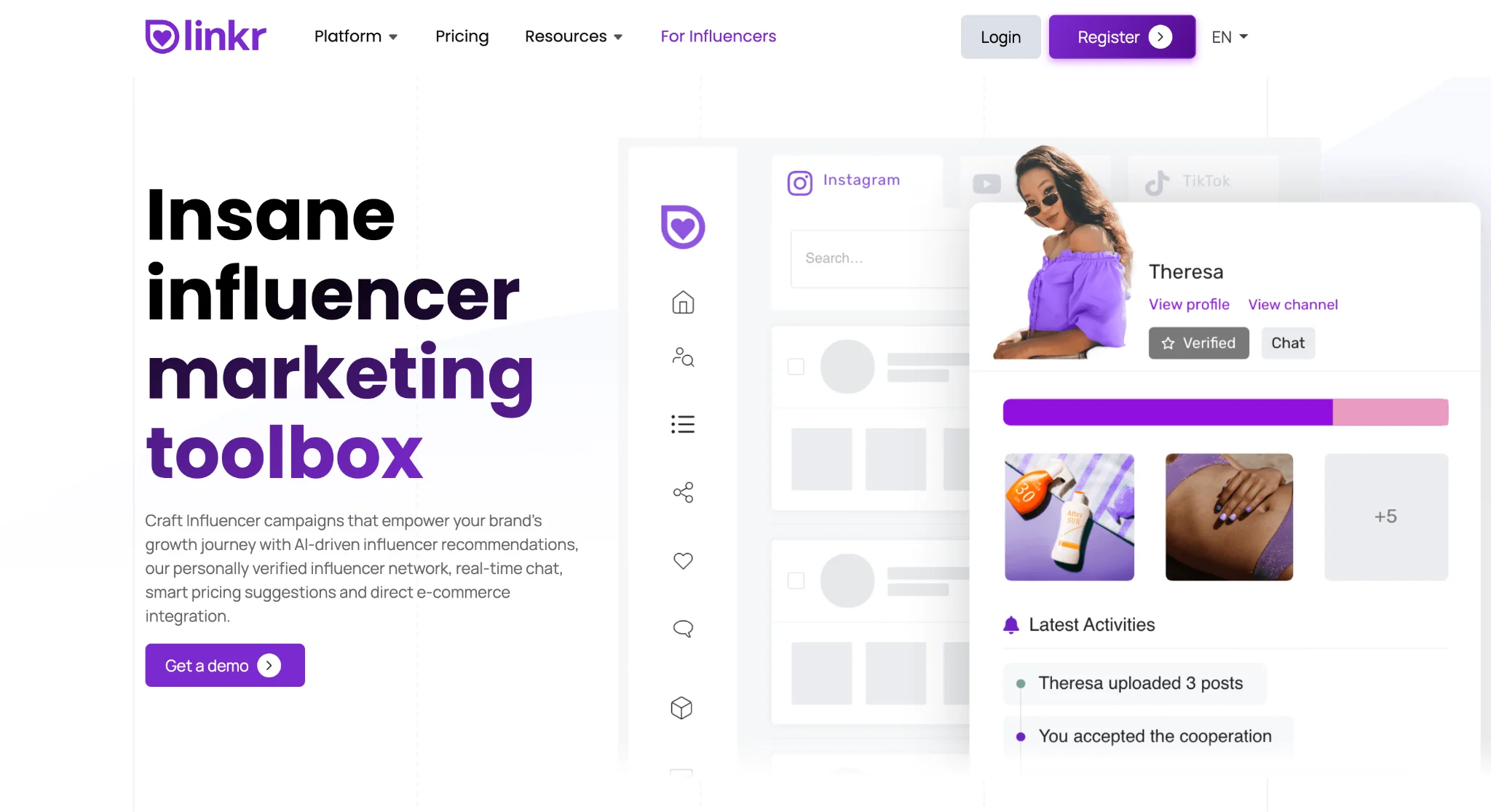
Linkr is an influencer relationship management platform operated from Munich, covering discovery, campaign management, product seeding, payments and invoicing in one subscription. It serves D2C brands, agencies and talent managers primarily across Germany and Austria, with a separate free side for creators. The model is self-serve software layered over a curated in-house creator marketplace of more than ten thousand manually verified profiles, plus a rebrandable white-label tier for organisations that want their own instance.
Key Features
- Curated Creator Search: unlimited search across a manually verified pool, filtered by gender, location, category and audience demographics.
- Statistical Twins: lookalike creator suggestions generated from profiles a brand has already saved or worked with.
- AI Recommendations: daily creator suggestions matched to brand values and target audience, with algorithmic guidance on what to pay.
- Cooperation Management: campaign templates, ambassador programs, real-time creator chat and multi-client handling for agencies.
- Briefing and Approval: content standards set per campaign, with deliverables flagged for pre-publication sign-off where required.
- Commerce Integration: Shopify and Shopware connections automating sample orders, inventory sync, discount-code generation and sales tracking.
- Flexible Compensation: a bidding mode where creators state their price, alongside fixed fees, barter, sales commission and hybrid arrangements.
- Payments and Invoicing: budgeting, creator payouts and automatic invoice generation handled in-platform.
Platform Coverage
Instagram, TikTok and YouTube on standard plans, with additional networks available only through white-label configuration.
Pricing
- Search & Communicate: €199/month, or €149/month billed annually, covering unlimited search, filters, lists, notes, AI recommendations and chat.
- Influencer Relationship Management: €349/month, or €289/month annually, adding cooperation and campaign management, smart pricing, payments and invoicing.
- Product & eCommerce Integration: €699/month, or €559/month annually, adding sample seeding, inventory sync, discount codes and sales commission tracking.
- Whitelabel Enterprise: €1,990/month, or €1,549/month annually, adding custom branding, multi-channel and multi-language support, a private database and API access.
- Terms: seven days free with no card required, and monthly cancellation on every plan except white label.
Reviews
No reliable third-party user rating exists for the platform. It holds no substantive listing on the major software review sites, and the rating displayed on its own site is self-reported from app-store listings rather than verified customer feedback, so it should not be read as an independent score.
Standout Features
- Prices on the Website: all four tiers published with a free trial and monthly cancellation, which is unusual for a platform selling this much workflow.
- Seeding That Reaches the Warehouse: sample orders raised against live inventory rather than tracked in a parallel spreadsheet.
- Creators Name Their Price: a bidding mode that surfaces real rates instead of leaving a manager to guess at them.
Limitations (Why Users Look For Linkr Alternatives)
The creator pool is small and regionally concentrated
Roughly ten thousand verified profiles is a fraction of what discovery-led platforms index, and the roster is weighted toward Germany and Austria. Filling a campaign in the US, the UK, France or the Nordics means running short of candidates quickly.
Standard plans stop at three networks
Instagram, TikTok and YouTube are covered; anything else requires the white-label tier at €1,990 a month. Brands in gaming, home and DIY, or B2B social have to jump to the top plan for coverage other platforms include by default.
Some reporting relies on creators self-reporting
Parts of the performance picture come from creators supplying their own numbers rather than every metric being pulled through platform APIs. That is workable for a curated roster and a real constraint once a program is large enough that nobody can spot-check it.
The commerce features sit high in the pricing
Seeding, inventory sync, discount codes and sales tracking — the reason many brands look at Linkr at all — only arrive on the €699 tier. A brand wanting the loop closed pays more than three times the entry price to get it.
There is no independent review record
The platform has no meaningful presence on G2, Capterra or TrustRadius, so a buyer cannot check how it performs for teams like theirs before committing. That is a due-diligence gap rather than a product flaw, but it matters when the alternatives publish hundreds of verified reviews.
10 Best Influencer Marketing Platform Alternatives:
| TOOL | REVIEWS | BEST FOR | TRIAL INFO | PRICING | ||
|---|---|---|---|---|---|---|
1 |

|
⭐ | Influencer CRM & automation | Book Demo | Pricing | Website |
2 |

|
⭐ | DTC creator management | Book Demo | Pricing | Website |
3 |

|
⭐ | Influencer marketplace campaigns | Book Demo | Pricing | Website |
4 |

|
⭐ | Campaign management | Book Demo | Pricing | Website |
5 |

|
⭐ | Influencer discovery | Book Demo | Pricing | Website |
6 |

|
⭐ | Influencer discovery | Book Demo | Pricing | Website |
7 |

|
⭐ | Influencer outreach | Book Demo | Pricing | Website |
8 |

|
⭐ | Enterprise influencer analytics | Book Demo | Pricing | Website |
9 |

|
⭐ | Influencer discovery | Book Demo | Pricing | Website |
10 |

|
⭐ | Data-driven influencer discovery & campaign analytics | Book Demo | Pricing | Website |
Influencer Hero

Influencer Hero keeps the parts of Linkr a seeding-led brand actually relies on — store-connected sample fulfillment, discount codes, commission tracking and automated payouts — and puts a far larger discovery engine in front of them. It runs across eight social networks, serves D2C and ecommerce brands, agencies and enterprise programs alike, and like Linkr it publishes its prices instead of routing buyers through a scoping call.
Key Features
- Eight Networks, Not Three: search by interests, engagement, demographics, location and follower quality, then extend a shortlist with lookalike suggestions and brand-follower detection.
- Authenticity Checking: fake-follower detection and audience quality scoring before contact, with a Chrome extension surfacing the same data while browsing a profile.
- AI Matching to a Goal: candidate lists built from a campaign objective described in plain language.
- Outreach at Volume: bulk or one-to-one email, AI-personalized templates, drip sequences and reply tracking.
- Creator CRM: an influencer CRM holding conversations, campaign stage and deliverables against each partner.
- Seeding From the Store: Shopify and WooCommerce auto-fulfillment with shipping and delivery tracking, plus script support for custom-built stores.
- Affiliate Links and Payouts: custom links, discount codes, commission and conversion tracking, with creator payments triggered automatically.
- UGC, Storefronts and Application Pages: published content collected and tagged for reuse, branded creator storefronts, and inbound application pages.
- Integrations and API: DocuSign, GoAffPro, Klaviyo, Slack, Zapier and hundreds more, with API access to millions of creator profiles.
Platform Coverage
Instagram, TikTok, YouTube, Facebook, Pinterest, Snapchat, X and Twitch.
Pricing
- Standard: $649/month for up to 1,000 creators or contacts.
- Pro: $1,049/month, raising that to 5,000.
- Business: $2,490/month, raising it to 10,000.
- Custom and Agency: tailored scopes for enterprise programs and agencies running several brands.
Reviews
5.0/5.0 (Capterra)
Standout Features
- Every Feature on Every Plan: networks, seeding and affiliate tracking are not gated behind a top tier — plans scale on contact volume instead.
- Data Behind Each Profile: audience composition and follower authenticity replace a curated pool as the reason to trust a shortlist.
- A Verified Review Record: independent customer feedback a buyer can actually read before signing.
Linkr vs Influencer Hero
Both close the loop from creator to tracked sale, and the difference is what feeds that loop. Linkr sources from roughly ten thousand verified profiles concentrated in German-speaking markets; Influencer Hero searches eight networks worldwide with authenticity scoring and audience data on every profile, so a brand expanding beyond DACH is not suddenly out of candidates. The commerce half survives the move intact — Shopify fulfillment, delivery tracking, discount codes, commission tracking and automatic payouts all ship as standard rather than sitting on a €699 tier.
Where Linkr keeps an edge is fit and price at the entry point. €199 a month for search and chat is well below $649, Shopware support matters for merchants Influencer Hero does not natively cover, and a hand-verified roster removes vetting work that a database hands back to the user. There is no free trial here either, against Linkr's seven days. The case for switching is strongest for a brand whose next campaign needs creators outside Germany and Austria, or on a network the standard Linkr plans do not reach.
GRIN
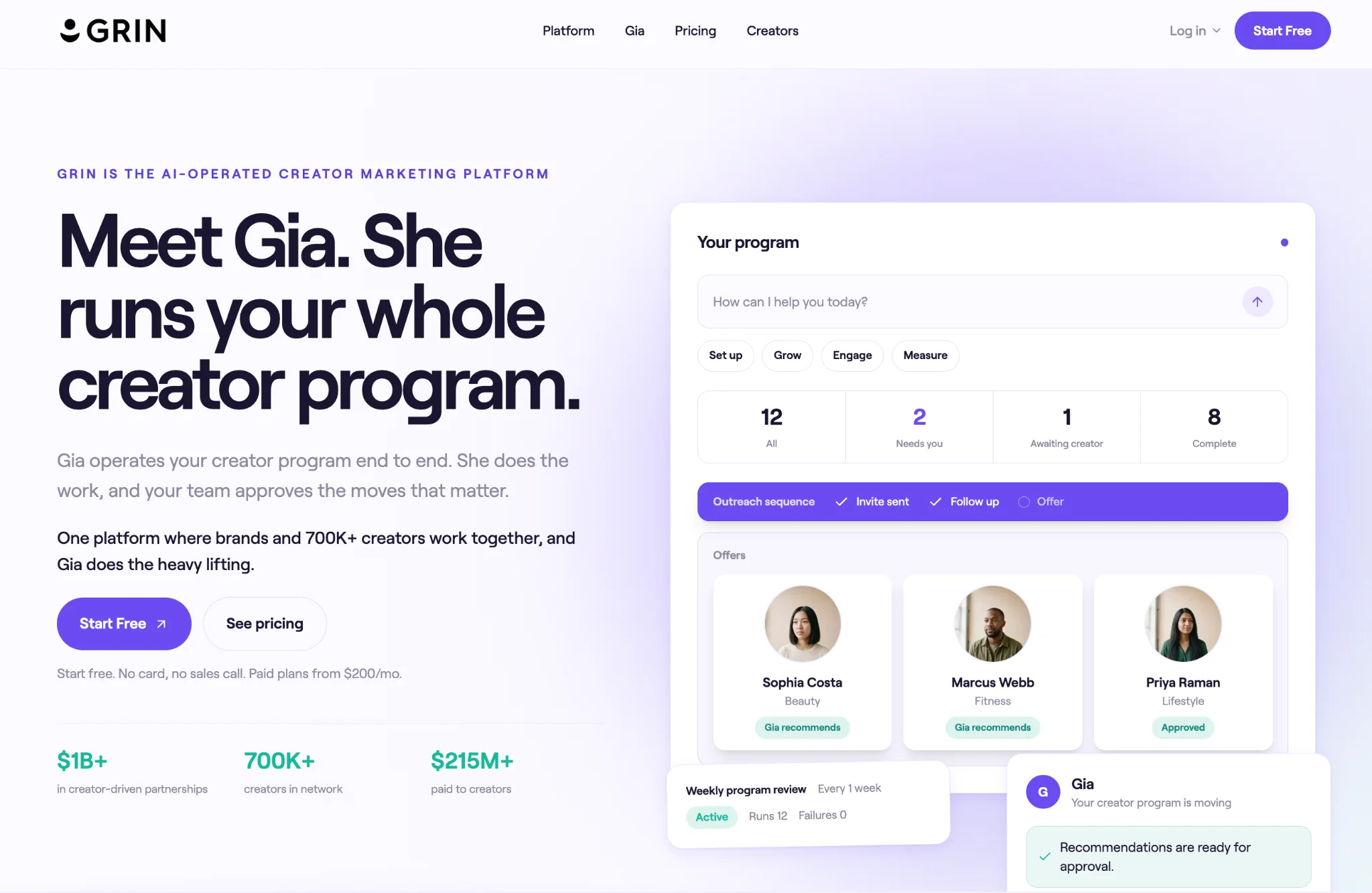
GRIN builds for consumer brands that treat creators as long-running relationships rather than one-off bookings, and it sells the way modern software should — published plans, usage metered in credits and a free tier with no expiry attached. An AI agent handles the repetitive end of discovery, outreach drafting and reporting, with a person approving the output.
Key Features
- Two Routes to a Roster: AI matching inside GRIN's creator network plus web-wide search and branded recruitment landing pages.
- The Complete Partner File: contract, shipment, message thread and published content held against each creator.
- Store Sync: Shopify, WooCommerce and Magento connections that mint codes and fulfill creator orders automatically.
- Commissions Kept Whole: creator-driven sales tracked and settled with no percentage taken by the platform.
- Reviews on a Schedule: customizable reports plus recurring automated program reviews.
Platform Coverage
Instagram, TikTok and YouTube, backed by ecommerce, email and communication integrations.
Pricing
- Free: $0/month with 200 credits and no card required.
- Starter: $200/month for 2,000 credits.
- Growth: $500/month for 7,500 credits and up to 100 active creators.
- Scale: $1,000/month for 20,000 credits and up to 250 active creators.
- Complete: $1,500/month for 30,000 credits and up to 500 active creators.
Reviews
4.5/5.0 (G2)
Standout Features
- A Bill That Cannot Surprise You: credit spend is capped by the brand and never billed above the ceiling it sets.
- A Free Tier With No Clock: the zero-dollar plan does not expire, so evaluation takes as long as it needs.
- Recruitment Pages of Your Own: branded landing pages collect applicants without relying on a vendor's roster.
Linkr vs GRIN
Seeding is the shared strength, and GRIN extends it to three ecommerce platforms rather than two, with contracts, shipments, messages and published content filed against each creator. Both publish prices, but the shapes differ: GRIN meters usage in credits from a free tier upward and takes no cut of creator-driven revenue, while Linkr gates capability by tier, so the commerce features a seeding brand wants start at €699.
Sourcing is where they diverge. GRIN combines its own creator network with web-wide search and branded recruitment pages, so a brand builds a roster rather than inheriting one — more work than Linkr's vetted pool, and no ceiling on it. Shopware is the notable omission for German-market merchants, and there is no equivalent of Linkr's bidding mode for surfacing what creators actually charge. A brand on Shopify running continuous seeding will find GRIN the stronger engine; a Shopware merchant will not find a like-for-like path.
Afluencer
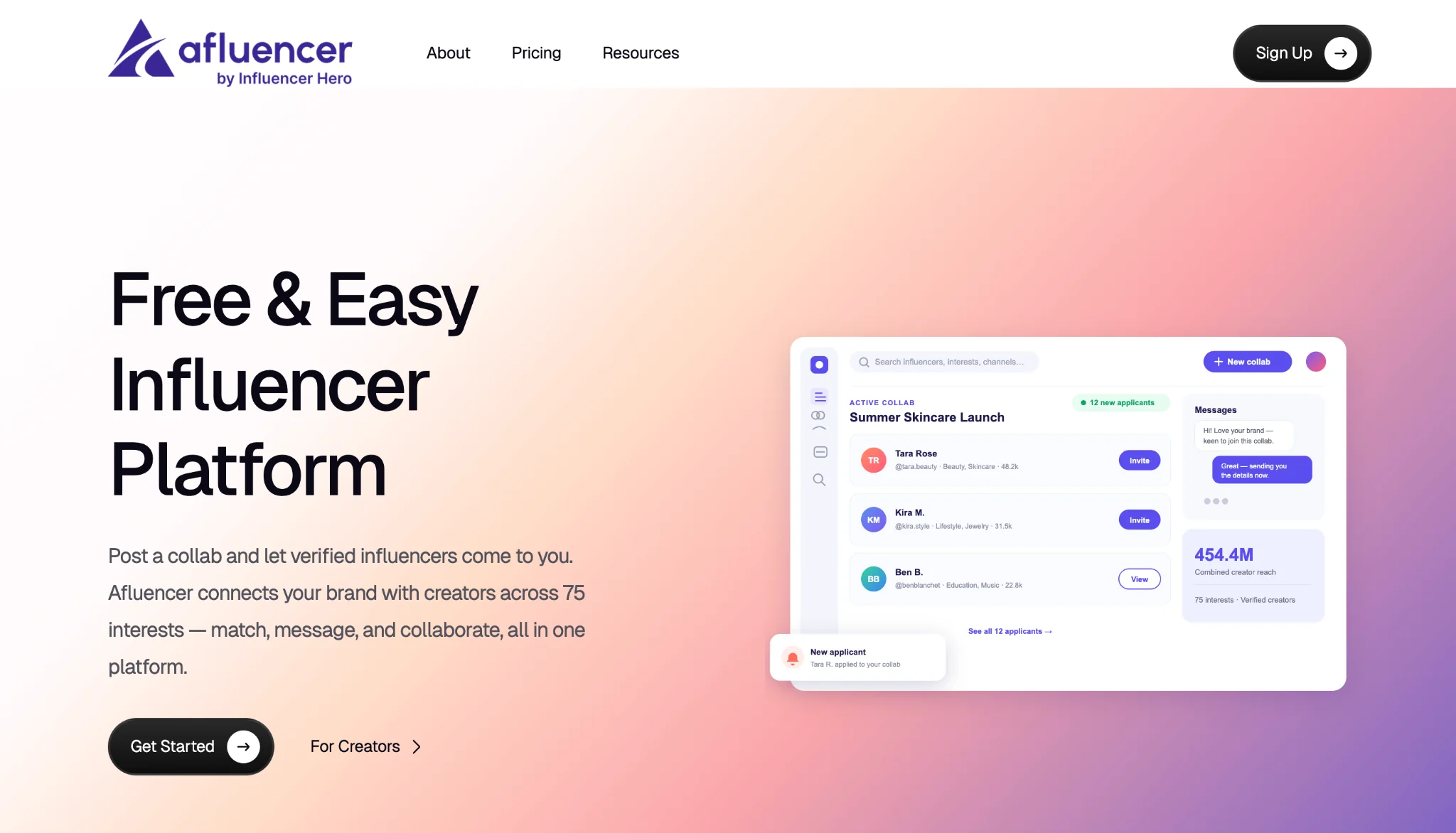
Afluencer approaches the roster problem from the other side. Rather than searching a database, a brand publishes a collaboration brief into a marketplace and opted-in creators apply to it, so the first conversation is with somebody who already read the offer. Its free tier runs a real campaign, and direct invitations start at $49 a month.
Key Features
- Published Collab Briefs: campaign details go live in the marketplace and matching creators apply.
- Verified Creator Directory: searchable profiles filtered by platform, follower count, niche and audience demographics.
- Monthly Invite Credits: allocations for approaching named creators directly, scaling with the plan.
- Deals Handled In-App: conversations, product send-outs and creator payments settled inside the dashboard.
- Forty-Plus Integrations: Shopify, Klaviyo, Amazon, Slack and DocuSign among them.
Platform Coverage
Instagram, TikTok, YouTube and X.
Pricing
- Free: $0/month to publish collabs and receive creator applications.
- Marketplace: $49/month for 60 invitation credits and premium filters.
- Standard: $649/month covering 1,000 reach-outs, product send-outs and creator payments.
- Pro: $1,049/month covering 5,000 reach-outs, three or more seats and a dedicated account manager.
Reviews
4.6/5.0 (G2)
Standout Features
- Consent Before Contact: applicants have read the brief before they arrive, which is why reply rates beat cold outreach.
- A Free First Campaign: an entire collaboration can run before any money changes hands.
- Named Invites at $49: proactive outreach at a price point few competitors offer.
Linkr vs Afluencer
Both put a verified pool between the brand and the open internet, and both keep the deal inside the platform. The difference is where the creators come from: Linkr's roster was assembled and checked in Munich, Afluencer's arrives by application from a largely English-speaking marketplace. For a brand pushing outside German-speaking markets, that is the cheapest way to test whether creators there respond at all, since the free tier costs nothing and $49 buys sixty direct invitations.
What it does not carry is the commerce machinery. Payments cover flat fees and gifted product rather than sample orders raised against live inventory, discount-code generation or sales commission tracking, and there is no Shopware support at all. Read it as a recruiting channel to run beside an existing setup rather than as a replacement — particularly useful for a Linkr customer on the €199 or €349 tier who needs more candidates but not another seeding system.
Influencity

One Influencity subscription covers three products: creator campaigns, social publishing and listening. It sells to brands, ecommerce teams and agencies handling several accounts, and its centre of gravity is analysis — an index of hundreds of millions of profiles filtered on who is actually watching rather than how many.
Key Features
- Audience-First Search: hundreds of millions of profiles queried through twenty-plus filters covering audience, authenticity and performance.
- Lists That Survive: segmented creator lists carry between campaigns, so a shortlist is assembled once.
- Briefing Through Reporting: casting, negotiation, content validation and reporting in one continuous flow.
- Metered Email Automation: automated sequences with a monthly send allowance per plan.
- Payouts in 180+ Countries: multi-currency creator payments processed in-platform.
Platform Coverage
Instagram, TikTok, YouTube and Twitch.
Pricing
- Basic, Professional, Business and Custom: four tiers assembled in an in-app calculator from seats and usage, with no fixed figures published.
- Trial: seven days free before any commitment.
- Annual Terms: a discount applies to yearly billing.
Reviews
4.5/5.0 (G2)
Standout Features
- Who, Not How Many: audience composition and authenticity describe the people behind a follower count.
- Three Jobs, One Invoice: creator campaigns, scheduling, the social inbox and listening on one bill.
- Approvals Inside the Campaign: content validation is a built-in stage rather than an email thread beside it.
Linkr vs Influencity
Content approval and campaign structure exist in both, which makes this a comparison about the data underneath them. Influencity profiles hundreds of millions of creators and answers whether an audience is real, in the target country and in the right age band — the check a curated roster performs once, centrally, and cannot re-run against a brand's own criteria. Payouts reaching more than 180 countries also solve the export problem a DACH-weighted pool creates.
Two things push the other way. Pricing is assembled in a calculator rather than published, so the transparency Linkr offers disappears, and there is no equivalent of raising sample orders against live Shopify or Shopware stock. Agencies benefit most from the swap, since the seat and usage model is designed for running several clients from one login — the same buyer Linkr courts with multi-client handling, served with a far larger database behind it.


Upfluence
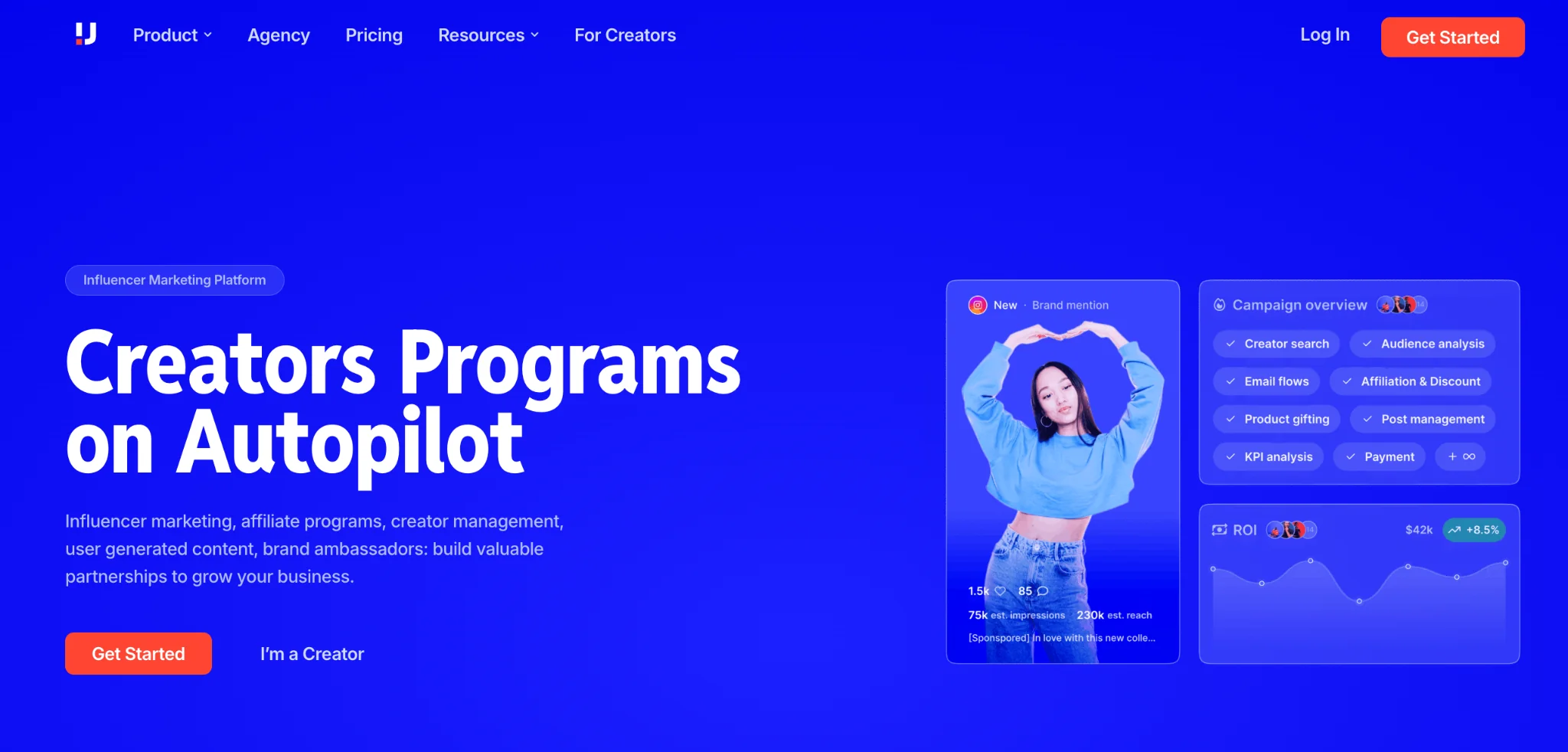
Upfluence merges influencer and affiliate management into one product for D2C and ecommerce brands, with an AI copilot handling shortlisting, campaign setup and the first draft of outreach. Its most distinctive move is reading connected store and email data to surface creators who are already customers, and it reaches more social networks and more ecommerce platforms than most tools here.
Key Features
- Fourteen Million Profiles: a creator index searchable by network and audience criteria.
- Copilot Work: shortlists, campaign recommendations and outreach drafts produced automatically.
- Customers With Audiences: connected store and email data reveals existing buyers who happen to carry reach.
- Sales Traced to the Creator: attribution through Shopify, WooCommerce, Magento, BigCommerce and Amazon.
- International Payouts: creator payments abroad with tax verification handled in-platform.
Platform Coverage
Instagram, TikTok, YouTube, Twitch, Pinterest and X.
Pricing
- Three Modular Packages: unpriced bundles covering discovery, program scaling and full automation.
- Priced on Modules, Seats and Volume: with no share of tracked creator revenue taken by the platform.
- Quote Only: nothing published, a twelve-month minimum term and a trial that follows a consultation call.
Reviews
4.6/5.0 (G2)
Standout Features
- Partners Who Already Buy: creators recruited from the order book need no convincing about the product.
- Networks Past the Big Three: Twitch, Pinterest and X reach categories the usual trio misses.
- Growth That Does Not Inflate the Fee: a larger affiliate channel costs nothing extra in platform terms.
Linkr vs Upfluence
Commerce depth is the shared ground, and Upfluence goes wider on it: five ecommerce platforms carrying revenue attribution against six social networks, versus Shopify and Shopware feeding three. Finding creators inside the existing customer list is also a recruitment route no curated roster can match, and it neatly sidesteps the geography problem — a brand's own buyers are wherever it already sells.
The buying experience is the reversal. Linkr's whole pitch includes published tiers, a seven-day trial and monthly cancellation; Upfluence quotes, asks for twelve months and starts the trial after a call. Shopware is absent, which rules it out for a slice of the German market outright. This is the swap for a Linkr customer already on the €699 tier whose ambitions have outgrown DACH, and a poor one for a brand that chose Linkr precisely because it could sign up on a Tuesday and leave in a month.
Modash
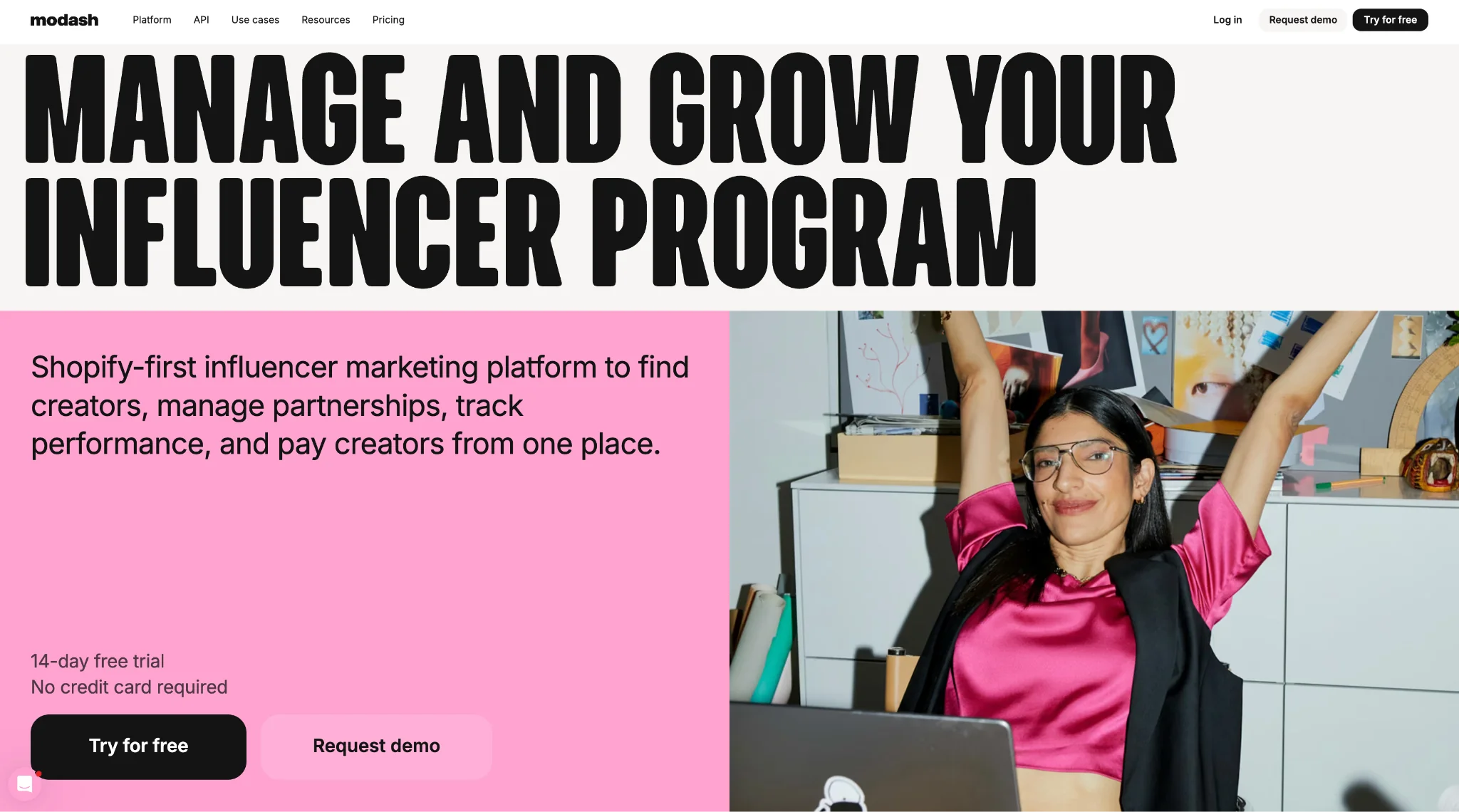
Modash was built on completeness. Every public profile above 1,000 followers on Instagram, TikTok and YouTube is in the index, and campaign content is captured without the creator opting in or connecting an account. Vetting, a light CRM, outreach and payment tools have grown around that core for in-house ecommerce teams.
Key Features
- Everyone Above 1,000 Followers: AI-assisted search across more than 350 million profiles, each carrying audience analytics.
- Vetting Before Contact: demographic breakdowns and fake-follower detection available before a first message.
- A CRM With No Setup: contacts, notes, collaboration history and per-creator performance without a configuration project.
- Outreach From Your Own Inbox: Gmail or Outlook sending with campaign context carried into the thread.
- Content Logged Automatically: stories, posts and metrics recorded with no creator participation required.
Platform Coverage
Instagram, TikTok and YouTube, with every public profile above 1,000 followers included on all three.
Pricing
- Essentials: $199/month — two seats, 300 opened profiles, 150 email unlocks, 100 tracked creators.
- Performance: $499/month — five seats, 800 opened profiles, 400 email unlocks, 250 tracked creators.
- Enterprise: from $14,700/year with negotiated limits and custom tracking domains.
- Terms: fourteen days free, a discount for annual billing and no lock-in.
Reviews
4.9/5.0 (G2)
Standout Features
- No Feature Paywalls: plans differ by volume alone, so nothing useful is reserved for a higher tier.
- Stories Captured For You: the format that vanishes in a day is recorded without chasing screenshots.
- Reporting Nobody Has to Supply: metrics come from the platform rather than from the creator's own account of them.
Linkr vs Modash
Database size is the entire argument, and the numbers are not close: roughly ten thousand curated profiles against every public account above 1,000 followers on three networks, worldwide. For a brand whose campaigns keep running out of suitable DACH creators, or that needs a roster in a market Linkr's roster does not cover, Modash simply removes the ceiling — at $199 a month, which is around the same as Linkr's entry tier.
The second gap is quieter but matters at scale. Modash records stories, posts and metrics itself, so performance reporting never depends on a creator remembering to send numbers. What it will not do is raise a sample order, sync inventory, generate a discount code or issue an invoice, which is precisely the loop Linkr's €699 tier closes. The natural arrangement is to run Modash for sourcing and vetting above whatever handles the seeding and the money, rather than treating it as a straight replacement.
SARAL
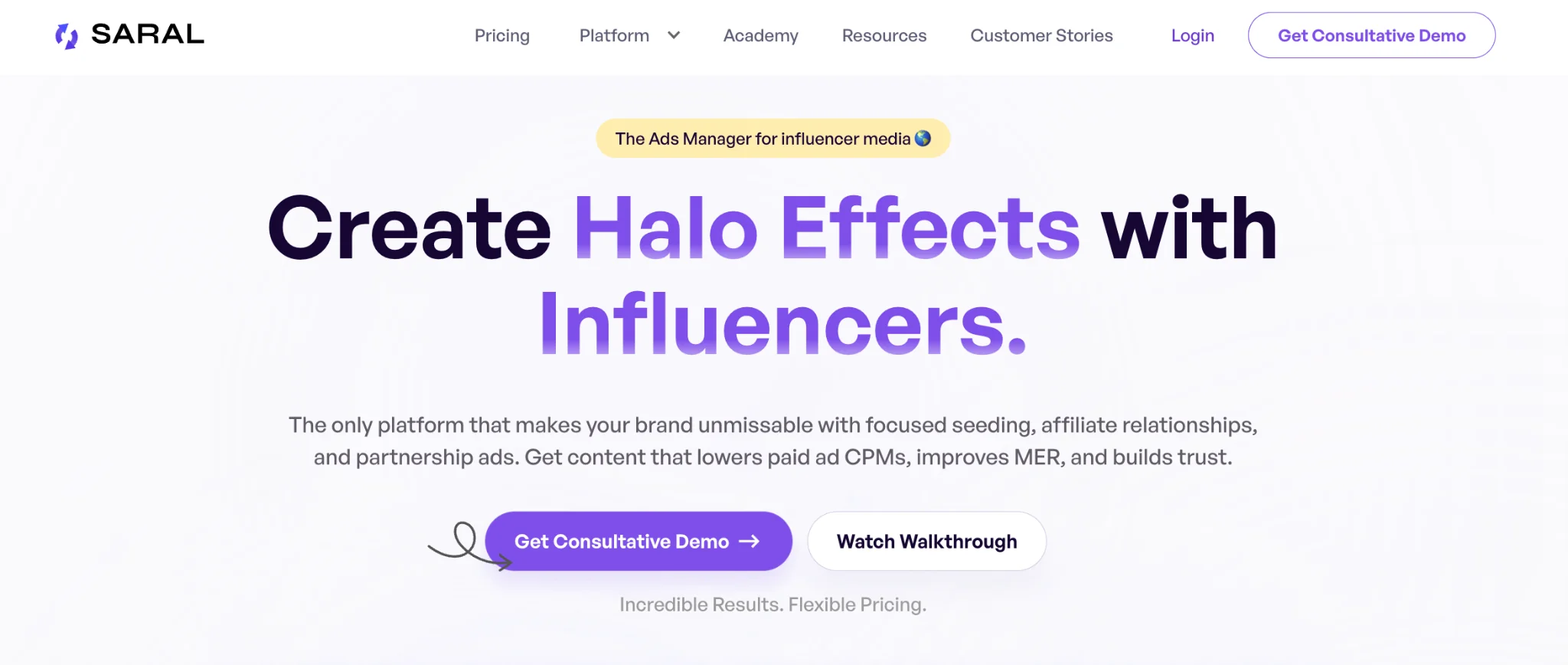
SARAL narrows deliberately: one buyer, the D2C ecommerce brand, and one user, the person running its creator program. A single annual subscription bundles discovery, outreach automation, a pipeline CRM, affiliate tracking and payouts, with an AI assistant absorbing much of the prospecting and follow-up.
Key Features
- 200 Million Profiles, Filtered Hard: sort by topic, location, engagement, audience data and whether a contactable email exists.
- Sequences Into One Inbox: personalized outreach at volume with every conversation visible to the team.
- Pipeline CRM: stages, tasks and history moving each partnership forward with its record attached.
- Cookieless Affiliate Tracking: native attribution, discount codes, commission calculation and payouts.
- Mentions Found Automatically: brand mentions detected and content collected for reporting and usage rights.
Platform Coverage
Instagram, TikTok and YouTube, extended by a Chrome extension usable while browsing profiles.
Pricing
- Starter: $12,000/year — 100 active partnerships, 300 new influencers a month, one seat.
- Business: $15,000/year — 500 active partnerships, unlimited post tracking, three seats.
- Professional: $25,000/year — 1,000 active partnerships, full social listening, ten seats.
- Terms: quarterly billing is possible at a higher effective rate, with no long lock-in.
Reviews
4.8/5.0 (G2)
Standout Features
- Opinionated By Design: serving one buyer type lets the workflow be prescribed rather than configured from scratch.
- Capture From the Browser: one click saves a creator profile while the manager is already looking at it.
- Commissions Included: affiliate tracking ships inside the subscription instead of arriving as a second bill.
Linkr vs SARAL
Both sell a complete workflow to one dedicated program manager, and both include affiliate tracking rather than charging for it separately. The difference is the funnel feeding that workflow: 200 million searchable profiles with contactable email addresses against roughly ten thousand curated ones, plus sequenced outreach designed for volume rather than chat with a pre-vetted roster.
Cost is the obstacle. $12,000 a year paid up front against €199 to €699 a month with monthly cancellation is a different kind of commitment, and even Linkr's white-label tier undercuts SARAL's entry plan annually. There is also no Shopware integration and no bidding mode, and the platform assumes a US-shaped D2C program rather than a European one. For a German brand at real scale it is worth pricing; for a mid-sized one it is a large step for a funnel it may not yet need.
Traackr
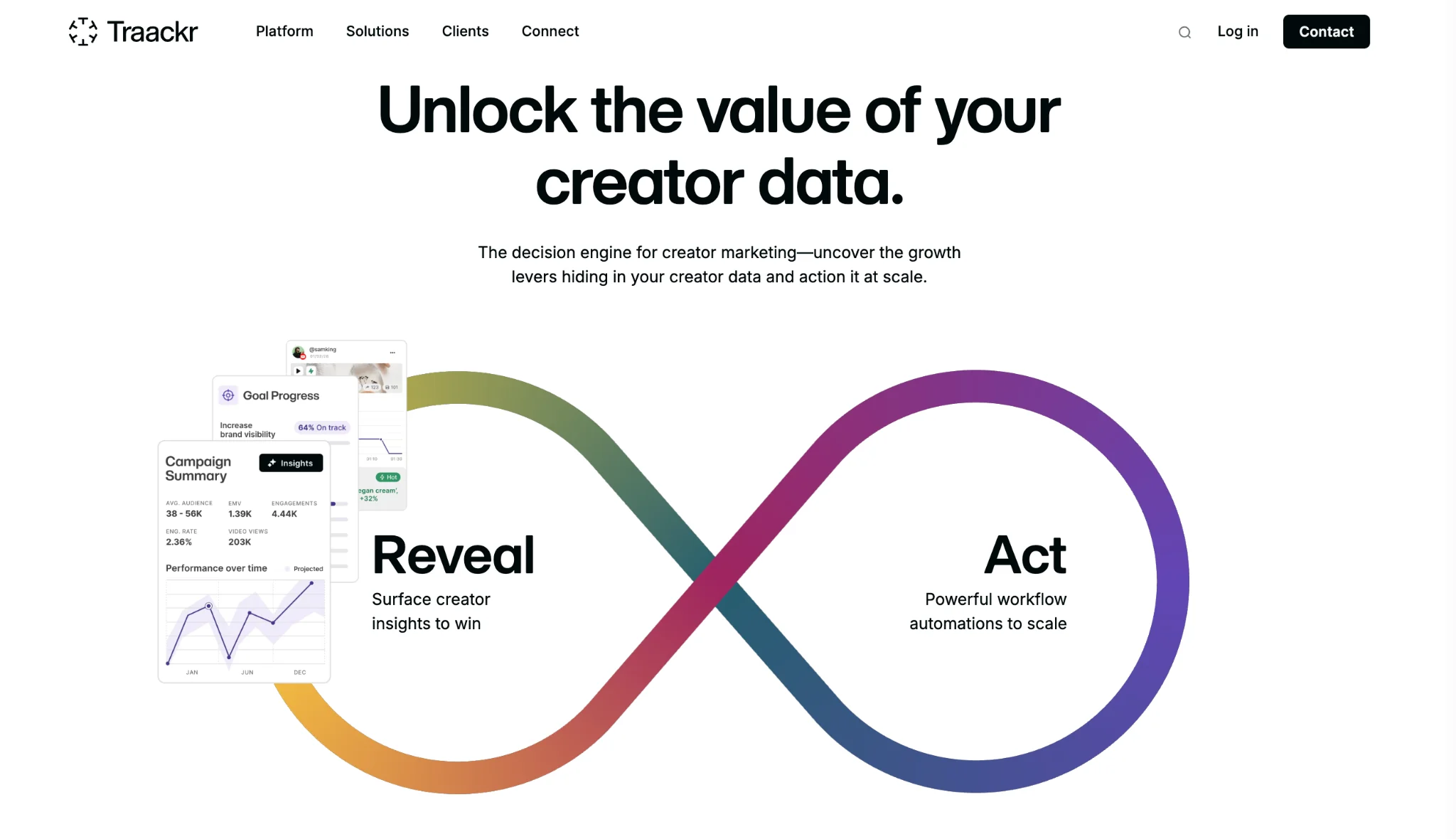
Traackr is the enterprise influencer relationship system global brands and their agencies use to plan, activate and measure creator programs market by market. Governance, comparable measurement and regional permissions come first, and self-serve convenience is not part of the offer. Few platforms in the category have been deployed at this scale for as long.
Key Features
- Search With Guardrails: discovery narrowed by brand safety, brand affinity, performance and audience quality.
- Permissioned Records: central creator files with configurable workflows and access rules across brands and regions.
- Activation End to End: briefs, content approvals, seeding and creator payments in local currency.
- Two Kinds of Proof: engagement and EMV-style metrics reported next to ecommerce clicks, conversions and revenue per creator.
- Share of Influence: performance benchmarked against named competitors across dozens of markets, sold as an add-on.
Platform Coverage
More than a dozen platforms, with blogs sitting alongside the major social networks.
Pricing
- Quote Only: a specialist call sizes cost against seat count and program scale.
- Annual Contracts: yearly terms, with entry reportedly starting in the tens of thousands a year.
- Benchmarking Sold Separately: the competitive module is priced apart from the core platform.
Reviews
4.3/5.0 (G2)
Standout Features
- One Framework Across Regions: every market reports against a single agreed model instead of licensing its own tools.
- Feeds the Wider Stack: creator performance data flows into marketing reporting rather than sitting in a silo.
- Local-Currency Payments: creators paid in their own currency across markets without a workaround.
Linkr vs Traackr
Scale separates these two before any feature does. Linkr is bought by one brand or agency, on a card, with a trial. Traackr is bought by an organisation with several markets and business units, through procurement, on an annual contract in the tens of thousands. A single German D2C brand running seeding into a Shopware store has no obvious reason to begin that conversation.
The picture changes for a group operating across Europe with local teams. Traackr covers more than a dozen platforms, applies permissions so a regional team cannot book someone the brand has excluded, and reports creator performance on one framework across every market — which is exactly the reporting a DACH-only tool with partly self-reported metrics cannot supply. What it will not do is raise a sample order against live inventory or generate an invoice, so the seeding loop still needs somewhere to live.
Heepsy

Heepsy sits at the self-serve end of creator discovery: published prices, a genuinely free tier, and nothing to sign before seeing what the database holds. It started as an audience analytics tool and has since added outreach, campaign pipelines, post tracking, a marketplace and creator payments around that core.
Key Features
- Thirty-Plus Filters: database search across millions of profiles with AI-assisted and lookalike options layered on.
- Audience Authenticity: every profile carries a demographic breakdown, an authenticity read and a fake-follower risk score.
- Templated Outreach: mass sends built from dynamic templates or drafted by AI, with opens and replies tracked.
- Campaign Boards: customizable pipelines with live post tracking and a gallery of published content.
- Store Hooks: creator payments plus Shopify and WooCommerce integrations.
Platform Coverage
Instagram, TikTok and YouTube.
Pricing
- Free: €0/month with results and advanced profile views capped low.
- Starter: €69/month — 5,000 results, 100 advanced profiles, 300 outreach emails, five projects.
- Plus: €149/month — 25,000 results, 500 advanced profiles, 1,200 outreach emails, plus creator payments.
- Advanced: €229/month — 50,000 results, 1,000 advanced profiles, 6,000 outreach emails, unlimited projects.
Reviews
4.5/5.0 (G2)
Standout Features
- Inbound Beside Outbound: marketplace listings collect applicants while database search prospects for them.
- Fans First: upper plans surface followers who already engage with the brand and route them to a sign-up page.
- Limits in Public: usage ceilings are published in full, so a budget can be modeled without a sales conversation.
Linkr vs Heepsy
Priced in the same currency and aimed at the same European buyer, these two make an unusually direct comparison. €69 a month against €199 buys filtered search across millions of profiles rather than ten thousand, with authenticity scoring on each one, and the free tier answers whether a category has depth before a card is entered. For a brand whose only complaint about Linkr is that the roster runs out, this is the cheapest possible answer.
Everything after the shortlist is thinner. There is no sample-order automation, no inventory sync, no discount-code generation, no invoicing and no Shopware connection, and while Heepsy pays creators on its upper plans, that is a transfer rather than tracked commission against orders. Reviewers also flag data quality, with inactive profiles appearing in results — the exact problem manual curation exists to prevent — so shortlists need a pass before outreach. It works best beside a seeding setup, not instead of one.
Kolsquare
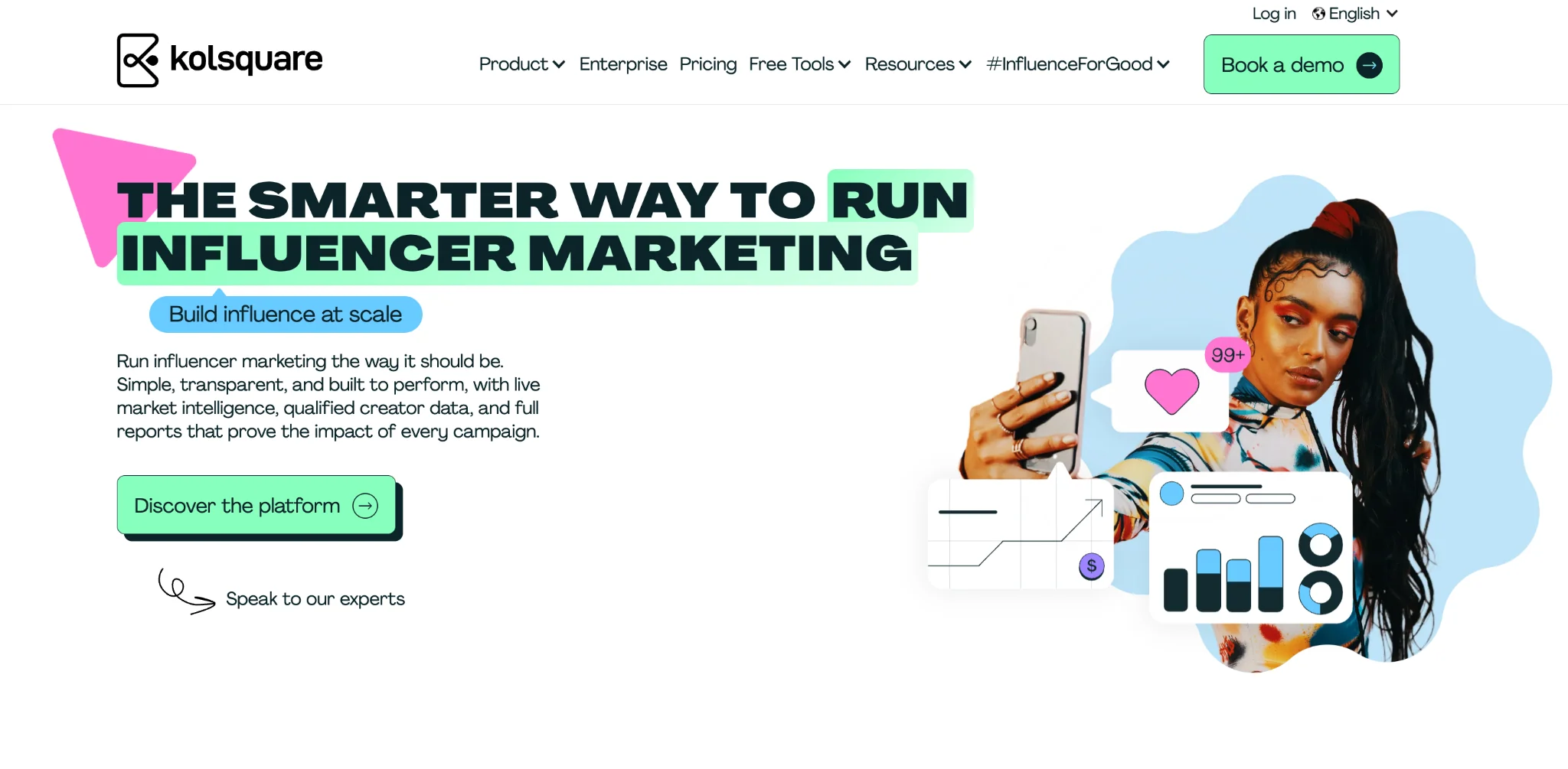
Kolsquare is the European heavyweight in this comparison, used by brands, agencies, enterprises and non-profits, with its deepest coverage across France, DACH, Southern Europe and the UK. Campaign management, CRM, discovery, automated reporting and competitive listening sit under one roof, and it takes the unglamorous questions seriously: where profile data comes from, whether disclosures hold up, how personal data is handled.
Key Features
- Credibility-Scored Search: AI search across millions of profiles in 180-plus countries, each carrying a credibility score.
- Campaign Workspace: briefs, approvals, communication and deadline tracking held together.
- Casting Through Payment: a CRM covering casting, negotiation, approvals and payments across multiple markets.
- Dashboards That Build Themselves: reach, EMV, engagement and sentiment reported live with nothing gathered by hand.
- Category Listening: a module for competitor activity and benchmarking, sold separately.
Platform Coverage
Instagram, TikTok, YouTube, Facebook, Snapchat, Twitch and X.
Pricing
- Discovery Module: database, AI search, audience insights and CRM, quoted on request.
- Listening Module: dashboards, competitive benchmarking and share of voice, also quoted.
- Enterprise: a custom scope adding payments, API access and single sign-on.
- Terms: discounted rates for qualifying startups and non-profits, with no off-the-shelf licence in any case.
Reviews
4.3/5.0 (G2)
Standout Features
- Data Through the Front Door: profile information arrives through platform APIs rather than scraping, which regulated advertisers care about.
- Built for European Rules: credibility scoring and disclosure verification designed around European advertising standards.
- Seven Networks as Standard: the coverage Linkr reserves for white label, included in the core product.
Linkr vs Kolsquare
These two sell into overlapping European markets and answer the same brief at very different weights. Kolsquare searches millions of profiles across 180-plus countries with credibility scoring attached and pulls its data through official platform APIs, which solves both of Linkr's core constraints at once — the size of the pool and how much of the reporting depends on creators supplying their own figures. Seven networks come as standard rather than as a €1,990 upgrade.
The trade is transparency and commerce. Kolsquare quotes rather than publishes, sells its listening module separately, and cannot be bought off the shelf with a seven-day trial and a monthly cancellation option. It also does not raise sample orders against live Shopify or Shopware inventory, so a brand whose program is fundamentally product seeding into a DACH store keeps something valuable by staying put.
Final Thoughts on Linkr Alternatives
Most of this list exists to solve one number. Ten thousand curated creators is enough while a program runs in Germany and Austria on three networks, and stops being enough the moment it does not. Modash and Heepsy fix that cheaply and leave the commerce loop where it is. Kolsquare and Traackr fix it at European and enterprise depth but give up published pricing to do so. Influencer Hero, GRIN and Upfluence keep the store-connected seeding and tracked revenue that made Linkr worth buying while multiplying the pool feeding it, with Shopware support the recurring casualty of a move.
The question worth answering before shortlisting is not which platform is better but whether the constraint is the roster, the reporting or the reach — because each points somewhere different.