

Launchmetrics Pricing Explained: Plans, Features & Review
Fashion, luxury, and beauty teams have a measurement problem the rest of retail does not: value shows up as a front-row placement, an editorial mention, and a celebrity carrying the bag, all at once, in ten markets. Launchmetrics built its business on putting a number on that through Media Impact Value, and wrapped it in tooling for samples, events, contacts, and media monitoring. It is a broad platform with a narrow industry focus, and only one of its four tiers has a public price. Sorting out which modules you actually need is where the budget conversation starts. In this article, we break down Launchmetrics pricing, key features, reviews, limitations, and the best Launchmetrics alternatives to consider.
Launchmetrics Pricing
Launchmetrics sells across four tiers: Starter, Pro, Premium, and Ultimate. Starter is the only one with a listed figure, beginning at 780 euros per month, and it covers core Launch features with tracking for five competitors in one country or region. Pro widens that to eight competitors and three regions and adds collaboration and customizable workflows. Premium moves up to fifteen competitors, three regions, RFID and API access, and quarterly insights. Ultimate is fully custom for enterprise deployments. Pricing beyond Starter is quoted, and the real cost depends on which modules you switch on: the Launch side covers sample management, event management, contacts, digital showrooms, and photo and video production, while the Metrics side covers brand tracking, media monitoring, and China analytics. Competitor count, market coverage, and user seats all move the number.
Free Trial
Launchmetrics does not offer a public free trial. Access starts with a demo, where the sales team scopes tiers and modules against your market coverage and competitor set. Brands that want proof before committing typically negotiate a narrower first-year scope, adding modules once the reporting has earned its place in the workflow.
Contract
Subscriptions are annual, priced by tier and by the modules included. Adding markets, competitors, or a new module mid-term is a commercial conversation rather than a toggle, so it pays to map your market coverage before signing rather than discovering the gap two quarters in.
Launchmetrics Overview
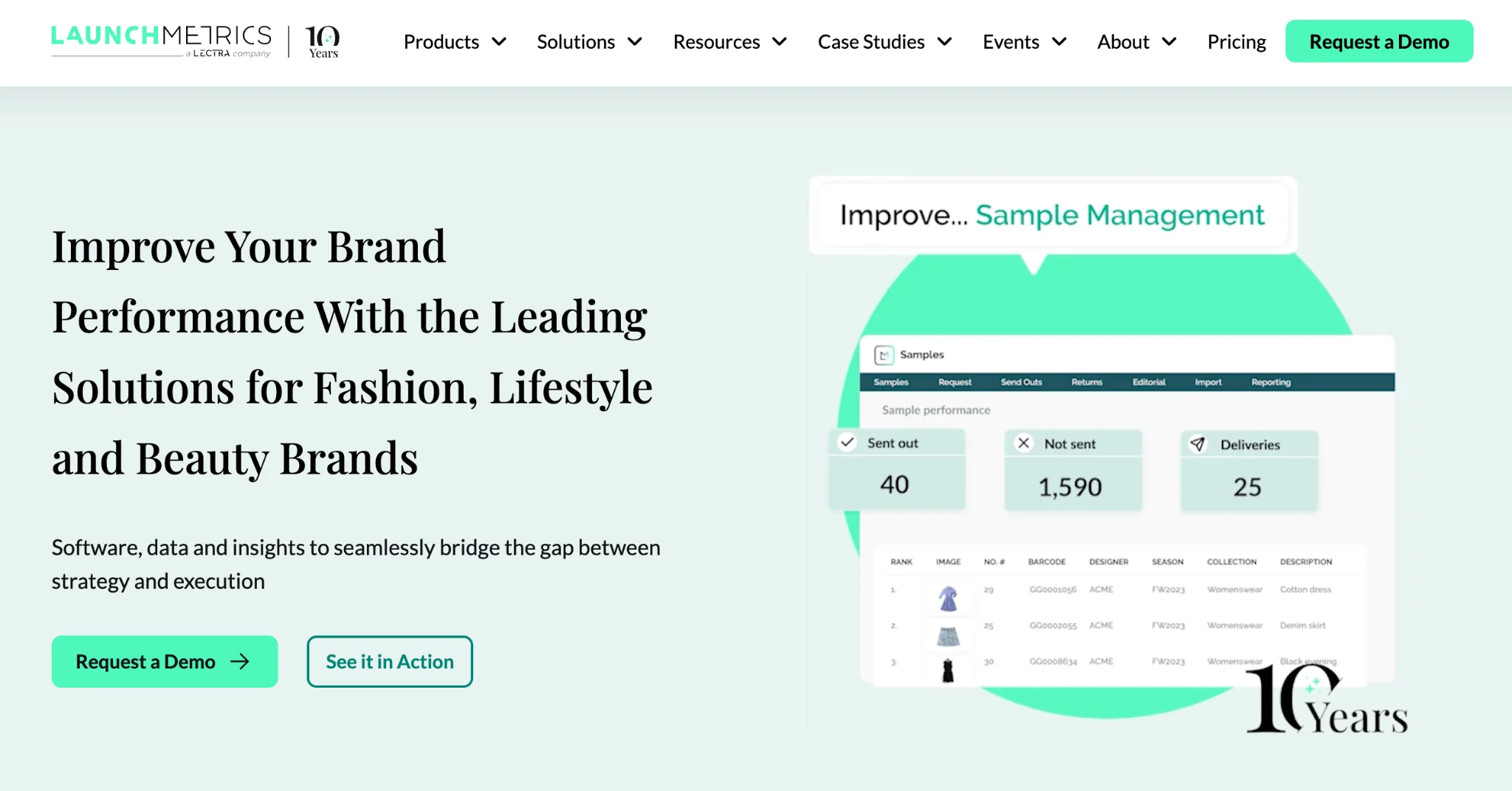
Launchmetrics is a brand performance platform built specifically for fashion, luxury, and beauty, now more than a decade into serving that market. Its best-known contribution is Media Impact Value, a proprietary metric that assigns a monetary figure to placements across print, online, and social so teams can compare a magazine feature, an influencer post, and a celebrity sighting on one scale. Around that sit two product families: Launch, which handles the operational side with sample management, event management, contact and email tools, digital showrooms, and content production, and Metrics, which covers brand tracking, media monitoring, and dedicated China analytics. The combination is why it tends to show up in PR and communications teams rather than performance marketing ones.
Key Features
Media Impact Value Measurement
MIV assigns a dollar figure to each placement across print, online, and social channels, giving teams a single currency for comparing earned media, influencer content, and celebrity moments in the same report.
Brand Tracking and Competitive Benchmarking
Brands track their own performance against a defined competitor set across chosen markets, with tier-based limits on how many competitors and regions are included, which is what makes the tiering decision consequential.
Media Monitoring
Coverage tracking across print, online, and social feeds into the same measurement framework, so PR teams do not have to reconcile a separate monitoring tool with their performance reporting.
Voices Relationship Management
Voices sits inside the contacts tool and helps teams identify influencers, press, celebrities, and partners, see the MIV and reach each one generates, and compare that against how competitors are using the same names.
Sample Management
Purpose-built sample tracking, including enterprise-scale deployments and RFID support at higher tiers, handles the logistics of moving product between showrooms, shoots, press, and talent.
Event Management
Guest lists, seating, check-in, and event workflows are covered natively, which matters for a customer base running shows, presentations, and activations on a fixed seasonal calendar.
Digital Showrooms
Virtual showrooms let brands present collections to buyers, press, and stylists remotely, cutting down on physical sample circulation and shortening the path from lookbook to request.
China Analytics
A dedicated module covers Chinese platforms and media, which is a genuine differentiator for luxury and beauty brands whose growth depends on a market most Western monitoring tools handle poorly.
Best For
Launchmetrics is built for fashion, luxury, and beauty brands and the agencies serving them, particularly communications and PR teams that need to justify earned media spend to a finance-minded leadership. It fits multi-market brands running seasonal shows, managing large sample inventories, and tracking celebrity and editorial coverage alongside influencer content. Teams outside those categories, or D2C brands whose influencer program lives and dies on affiliate revenue and conversion tracking, will find the measurement model less useful than a commerce-oriented platform.
Launchmetrics Reviews
4.6/5.0 (G2)
Launchmetrics rates well with users, who point to an intuitive core workflow, clear efficiency gains across sample and event operations, and a support team that responds quickly and resolves issues. The criticism is more specific than a general cost complaint: users describe an interface split across multiple workspaces that gets confusing, manual tagging steps that introduce errors, gaps like barcode automation, and media clippings that are occasionally out of date and undercut data accuracy. Read together, the picture is a capable platform with real operational polish in places and rough edges in others, worth pressure-testing on your own coverage during the demo.
Launchmetrics Standout Features
Media Impact Value as an Industry Standard
MIV is not just a feature, it is a shared vocabulary. Enough of the fashion and beauty industry reports in MIV that using it makes a brand's numbers legible to boards, partners, and press in a way a proprietary in-house score never is.
Voice Echo Tagging
Custom tags let teams track a specific celebrity, influencer, product, or event across all coverage, applied automatically by keyword or manually, and toggled on and off for time-boxed moments like a fashion week. It turns broad monitoring into a targeted read on what a single activation actually produced.
China Coverage as a First-Class Module
Dedicated China analytics is rare in this category and hard to replicate. For luxury and beauty brands, having that market measured on the same framework as everything else removes a persistent blind spot.
Launchmetrics Limitations
Only One Public Price
With Starter at 780 euros a month and everything above it quoted, brands cannot compare total cost without entering a sales process, and module-based pricing makes the final figure hard to predict up front.
Fragmented Interface
Users repeatedly flag the split across multiple workspaces as a source of friction, which slows onboarding and makes the platform feel heavier than the sum of its parts.
Manual Steps and Data Freshness
Manual tagging requirements introduce room for error, and reports of outdated clippings mean coverage data needs periodic sanity checks rather than blind trust.
Measurement Over Activation
Launchmetrics tells you what your earned media was worth. It is not built to run creator outreach, negotiate deals, seed product to a creator roster, or track affiliate conversions, so brands running a performance-led influencer program need a second system alongside it.


Is Launchmetrics Worth It?
For a fashion, luxury, or beauty brand with real earned media volume across multiple markets, Launchmetrics is a defensible investment: MIV gives leadership a number they can act on, and the sample, event, and showroom tooling solves operational problems generic platforms ignore. It makes less sense for brands outside those categories, teams that need transparent pricing, or programs where the point of influencer marketing is tracked revenue rather than measured visibility. If your priorities lean that way, these alternatives are worth weighing:
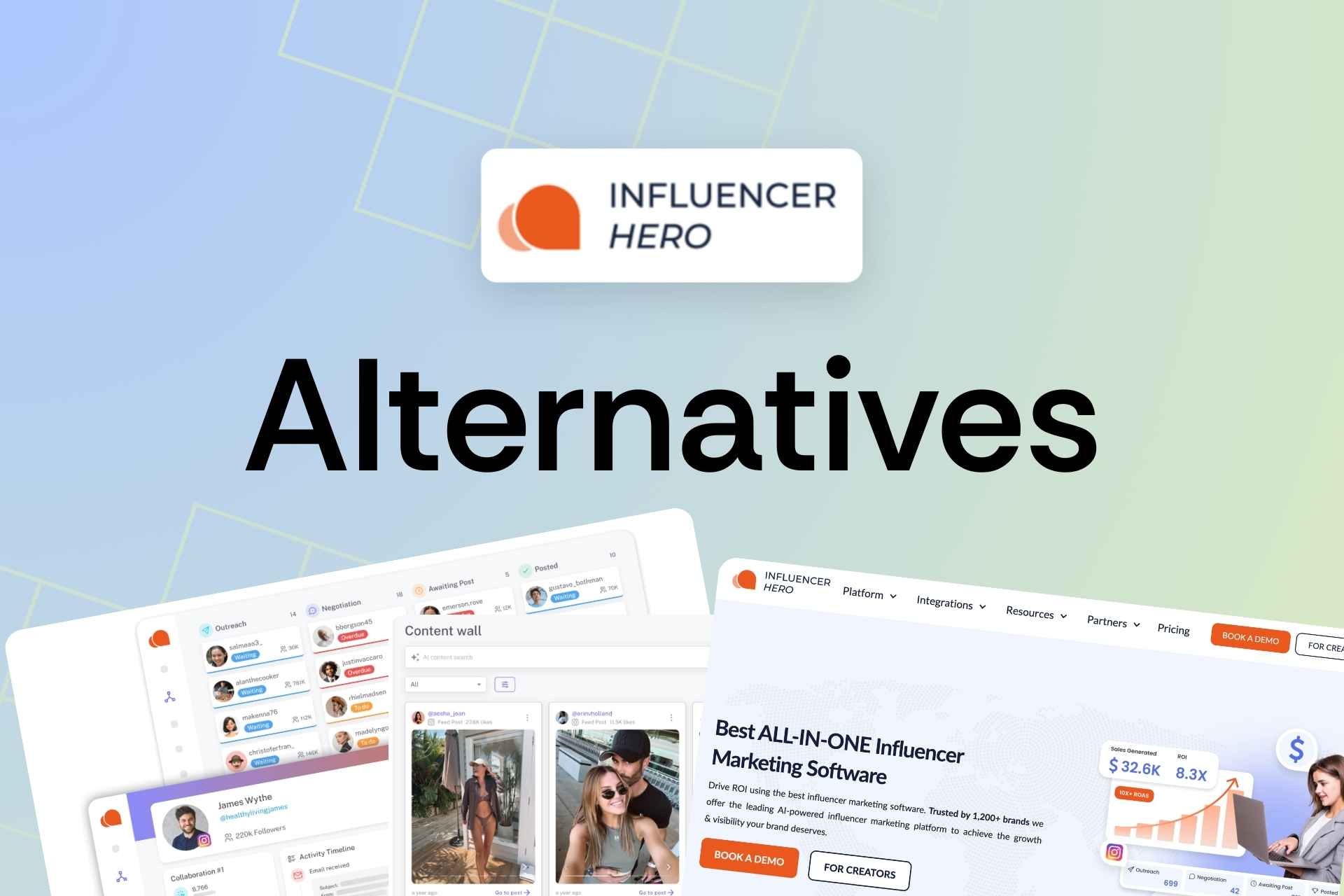
- Influencer Hero — an all-in-one platform pairing creator discovery and outreach automation with an influencer CRM, gifting, affiliate tracking, and ROI reporting on publicly listed plans.
- Afluencer — a marketplace built around brands posting collaborations and creators applying, which covers the recruitment side Launchmetrics does not touch.
- Traackr — influencer relationship management with strong data governance and cross-market program measurement for large teams.
- CreatorIQ — enterprise creator management with deep integrations, workflow controls, and program-wide analytics.
- Klear — audience insights and campaign measurement for teams that want analytics without a full enterprise rollout.
Final Thoughts
Launchmetrics occupies a specific seat: the platform fashion, luxury, and beauty communications teams use to prove what their coverage was worth and to keep samples, shows, and showrooms moving. Judge it on whether MIV changes decisions in your organization and whether the operational modules replace tools you are already paying for, because that is where the return lives. If your influencer program is measured in tracked sales rather than earned media, an activation-first platform will serve you better, and our breakdown of Onalytica pricing covers another analytics-led option in the same space. For a side-by-side view of the options above and more, browse our guide to the best Launchmetrics alternatives.