

Launchmetrics Alternatives: Best Influencer Marketing Platforms
Fashion, luxury and beauty teams report value that arrives in three shapes at once: an editorial feature, a creator post and a celebrity carrying the bag, across ten markets in the same week. Launchmetrics built a business on giving all of that one number. Media Impact Value assigns a monetary figure to each placement, and enough of the industry reports in MIV that the number travels well to a board. Around it sit the operational modules for samples, events, showrooms and media monitoring, plus a China analytics module most Western tools cannot match.
Then the tool stops. Launchmetrics measures what already happened and does not help you make more of it happen. There is no creator outreach, no deal negotiation, no seeding workflow and no affiliate tracking, so any brand running influencer marketing as a revenue channel needs a second system next to it. Only the Starter tier at 780 euros a month carries a published price, users flag a fragmented interface across workspaces, and coverage data occasionally goes stale. These ten Launchmetrics alternatives cover the ground it leaves open: Aspire, Influencer Hero, CreatorIQ, NeoReach, Afluencer, IZEA, Later, Brandbassador, Lefty and Klear.
Criteria for Suggesting Platform Alternatives
Core Features
Evaluation of each platform's essential capabilities, including influencer discovery, outreach, CRM, campaign reporting, gifting, UGC and content collection, affiliate tracking and payments, storefronts, application pages, and AI-powered tools.
Supported Social Media Platforms
Assessment of how well each platform integrates with major social networks such as Instagram, YouTube, TikTok, Facebook, Pinterest, and many more
Pricing & Contract Flexibility
Comparison of pricing models, subscription costs, and contract requirements to help brands choose solutions that match their budget and scalability needs.
Standout & Differentiating Features
Highlighting unique or innovative functionalities that set each platform apart, such as real-time tracking dashboards, creator benchmarking, TikTok email discovery, or advanced automation tools.
Customer Reviews & User Satisfaction
Analysis of verified user feedback from credible platforms like G2, TrustRadius, Capterra, focusing on usability, reliability, value for money, customer support, and real-world performance.
Launchmetrics Overview
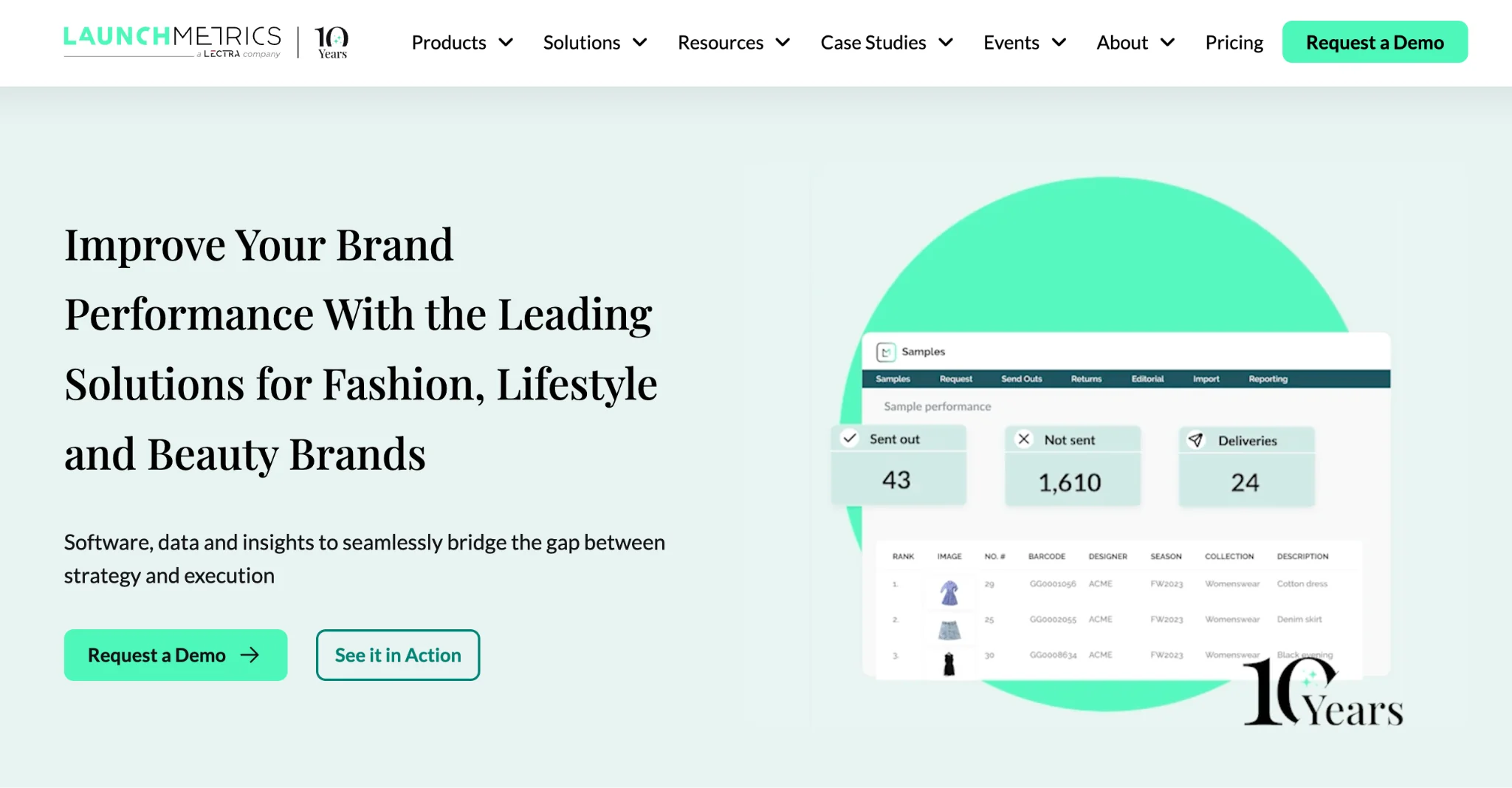
Launchmetrics is a brand performance platform built for fashion, luxury and beauty, more than a decade into serving that market. It splits into two product families: Launch, which handles samples, events, contacts, digital showrooms and content production, and Metrics, which covers brand tracking, media monitoring and China analytics. Because the value it reports is coverage rather than conversion, it usually lives with communications and PR teams instead of performance marketing ones.
Key Features
- Media Impact Value: a monetary figure applied to each placement across print, online and social, so a magazine feature and a creator post sit on one scale.
- Competitive Brand Tracking: your performance measured against a defined competitor set, with the number of rivals and regions set by your tier.
- Media Monitoring: print, online and social coverage feeding the same measurement framework, so PR does not need a separate tool.
- Voices: a contacts layer for identifying influencers, press, celebrities and partners, showing the MIV each one generates and how rivals use the same names.
- Sample Management: purpose-built tracking for product moving between showrooms, shoots, press and talent, with RFID at higher tiers.
- Event Management: guest lists, seating and check-in for brands running shows and activations on a seasonal calendar.
- Digital Showrooms: virtual collection presentations for buyers, press and stylists, cutting physical sample circulation.
- China Analytics: a dedicated module covering Chinese platforms and media on the same reporting framework.
Platform Coverage
Launchmetrics monitors print, online and social coverage rather than integrating with social networks for activation. Instagram, TikTok and other channels feed the measurement side, and the China module extends that to Chinese platforms and media.
Pricing
- Starter: from 780 euros/month for core Launch features, tracking five competitors in one country or region.
- Pro: quoted, adding collaboration and customisable workflows, eight competitors and three regions.
- Premium: quoted, adding RFID and API access, fifteen competitors, three regions and quarterly insights.
- Ultimate: fully custom for enterprise deployments across markets, modules and teams.
- Add-on modules: sample and event management, digital showrooms, content production and China analytics all quoted separately.
- Terms: annual subscriptions with no public free trial. Adding markets, competitors or modules mid-term is a commercial conversation.
Reviews
4.6/5.0 (G2)
Standout Features
- A Metric the Industry Already Speaks: MIV is reported widely enough in fashion and beauty that your numbers are legible outside your own company.
- Voice Echo Tagging: custom tags follow a celebrity, product or event across all coverage and can be switched on for a single fashion week.
- China as a First-Class Module: dedicated coverage of a market most monitoring tools handle badly.
Limitations (Why Users Look For Launchmetrics Alternatives)
It measures, it does not activate
There is no creator outreach, no negotiation, no seeding workflow and no affiliate tracking. Launchmetrics tells you what your coverage was worth. Making more of it happen requires a different platform entirely.
One published price out of four tiers
Starter is listed at 780 euros a month. Pro, Premium and Ultimate are all quoted, and because modules are priced separately, the total is hard to predict before a sales process.
The interface is split across workspaces
Users repeatedly describe moving between several workspaces as confusing. It slows onboarding and makes the platform feel heavier to operate than the individual modules suggest.
Manual steps and stale clippings
Manual tagging leaves room for error, and reviewers report clippings that are occasionally out of date. Coverage data needs periodic checking rather than being taken on trust.
Narrow outside its categories
The whole model assumes fashion, luxury or beauty with editorial and celebrity coverage worth measuring. A D2C brand whose creator program is judged on tracked sales gets very little from MIV.
10 Best Influencer Marketing Platform Alternatives:
| TOOL | REVIEWS | BEST FOR | TRIAL INFO | PRICING | ||
|---|---|---|---|---|---|---|
1 |

|
⭐ | Influencer partnerships | Book Demo | Pricing | Website |
2 |

|
⭐ | Influencer CRM & automation | Book Demo | Pricing | Website |
3 |

|
⭐ | Enterprise influencer marketing | Book Demo | Pricing | Website |
4 |

|
⭐ | Influencer campaigns & data analytics | Book Demo | Pricing | Website |
5 |

|
⭐ | Influencer marketplace campaigns | Book Demo | Pricing | Website |
6 |

|
⭐ | Influencer marketplace | Book Demo | Pricing | Website |
7 |

|
⭐ | Social media & influencer campaigns | Book Demo | Pricing | Website |
8 |

|
⭐ | Ambassador Marketing | Book Demo | Pricing | Website |
9 |
|
⭐ | Influencer analytics & discovery | Book Demo | Pricing | Website |
10 |
|
⭐ | Influencer analytics | Book Demo | Pricing | Website |
Aspire

Aspire is built on top of Shopify more thoroughly than anything else in this list. Orders, creator shop pages and conversion data all move through the store natively, and its roughly 800 customers sit mainly in beauty, apparel, food, drink and health. Its own framing is word-of-mouth commerce rather than influencer marketing.
Key Features
- Store-Native Commerce: fulfilment and conversion tracking wired directly into Shopify.
- Creator Applications: publish a brief and receive applications from an opt-in marketplace.
- Fit-Based Shortlisting: AI ranks candidates on brand alignment and prior results.
- Campaign Workflow: briefs, revisions and deliverable approvals in one thread per partnership.
- CreatorAds: usage rights requested in the platform, then content amplified through Meta.
Platform Coverage
Creators are tracked across TikTok, Instagram, Facebook, YouTube and Pinterest, with Shopify, PayPal and Klaviyo integrated on the commerce side.
Pricing
- All tiers: quote-only. There is no pricing page, and a legacy Capterra listing at $2,499 per user per month is out of date.
Reviews
4.6/5.0 (G2, 146 reviews)
Standout Features
- Shoppable Creator Pages: every partner gets a storefront tied to the store's catalogue.
- Rights Handled In-Workflow: whitelisting is part of the campaign rather than a side negotiation.
- Inbound Recruitment: creators apply, so sourcing is a shortlisting job.
Launchmetrics vs Aspire
The two answer different questions about the same money. Launchmetrics tells you a creator post was worth a certain MIV. Aspire tells you it produced a certain number of orders, because the storefront, the promo code and the conversion tracking all sit in Shopify. For a beauty brand selling directly, the second number is the one the finance team actually asks about.
Aspire also runs the activation side Launchmetrics leaves out: finding creators, briefing them, approving content and turning the best of it into paid media. What it will not do is value editorial coverage, track a celebrity sighting or manage a sample inventory through fashion week, all of which Launchmetrics handles natively. A brand with a showroom and a press office needs Launchmetrics. A brand whose growth is measured in orders needs Aspire.
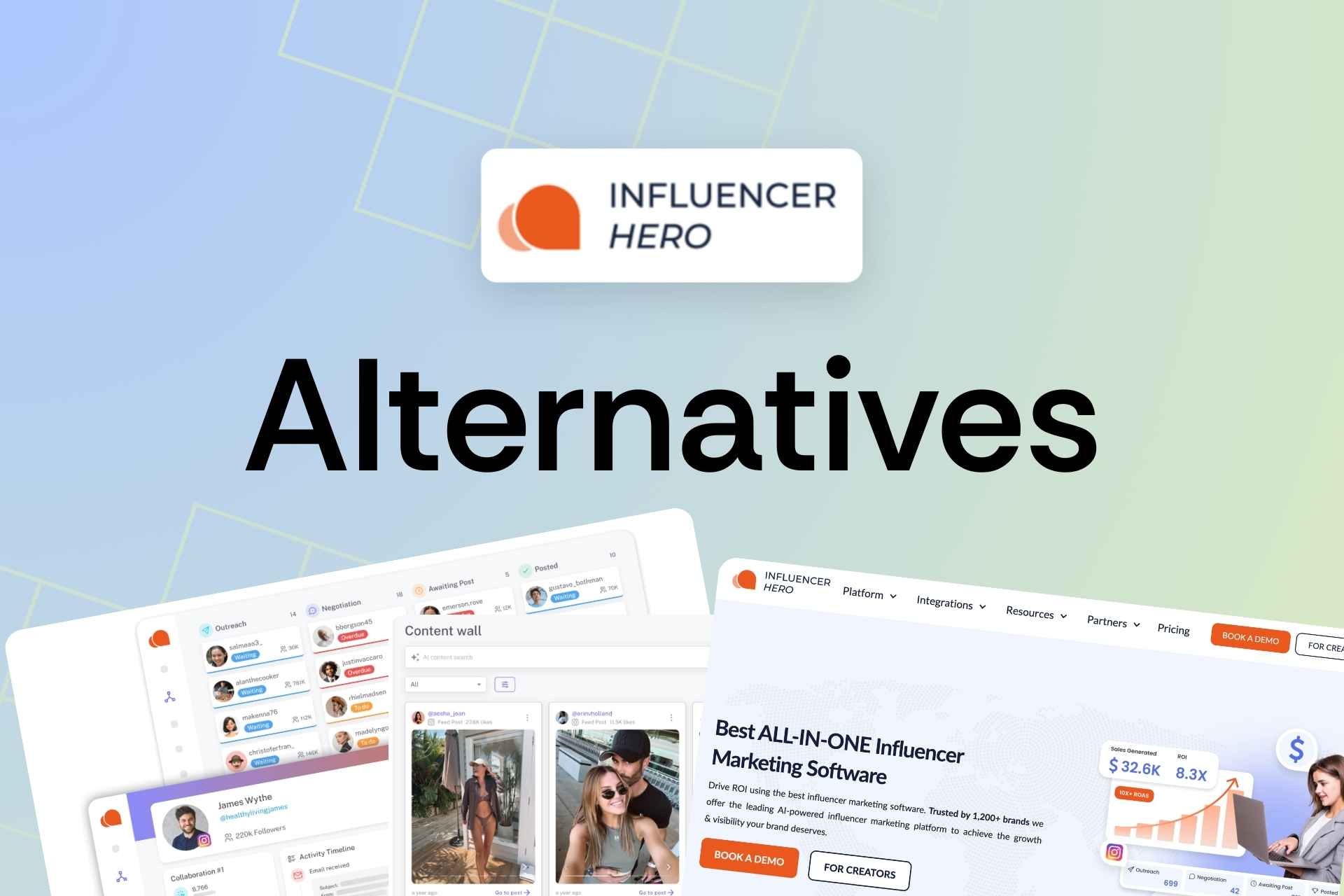
Influencer Hero

Influencer Hero runs an entire creator program from one system across eight social networks, from the first search through to the commission payment. It serves growing D2C brands and enterprise teams on the same product, and unlike most platforms at this level, it lists its prices publicly.
Key Features
- Quality-Filtered Search: location, demographics, interests, engagement and follower quality, with fake-follower detection, lookalike search and brand-follower search.
- Chrome Extension: creator metrics on screen while you browse, with one-click profile imports.
- Automated Email: bulk or one-to-one outreach with AI personalisation, drip follow-ups and reply tracking.
- CRM Boards: each creator's stage, conversation history and outstanding deliverables in a visual pipeline.
- Seeding Automation: gifting orders fulfilled through Shopify or WooCommerce with delivery tracked.
- Commission and Payouts: affiliate links and discount codes, commission calculated in-platform, payments sent automatically.
- Storefronts and Application Pages: creator storefronts plus branded application pages collecting inbound applications.
- ROI Reporting and UGC: dashboards covering clicks, affiliate sales and return per creator, with collected posts downloadable for reuse.
Platform Coverage
Eight networks are covered: Instagram, TikTok, YouTube, Facebook, Pinterest, Snapchat, X and Twitch.
Pricing
- Standard: $649/month for up to 1,000 creators and contacts.
- Pro: $1,049/month for up to 5,000.
- Business: $2,490/month for up to 10,000.
- Custom & Agency: tailored pricing for larger or multi-brand programs.
Reviews
5.0/5.0 (Capterra)
Standout Features
- Prices on the Website: four tiers listed, with quarterly and yearly discounts, no demo required to see them.
- Built for Volume: outreach, follow-ups and gifting all designed to run across hundreds of creators.
- Revenue Reported Per Creator: codes, links and payouts tie back to actual orders.
Launchmetrics vs Influencer Hero
Launchmetrics is a measurement platform with operational modules attached, and it is genuinely good at that. MIV gives a communications team a number leadership understands, sample and event management solve problems generic tools ignore, and the China module is close to unique. None of it activates a creator. There is no search, no outreach, no CRM, no seeding, no affiliate tracking and no payouts. Influencer Hero covers every one of those, across eight networks, and its campaign reporting returns clicks, affiliate sales and ROI for each individual creator rather than an estimated media value.
The pricing structures differ as much as the products. Launchmetrics lists one tier at 780 euros a month, quotes the other three, and prices the sample, event, showroom and China modules separately, so the annual total only becomes clear inside a sales process. Influencer Hero's three listed tiers run $649, $1,049 and $2,490 a month, set by how many contacts you hold, discounted 20% quarterly and 30% yearly, with the full feature set on every one. Roughly $7,800 a year at entry buys the whole workflow. Influencer Hero has no free trial and it is not the cheapest tool on this page, but it is the one you can budget for before you talk to anybody, and it replaces the activation stack a Launchmetrics deployment still needs.
CreatorIQ
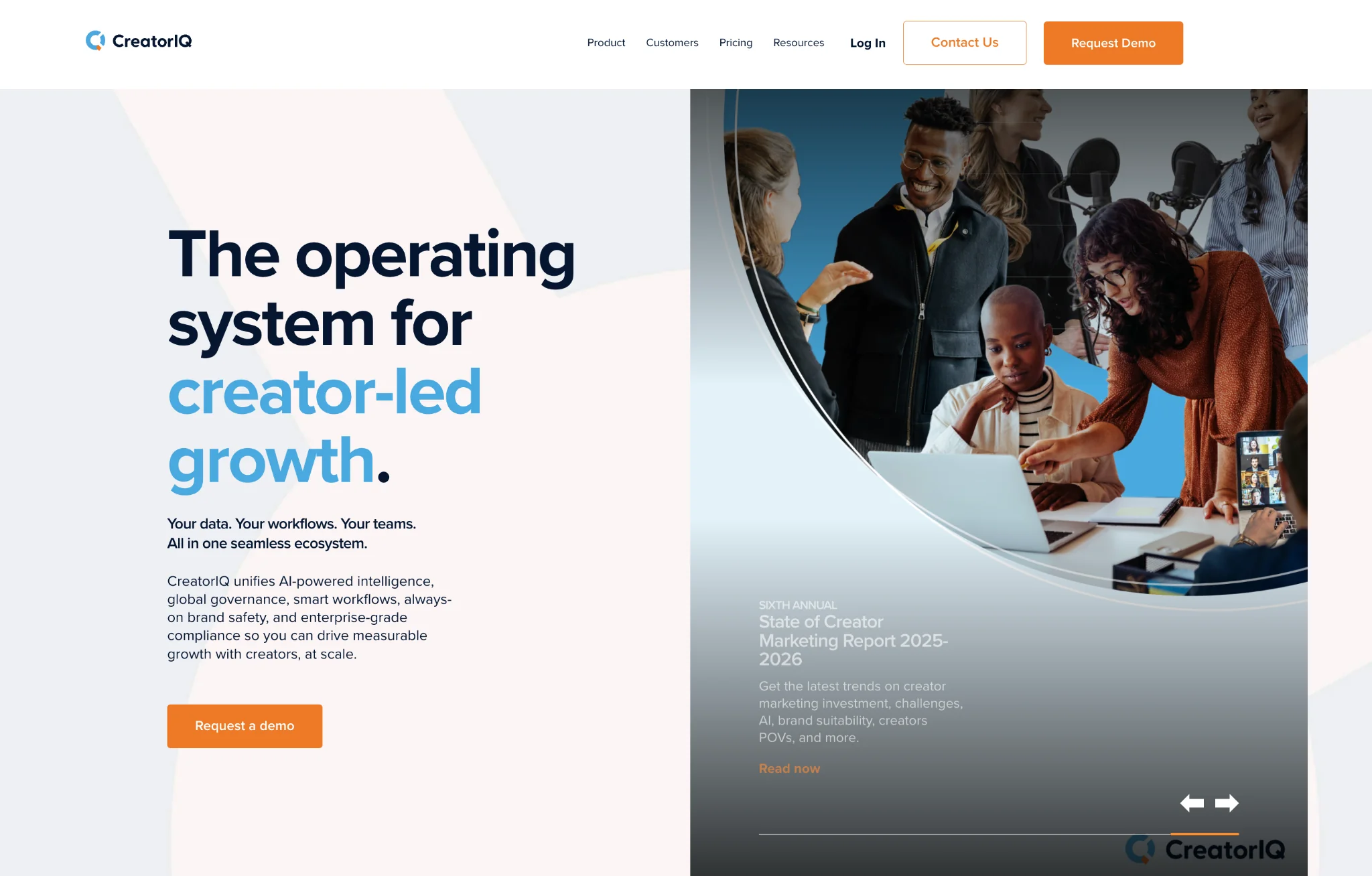
Everything in CreatorIQ reads from the Creator Graph, the profile and performance dataset the platform is built on. Discovery, measurement, benchmarking and payments all draw from it, which is what lets more than 1,300 brands and agencies run multi-brand, multi-region programs on a single source of data.
Key Features
- Creator Graph: the underlying dataset every module queries.
- SafeIQ: brand safety screening across a creator's posting history before contracting.
- BenchmarkIQ: competitive benchmarking and share-of-voice tracking against named rivals.
- CreatorIQ Pay: creator invoicing and payments processed in the platform.
- ExchangeIQ: APIs and permission controls for integrating with a wider stack.
Platform Coverage
Instagram, TikTok, YouTube, Facebook, Snapchat and Amazon are supported.
Pricing
- All tiers: quote-only, with the pricing page routing to a booked call.
Reviews
4.6/5.0 (G2, 581 reviews); 4.5/5.0 (Capterra, 17 reviews)
Standout Features
- One Dataset, Many Modules: results stay consistent because everything reads the same records.
- Screening Before Signature: reputational risk surfaces while you can still choose someone else.
- Region and Brand Separation: permissions and reporting split cleanly for large organisations.
Launchmetrics vs CreatorIQ
Competitive benchmarking exists in both, which makes the comparison unusually direct. Launchmetrics benchmarks coverage, capping the competitor count by tier at five, eight or fifteen. CreatorIQ benchmarks creator program performance and share of voice through BenchmarkIQ, without tiered limits on who you can watch. The deeper difference is that CreatorIQ then acts on what it finds: it screens creators, contracts them and pays them, none of which Launchmetrics does.
Both are enterprise buys sold through a call, though Launchmetrics at least publishes its entry tier. Its operational modules are also genuinely specialised: CreatorIQ has nothing for sample logistics, showrooms or fashion week seating, and no equivalent to the China analytics module. A luxury house running shows in four cities needs those. A brand running a global creator program with a compliance function needs CreatorIQ.
NeoReach
Casting precision is what NeoReach sells. Its team runs campaigns end to end using a proprietary index of more than 250 million creators, each profile carrying over 400 data points and searchable through more than 40 filters. Clients skew enterprise across a dozen verticals and include NVIDIA, Netflix, Walmart and Airbnb.
Key Features
- 40-Plus Filters: demographic, platform and audience filters for narrowing a cast list precisely.
- Proprietary Index: 250 million-plus creator profiles with 400-plus data points each.
- Managed Campaigns: strategy, casting, execution and reporting delivered by NeoReach staff.
- Audience Screening: fraud and brand safety checks run before outreach begins.
- Regulated Category Handling: campaign support for finance, healthcare and similar sectors.
Platform Coverage
Coverage spans TikTok, Instagram and YouTube, plus Twitch and LinkedIn, which comparable platforms seldom offer.
Pricing
- All engagements: quote-only and scoped per campaign, starting with a strategy call and a proposal in roughly ten days. An old Capterra listing at $399 per user per month reflects a retired self-serve product.
Reviews
4.5/5.0 (G2, 11 reviews). The sample is small, so read it as directional.
Standout Features
- Execution, Not Software: the deliverable is a run campaign, not a subscription to operate.
- Selection You Can Defend: 400-plus data points per creator supports precise, arguable casting.
- Gaming and B2B Access: Twitch and LinkedIn reach audiences most tools ignore.
Launchmetrics vs NeoReach
Talent identification is where these two brush against each other. Launchmetrics has Voices, which surfaces influencers, press and celebrities and shows the MIV each one generates, including for competitors. That is useful intelligence, but it stops at the insight. NeoReach takes the equivalent question and answers it operationally, casting from 250 million profiles with 40-plus filters and then actually running the campaign.
The gap in the other direction is just as wide. NeoReach has no view of editorial coverage, no sample tracking, no event tooling and no China module, so a luxury communications team would still need Launchmetrics beside it. Cost is opaque on both sides, though NeoReach's per-campaign scoping lets you start smaller than an annual Launchmetrics subscription. Use Voices to decide who matters. Use NeoReach when someone has to go and book them.
Afluencer
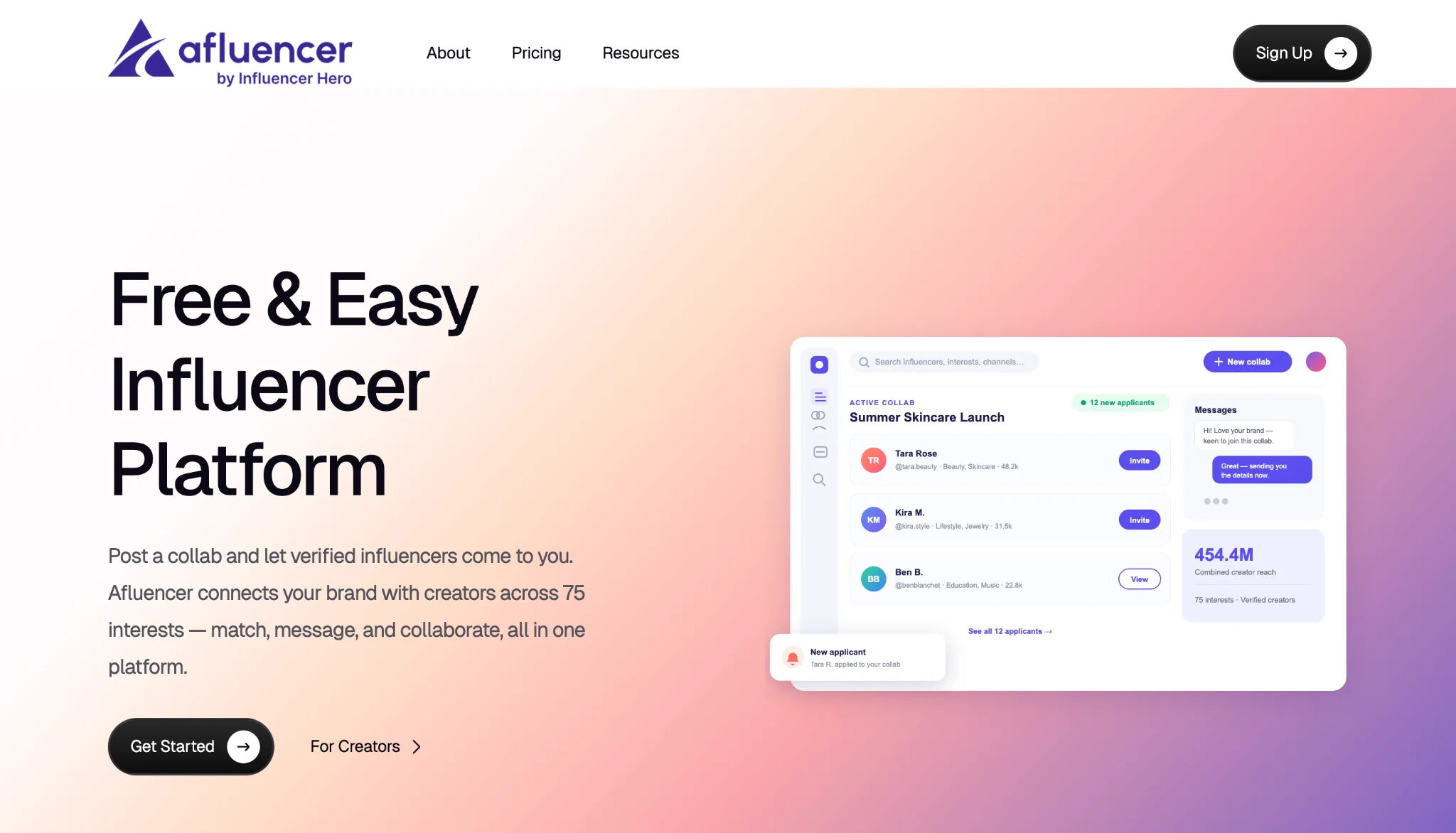
Recruitment runs inbound on Afluencer. Brands publish a collaboration, verified creators across more than 75 interest categories apply, and the shortlisting happens from there. The user base runs past 7,000 brands, weighted heavily towards SMB and DTC teams standing up a first creator program. It now sits within Influencer Hero.
Key Features
- Published Collaborations: post what you need and let creators put themselves forward.
- Verified Profiles: opt-in creators across 75-plus interest categories.
- Unified Dashboard: matching, messaging and collaboration status in one view.
- 40-Plus Integrations: Shopify, Klaviyo, Amazon and Slack among them.
- Profile Analytics: demographic and engagement data on each applicant.
Platform Coverage
Instagram, TikTok, YouTube and X are supported.
Pricing
- Marketplace: $49/month including 60 invitation credits.
- Standard: $649/month for 1,000 reach-outs, product send-outs and influencer payments.
- Pro: $1,049/month for 5,000 reach-outs, a dedicated account manager and three or more seats.
Reviews
4.6/5.0 (G2, 738 reviews). It is the largest review base here, though it includes creator-side users.
Standout Features
- $49 With the Price Published: the cheapest transparent entry point in this comparison.
- Creators Come to You: inbound applications lift response rates and cut chasing.
- Opt-In Rather Than Scraped: every listed creator chose to be there.
Launchmetrics vs Afluencer
Cost sets these two far apart before anything else. Afluencer publishes $49, $649 and $1,049 a month with no contract. Launchmetrics lists one tier at 780 euros a month, quotes the rest, prices modules separately and sells annually. For a smaller brand, that alone settles it.
What each actually does is different enough that price is almost beside the point. Afluencer recruits creators, which Launchmetrics does not attempt, and includes creator payments on its higher tiers. Launchmetrics values coverage, manages samples and events, and reports across markets, none of which Afluencer offers. A young beauty brand should start with Afluencer and worry about MIV later. An established house with a press office and a seasonal calendar will find Afluencer far too light on its own.


IZEA

IZEA's current platform is ZED, which arrived in March 2026 and superseded Flex, the product most directory listings still describe. It is built around AI assistance across the whole campaign lifecycle, and it sits alongside an open marketplace and a managed services arm inside a publicly listed company.
Key Features
- ZED Lifecycle: plan, partner, produce, publish, promote and pay as one connected flow.
- Live Analytics: creator intelligence reporting that supports optimisation while a campaign runs.
- Direct Marketplace: brands and creators match without an intermediary.
- FormAI: AI community tooling built into the marketplace.
- Managed Delivery: strategy, content studio, social commerce and performance marketing from IZEA's team.
Platform Coverage
No specific network list is published. TikTok recurs throughout its materials, with partnerships described only in general terms.
Pricing
- Free: $0 for basic marketplace membership.
- Creator Pro: $9/month, with AI tiers at $23 and $47/month.
- Marketer Pro: $129/month for brand-side marketplace access.
- Managed services: quote-only, scoped by proposal.
Reviews
3.9/5.0 (G2, 32 reviews). These sit against the legacy Flex product and may not describe ZED.
Standout Features
- Zero-Cost Entry: published plans starting free on both sides of the marketplace.
- One Company, Three Models: marketplace, software and agency from a single listed business.
- Ends in Payment: the ZED cycle closes by paying creators rather than exporting a report.
Launchmetrics vs IZEA
Speed of entry is the sharpest contrast on this page. IZEA gives you a free account, a marketplace you can browse immediately and brand-side access at $129 a month. Launchmetrics starts at 780 euros a month on an annual subscription and requires a demo for anything above Starter. A team that wants to run a creator campaign next week can do it on IZEA and cannot on Launchmetrics.
Rigour is Launchmetrics' answer. Its 4.6 rating is comfortably above IZEA's 3.9, its measurement framework is an industry reference point, and IZEA publishes no network list at all, which makes coverage impossible to verify before buying. They also barely overlap: IZEA activates creators and pays them, Launchmetrics values coverage and moves samples. Plenty of brands would get more from running both than from choosing.
Later
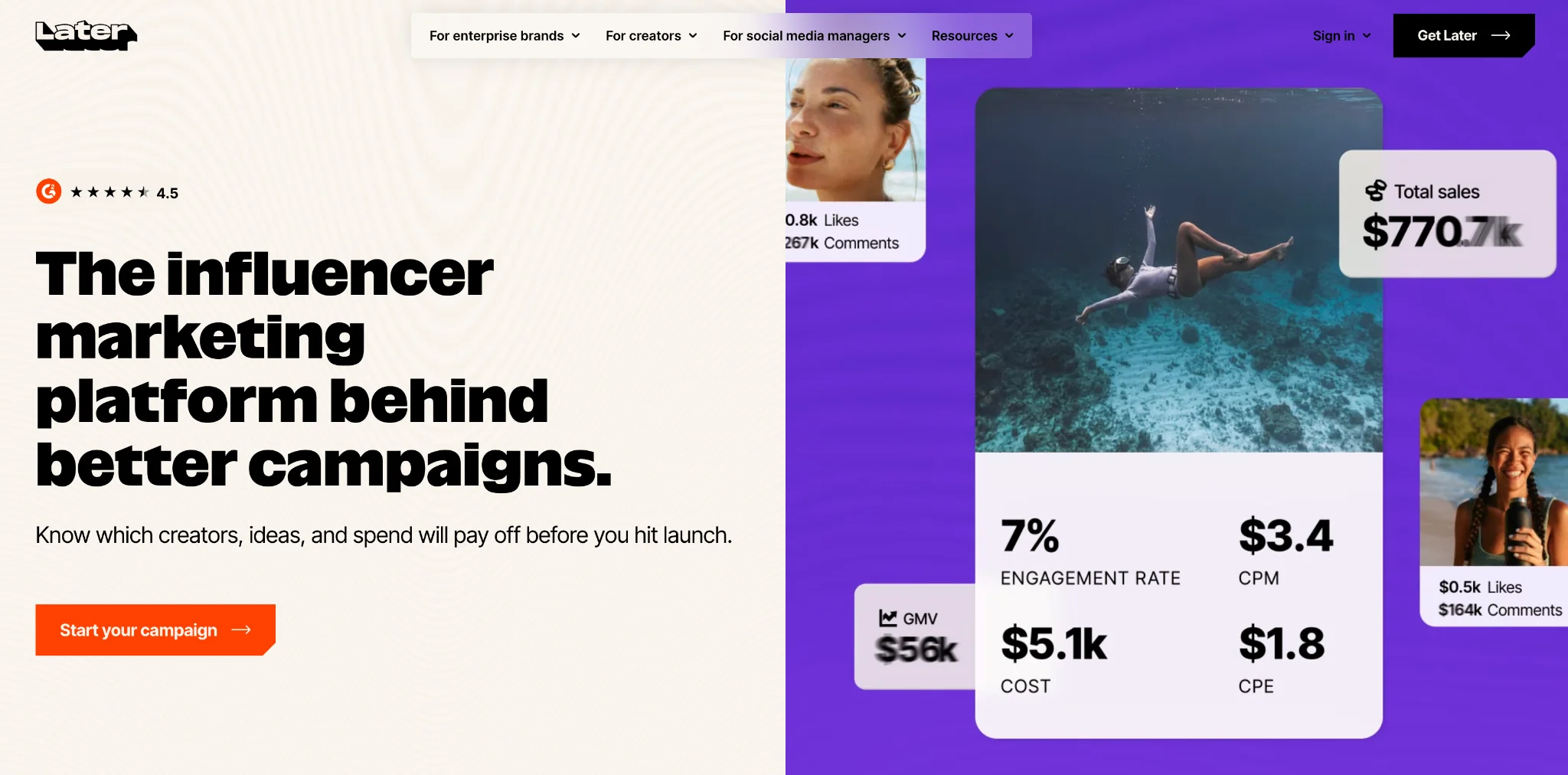
Measurement is where Later Influence puts its weight, pulling paid, organic and sales metrics into one reporting view and adding forecasting on top. Formerly Mavrck, it is an enterprise platform used by Wayfair, Nike, Southwest, Unilever and Chewy, sold separately from the similarly named social scheduling product.
Key Features
- Unified Reporting: paid, organic and sales performance in a single view.
- EdgeAI: predicts campaign outcomes from historical data before budget is approved.
- Incentive Advisor: channel-level benchmarks for what creators typically get paid.
- 20 Million Creator Search: brand-signal filtering with risk indicators surfaced early.
- Overlap Detection: identifies shortlisted creators with duplicate followings and suggests where budget should go.
Platform Coverage
Later Influence does not publish a network list. Instagram and TikTok run through all of its material. The scheduling product that shares the brand name supports the major networks and is sold on its own terms.
Pricing
- Later Influence: quote-only, through a booked strategy call.
- Social media management (separate product): Starter $18.75/month, Growth $37.50/month, Scale $82.50/month, billed annually.
Reviews
4.5/5.0 (G2, 469 reviews); 4.6/5.0 (Capterra, 135 reviews under the legacy Mavrck listing)
Standout Features
- Prediction Before Spend: EdgeAI models the outcome while the plan can still change.
- Evidence-Based Rates: benchmarks replace guesswork in creator negotiations.
- Self-Serve or Managed: the same platform works either way.
Launchmetrics vs Later
Both sell measurement to teams that must justify spend, so this is the closest comparison in the list. Launchmetrics looks backwards with authority, converting coverage into MIV that the fashion industry already accepts. Later looks forward, forecasting campaign results with EdgeAI, benchmarking creator rates before you negotiate and flagging duplicate audiences on a shortlist. It also unifies paid, organic and sales numbers, which Launchmetrics does not attempt because it does not see the sales.
Later's other advantage is that it activates. A search across 20 million creators and a full campaign workflow sit behind the reporting. Launchmetrics keeps the operational depth for a specific industry, with samples, showrooms, events and the China module, plus one published tier against Later's quote-only enterprise pricing. Communications teams stay with Launchmetrics. Teams whose creator work is judged on outcomes will get more from Later.
Brandbassador (Club)
Missions are the mechanic behind Brandbassador, which trades as Club these days and answers at club.co rather than its old domain. Ambassadors recruited from a brand's own customer base complete tasks through a white-labelled app and earn rewards, calculated and paid automatically. Samsung, Celsius, Daniel Wellington and Fabletics are among its users.
Key Features
- Mission Templates: more than 100 prebuilt tasks ambassadors complete for rewards.
- Reward Automation: commission calculated and paid with no manual reconciliation.
- Branded App: a white-labelled mobile and web portal for the community.
- Community Segments: target and notify specific ambassador groups.
- Content and Reviews: UGC collection and review generation with a Shopify connection.
Platform Coverage
Posting missions reference Instagram and TikTok. The vendor names no other networks.
Pricing
- Club Hub, Club Suite and Club Universe: all quote-only, scaling with active ambassadors and missions run.
Reviews
4.7/5.0 (G2, 107 reviews, listed as Club formerly Brandbassador). It is the strongest score in this comparison on a credible sample.
Standout Features
- Repeatable Activation: the template library makes running a large community routine.
- Community Under Your Brand: ambassadors see your identity, not the vendor's.
- Sourced From Customers: the roster begins with people who already bought.
Launchmetrics vs Brandbassador
Scale of audience is the split. Launchmetrics is built around a small number of high-value voices: an editor, a celebrity, a top-tier creator, each placement valued individually in MIV. Brandbassador works at the opposite end, activating thousands of ordinary customers through gamified missions and paying each of them a small automatic reward. One counts prestige, the other counts volume.
Brandbassador also handles the money, calculating and paying commission, which Launchmetrics never touches. Against that, Brandbassador is quote-only with cost rising by active ambassador count, and it offers no measurement of editorial or celebrity coverage at all. A luxury brand whose value sits in press and celebrity placement gets nothing from missions. A consumer brand with a large, enthusiastic customer base gets far more from Brandbassador than from a coverage report.
Lefty
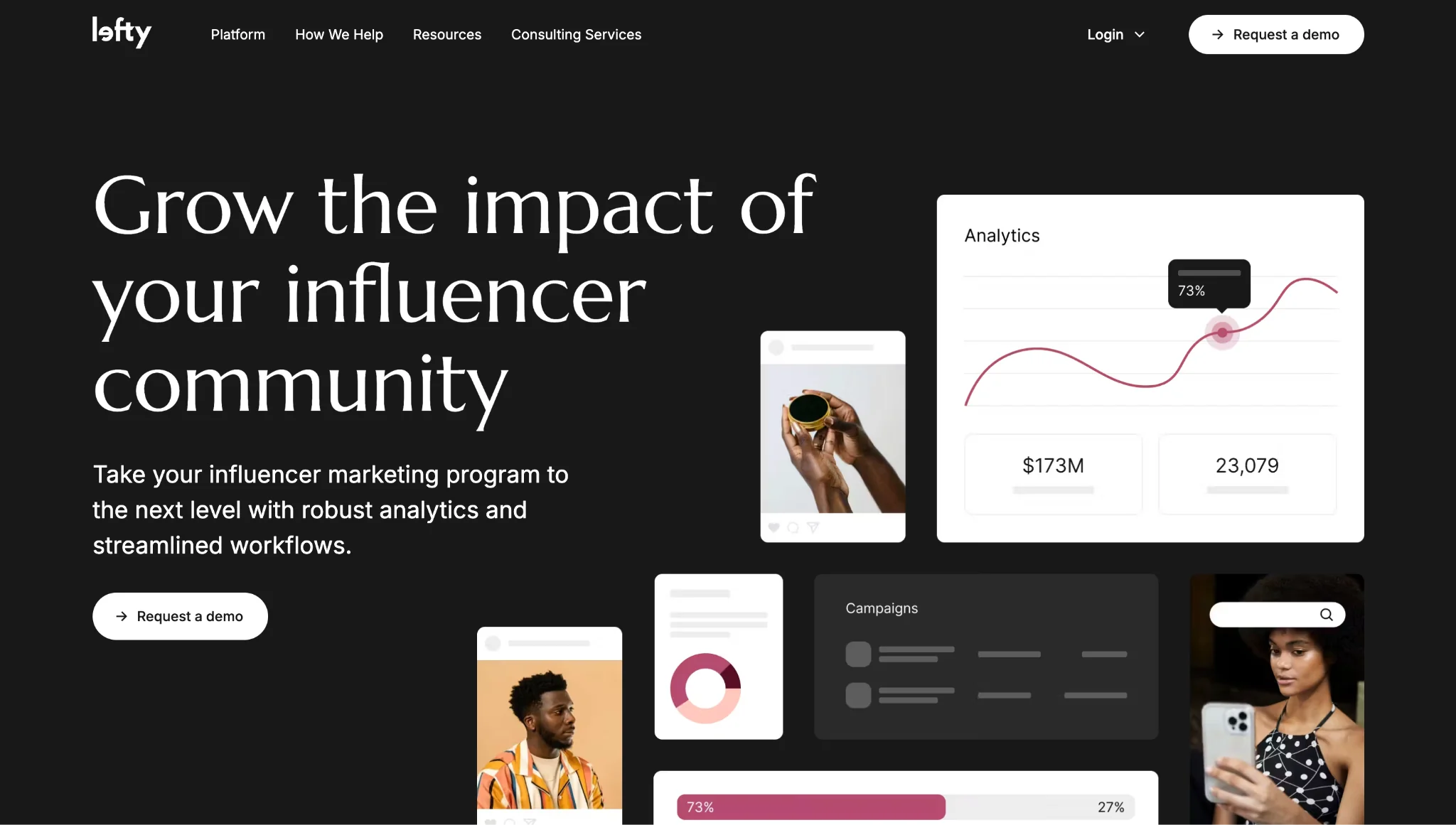
Weibo, Douyin and Red sit in Lefty's network list alongside the Western platforms, which is the clearest signal of who it serves. Luxury, fashion and beauty are where the company grew up, with Louis Vuitton, Tommy Hilfiger, Ralph Lauren and Guerlain on the client list, and analytics carry more weight in the product than affiliate mechanics.
Key Features
- Vetted Discovery: more than 30 million curated profiles rather than an open signup pool.
- Collaborative Casting: a CRM where a team shortlists and comments on the same campaign.
- Competitor Analytics: performance compared against direct rivals in the category.
- Gifting Workflows: seeding built for programs sending product to many creators at once.
- Affiliation: affiliate tracking is live, with creator payments still listed as forthcoming.
Platform Coverage
Lefty covers Instagram, TikTok, X, YouTube, Snapchat, Weibo, Douyin and Red.
Pricing
- All plans: quote-only, by demo request, with no published figures.
Reviews
4.7/5.0 (G2, 92 reviews)
Standout Features
- Mainland China Networks: Weibo, Douyin and Red coverage almost no Western competitor matches.
- Luxury-Native Casting: built for categories where brand fit outweighs raw reach.
- Share of Voice: benchmarking against rivals rather than internal history alone.
Launchmetrics vs Lefty
These two chase the same buyer, and the client lists prove it. Both serve luxury, fashion and beauty, and both treat China as a priority rather than an afterthought. The difference is what happens after the analysis. Lefty puts 30 million vetted profiles behind collaborative casting and runs gifting programs at scale, so a team can go from insight to a seeded creator inside the same tool. Launchmetrics identifies the right voices through Voices, then hands you back to your inbox.
Launchmetrics is stronger on everything outside creator work. Editorial and celebrity coverage, sample logistics, showrooms, fashion week seating and MIV as a shared industry currency have no Lefty equivalent. Lefty also quotes every plan privately, and creator payments remain a roadmap item rather than a shipped feature. Run Launchmetrics if the deliverable is a coverage report the board understands. Run Lefty if the deliverable is a campaign.
Klear

Klear reports earned media value across more than 190 countries, which puts it in direct conversation with anything measuring coverage globally. It no longer exists as a standalone brand, having become the influencer module inside Meltwater's media, social and consumer intelligence suite.
Key Features
- Global EMV: earned media value and ROI reporting across 190-plus countries.
- True Reach: reach recalculated with fraudulent and suspicious followers removed.
- AI Discovery: more than 30 million profiles, with search tuned to your brand over time.
- Approvals and Payments: content sign-off workflows and creator payment processing.
- Code-Level Attribution: Shopify and WooCommerce conversions tracked through unique discount codes.
Platform Coverage
No current network list is published for the module, so coverage is worth pinning down during the demo.
Pricing
- All plans: quote-only, by demo request, with no published figures.
Reviews
4.3/5.0 (Capterra, 13 reviews). These predate the Meltwater consolidation, so no current standalone rating exists.
Standout Features
- Fraud-Adjusted Reach: inflated followers removed before the figure reaches a report.
- Creator Work Beside PR: the influencer module sits in the same suite as media monitoring.
- 190-Plus Countries: multi-language search and reporting at genuine global scale.
Launchmetrics vs Klear
Two monetary metrics, one argument. Launchmetrics reports MIV, and its strength is adoption: enough of the fashion and beauty industry uses it that the number needs no explanation. Klear reports EMV across 190-plus countries inside a suite that also covers media monitoring and consumer conversation. On measurement alone they are close, and the choice usually comes down to which suite your PR team already owns.
Klear pulls ahead on everything adjacent. Discovery runs across 30 million profiles, True Reach cleans up the audience numbers, payments are processed in-platform, and discount codes tie orders back on Shopify and WooCommerce. Launchmetrics does none of that but holds the operational modules Klear has never attempted, from sample management to showrooms to fashion week logistics. Klear is also fully quote-only with no current public rating, while Launchmetrics at least publishes one tier and holds a solid 4.6.
Final Thoughts on Launchmetrics Alternatives
Be honest about what the number is for. If it exists to prove to leadership that the coverage was worth the spend, Launchmetrics does that better than anything here, and Klear is the main rival worth a look because EMV across 190 countries sits inside a suite your PR team may already pay for. If the number is supposed to guide the next campaign rather than close out the last one, Later forecasts outcomes and benchmarks rates before the money goes out. And if the real problem is that nothing in Launchmetrics actually activates a creator, that is a different purchase entirely: Influencer Hero runs search, outreach, seeding, affiliate codes and payouts on plans you can read on the website, Aspire does the commerce version for Shopify brands, and Afluencer fills a roster from $49 a month.