

Joinbrands Alternatives: Best Influencer Marketing Platforms
Managing influencer campaigns today requires more than spreadsheets and manual outreach, especially as brands scale across multiple creators and channels. Influencer marketing software helps centralize creator discovery, automate outreach, manage campaigns, and track performance metrics like engagement, conversions, and ROI—making it a core part of modern marketing stacks for DTC teams and agencies. Joinbrands is one of the platforms that simplifies creator collaborations, particularly for product seeding and UGC campaigns, but as teams grow, many start evaluating Joinbrands alternatives that offer deeper analytics, CRM capabilities, and end-to-end workflow management.
Based on user feedback across platforms and and marketing communities, common limitations of Joinbrands include limited campaign customization and reporting depth, making it harder to track ROI beyond basic metrics; a marketplace-driven model that restricts control over outreach and relationship management compared to full CRM platforms; and scalability constraints for teams managing larger or more complex influencer programs. These gaps often push marketers to explore more advanced influencer marketing software that supports multi-channel campaigns, automation, and detailed performance tracking. In this article, we’ll compare the 10 best Joinbrands alternatives—GRIN, Influencer Hero, Aspire, SARAL, Influencity, NeoReach, Heepsy, Skeepers, Upfluence, and Traackr—to help you find the right fit for your needs.
Criteria for Suggesting Platform Alternatives:
- Core Features
Evaluation of each platform’s essential capabilities, including influencer discovery, outreach, CRM, campaign reporting, gifting, UGC and content collection, affiliate tracking and payments, storefronts, application pages, and AI-powered tools. - Supported Social Media Platforms
Assessment of how well each platform integrates with major social networks such as Instagram, YouTube, TikTok, Facebook, Pinterest, and many more - Pricing & Contract Flexibility
Comparison of pricing models, subscription costs, and contract requirements to help brands choose solutions that match their budget and scalability needs. - Standout & Differentiating Features
Highlighting unique or innovative functionalities that set each platform apart, such as real-time tracking dashboards, creator benchmarking, TikTok email discovery, or advanced automation tools. - Customer Reviews & User Satisfaction
Analysis of verified user feedback from credible platforms like G2, TrustRadius, Capterra, focusing on usability, reliability, value for money, customer support, and real-world performance.
Joinbrands Overview
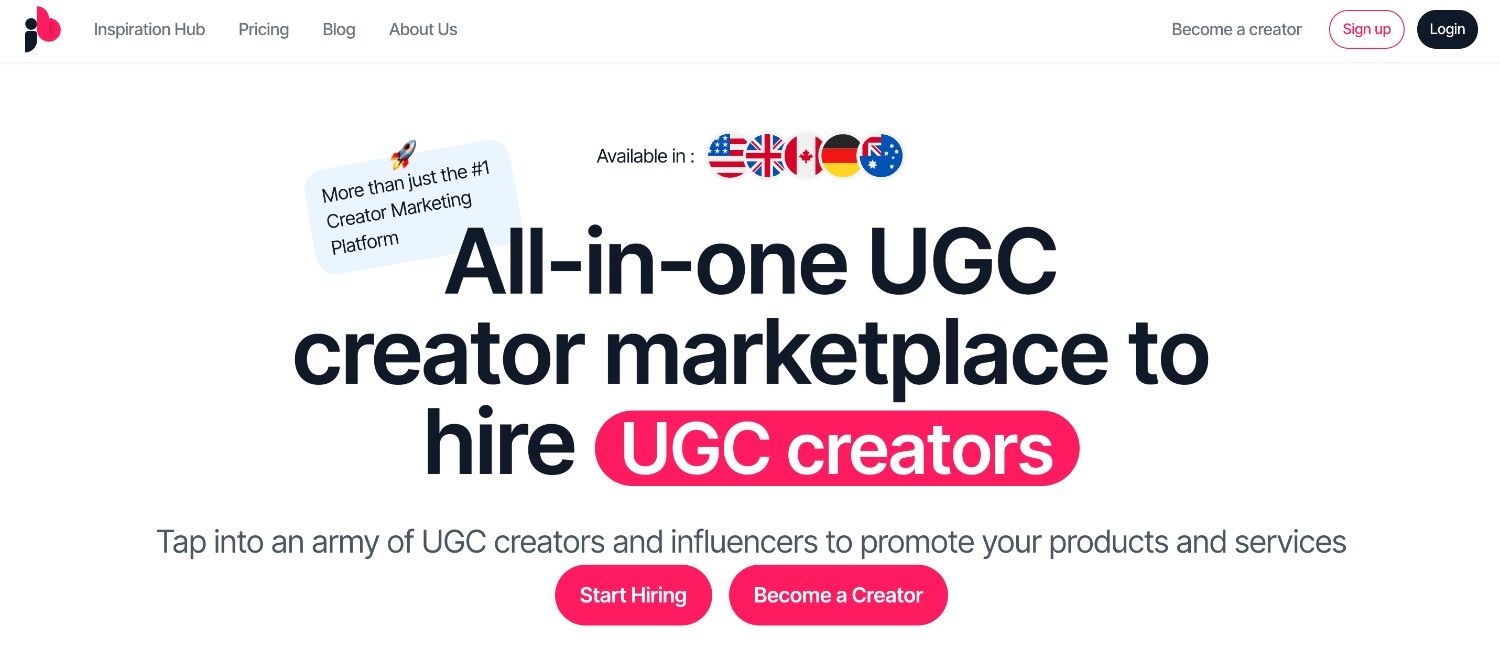
Joinbrands is a creator marketplace and influencer marketing platform built for brands that want to source UGC, recruit influencers, and run product-led creator campaigns from one place. The platform positions itself as an all-in-one system for content creation and product launches, with access to 250K+ UGC creators, 100K+ TikTok Shop affiliates, and 10K+ influencers, plus workflows for campaign setup, creator communication, approvals, and paid media usage rights.
Key Features
- Creator marketplace and discovery: Joinbrands gives brands access to a large creator pool spanning UGC creators, influencers, and TikTok Shop affiliates, with creator filters, portfolios, favorites, and invites to help narrow down the right fit for each brief.
- Multiple campaign types: Brands can run content-only campaigns, content-plus-posting campaigns, retainers, social blasts, live campaigns, and local jobs, which makes the platform usable for both one-off UGC production and ongoing creator programs.
- Broad content format support: The platform supports UGC images, UGC videos, TikTok videos, TikTok Shop videos, Amazon shoppable videos, Instagram Reels, YouTube Shorts, YouTube videos, B-rolls, and TikTok Shop Live content.
- Built-in creator communication: Once a creator accepts a job, brands can message them directly inside the platform to clarify briefs, share references, coordinate deadlines, and manage feedback without moving conversations to email.
- Content review and revision workflow: Joinbrands includes revision requests by plan, deadline extensions on higher tiers, and a reject-content workflow so brands can send content back with feedback before approving final assets.
- Product seeding and shipping options: Brands can choose reimbursement, ship products themselves, or run digital campaigns with no shipping required, which makes the platform flexible for physical products and digital offers.
- Paid media enablement: Joinbrands includes TikTok Spark Ad codes and Instagram Partnership Ad codes for relevant campaigns, allowing brands to turn creator posts into paid ads with social proof already attached.
- TikTok Shop outreach tools: Paid plans include access to TikTok Shop Outreach Agents, unlimited daily outreach, targeted collaboration messages, product cards, automated follow-ups, and creator contact data such as email and phone retrieval on higher tiers.
- Campaign analytics: Joinbrands has campaign analytics for TikTok and TikTok Shop content, including views, likes, and re-shares from the dashboard, with expanded analytics available on higher plans.
- Team and agency features: Higher tiers add multiple team seats, Slack priority support, custom watermarks, white-label shareable links, and custom domain or subdomain support for agencies or multi-brand operators.
Platform Coverage
TikTok, Instagram, YouTube.
Pricing
Joinbrands offers four self-serve plans with both monthly billing and annual billing at 10% off. The Free plan has no subscription fee and a 15% platform fee; Start-up costs $99/month with a 12% platform fee and $30/month in Roll Over Cash credits; Pro costs $299/month with a 10% platform fee and $90/month in credits; and Max costs $499/month with an 8% platform fee and $150/month in credits. Monthly plans do not have lock-in contracts, and pricing for deliverables starts at $10+ for UGC images, $25+ for most video formats, and $1/min for TikTok Shop Live.
Reviews
4.8 / 5.0 (G2)
Joinbrands Standout Features
- Built-in TikTok & TikTok Shop analytics: Joinbrands recently introduced native TikTok and TikTok Shop campaign analytics, letting brands track views, likes, and re-shares directly in-platform instead of relying only on manual creator reporting.
- TikTok Shop Live campaign support: The platform now supports TikTok Shop Live collaborations, giving brands a way to work with creators on real-time, shoppable livestreams designed to drive both awareness and conversion.
- AI video job workflow: Joinbrands has rolled out AI video jobs and AI video certification, which helps brands source AI-assisted creative formats for concept testing, scalable content production, and performance-focused campaigns.
Limitations (Why People Look for Joinbrands Alternatives)
Costs can rise quickly at scale
While the entry point is accessible, some users find that platform fees, creator fees, and subscription upgrades add up once they begin running campaigns at higher volume.
Approval flow can slow campaigns down
Some users report that campaign approvals and content workflows can move slower than expected, which can create delays when brands need fast turnaround.
Revision flexibility is limited on lower plans
Brands on lower tiers get fewer revision requests, and the reject-content workflow is restricted unless they upgrade, which can be a drawback for teams that want tighter creative control.
Marketplace model still carries creator execution risk
Even with timelines and in-platform support, some users say creator responsiveness can be inconsistent, and if a product has already been shipped, a failed collaboration can still create wasted cost and lost time.
10 Best Influencer Marketing Platform Alternatives:
| TOOL | REVIEWS | BEST FOR | TRIAL INFO | PRICING | ||
|---|---|---|---|---|---|---|
1 |

|
⭐ | DTC creator management | Book Demo | Pricing | Website |
2 |

|
⭐ | Influencer CRM & automation | Book Demo | Pricing | Website |
3 |

|
⭐ | Influencer partnerships | Book Demo | Pricing | Website |
4 |

|
⭐ | Influencer outreach | Book Demo | Pricing | Website |
5 |

|
⭐ | Campaign management | Book Demo | Pricing | Website |
6 |

|
⭐ | Influencer campaigns & data analytics | Book Demo | Pricing | Website |
7 |

|
⭐ | Influencer discovery | Book Demo | Pricing | Website |
8 |

|
⭐ | Influencer gifting & UGC campaigns with micro-influencers | Book Demo | Pricing | Website |
9 |

|
⭐ | Ecommerce influencer discovery | Book Demo | Pricing | Website |
10 |

|
⭐ | Enterprise influencer analytics | Book Demo | Pricing | Website |
1. GRIN
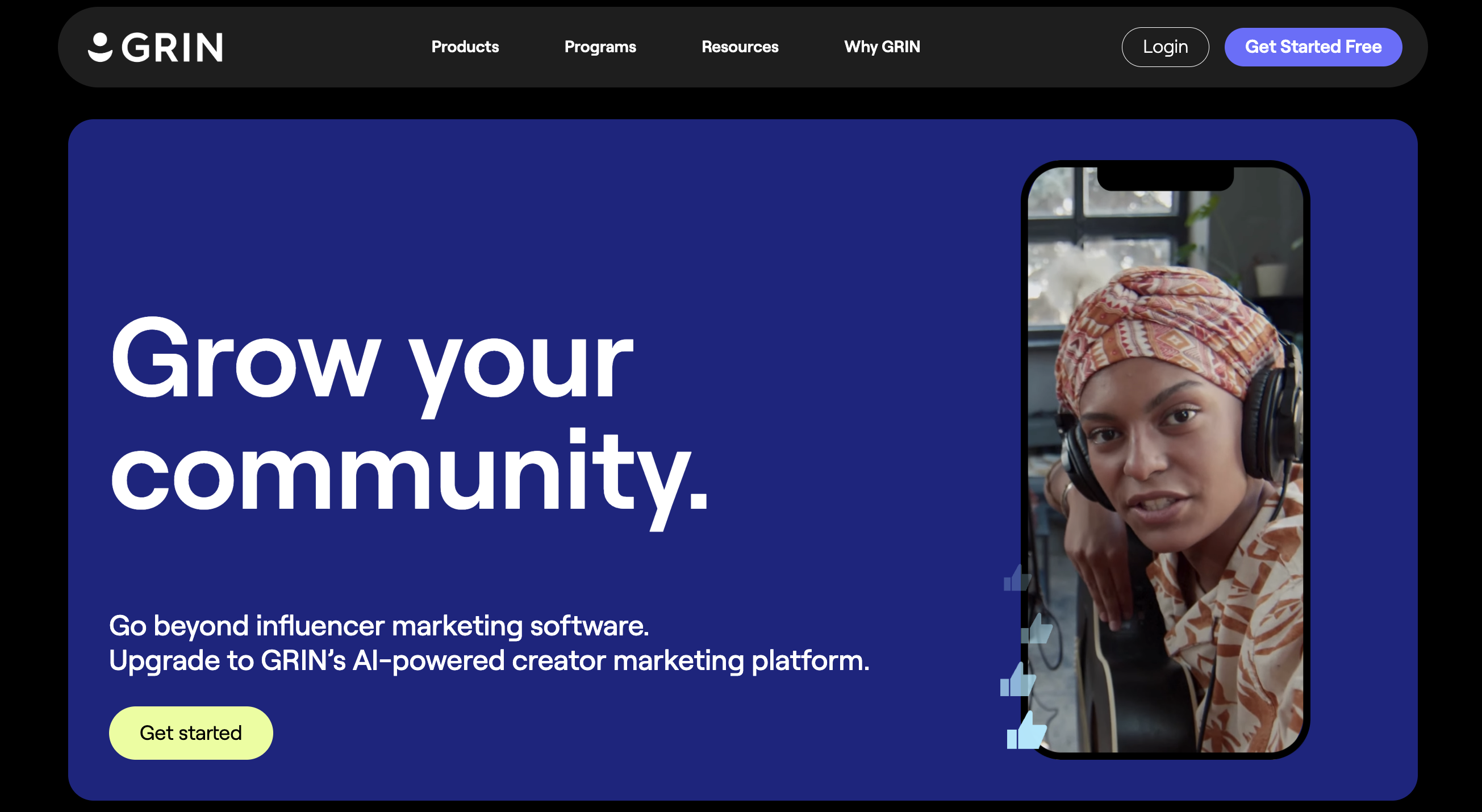
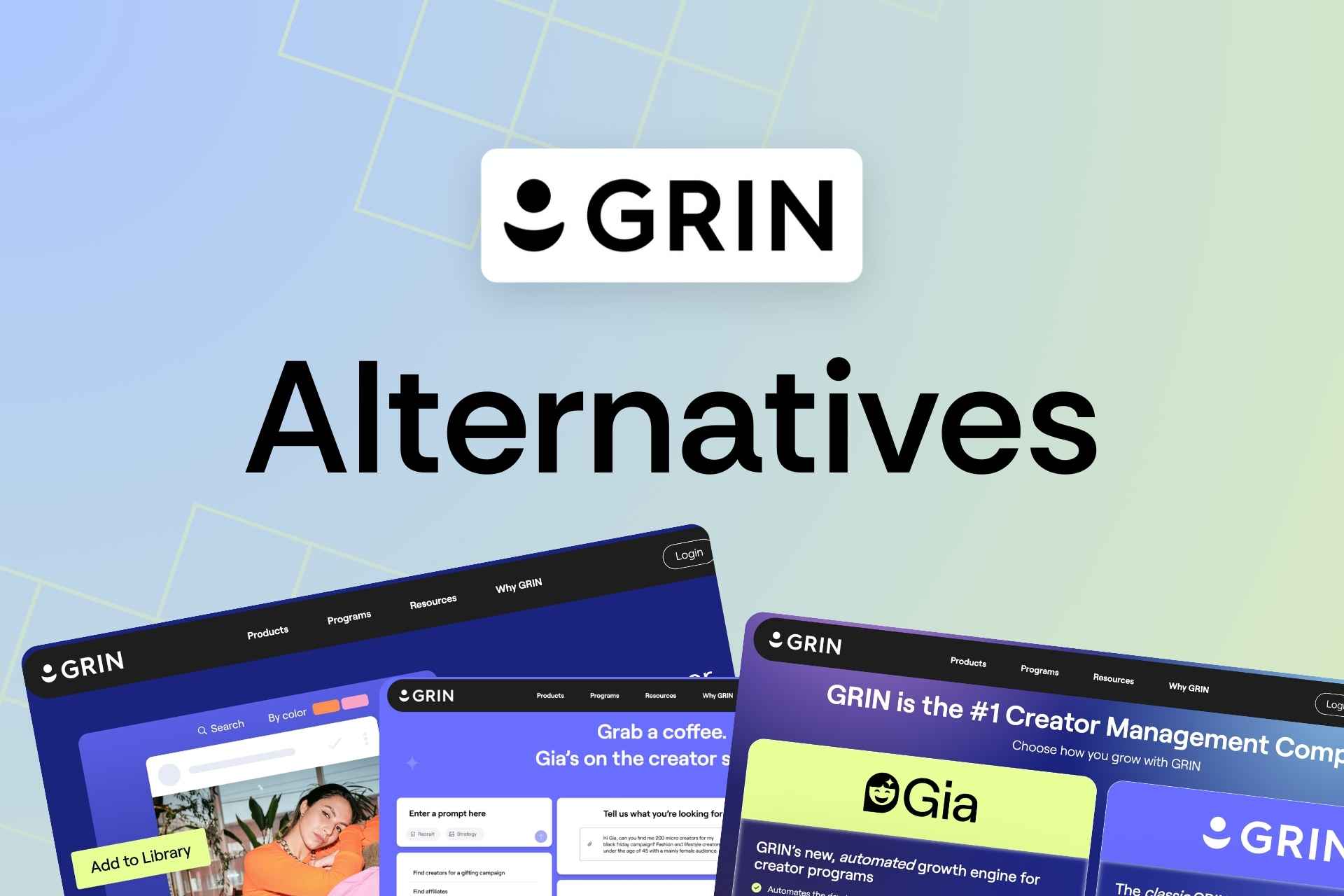
GRIN is a creator management platform built primarily for DTC and eCommerce brands that want to run influencer marketing, gifting, affiliate tracking, creator payments, and content management in one system. The company now positions its product around two paths: traditional hands-on workflow management through the GRIN platform, or AI-assisted execution through Gia, its newer creator marketing agent.
Key Features
- Influencer discovery and vetting: GRIN helps teams find creators by niche, audience fit, engagement, and brand affinity, then move them directly into outreach and campaign workflows without juggling separate tools.
- Built-in outreach and communication: Brands can run outreach from connected email accounts, track opens and replies, and keep creator conversations tied to campaign records.
- Creator CRM and workflows: GRIN’s CRM supports tagging, notes, statuses, deliverables, and creator portals so teams can manage relationships beyond one-off campaigns.
- Product seeding and gifting: GRIN is especially strong for product-heavy programs, with native eCommerce workflows for sending products, generating discount codes, and tracking fulfillment.
- Affiliate tracking and payouts: The platform supports affiliate links, commission logic, and creator payments, making it easier to connect creator activity with attributable revenue.
- UGC library and rights handling: GRIN stores creator content in a searchable library and supports media rights workflows, which is useful for brands repurposing influencer content across paid and owned channels.
- Deep integrations: GRIN integrates with major commerce and marketing systems, including Shopify, WooCommerce, Gmail, Klaviyo, Slack, PayPal, and DocuSign.
- AI support through Gia: Gia, launched in 2025, is designed to help with creator discovery, outreach, gifting, and performance tracking inside the platform.
- New social listening and affiliate tools: GRIN also launched Social Listening and Affiliate Hub, adding more visibility into creator conversations and revenue-focused workflows.
Platform Coverage
Facebook, Instagram, TikTok, X, Pinterest, YouTube, and Twitch
Pricing
Annual pricing starts at $25,000/year (approx. $2,050/month)
Reviews
4.5/5.0 (G2)
Standout Features
- Ecommerce-native infrastructure: GRIN stands out for how tightly it connects creator workflows to ecommerce operations, including gifting, discount codes, affiliate tracking, and attributable sales reporting.
- Inbound creator recruitment: Its branded application pages and relationship-first workflow make it stronger than typical UGC marketplaces for brands that want to build long-term creator pipelines.
- Unified creator operations: GRIN combines CRM, communication, content management, and performance measurement in one system, which is especially useful for brands scaling recurring creator programs rather than buying one-off deliverables.
Joinbrands vs GRIN
Joinbrands is more marketplace-led and content-first, which makes it easier for brands that want fast UGC and simpler creator hiring. GRIN is better suited to brands that want a deeper operating system for influencer marketing, especially when outreach, gifting, affiliate tracking, and long-term creator relationship management matter more than quick job-based sourcing. GRIN is also the stronger fit for ecommerce-heavy teams that need creator activity tied back to revenue and CRM workflows, while Joinbrands is usually the easier option for smaller teams focused on fast campaign execution.
2. Influencer Hero
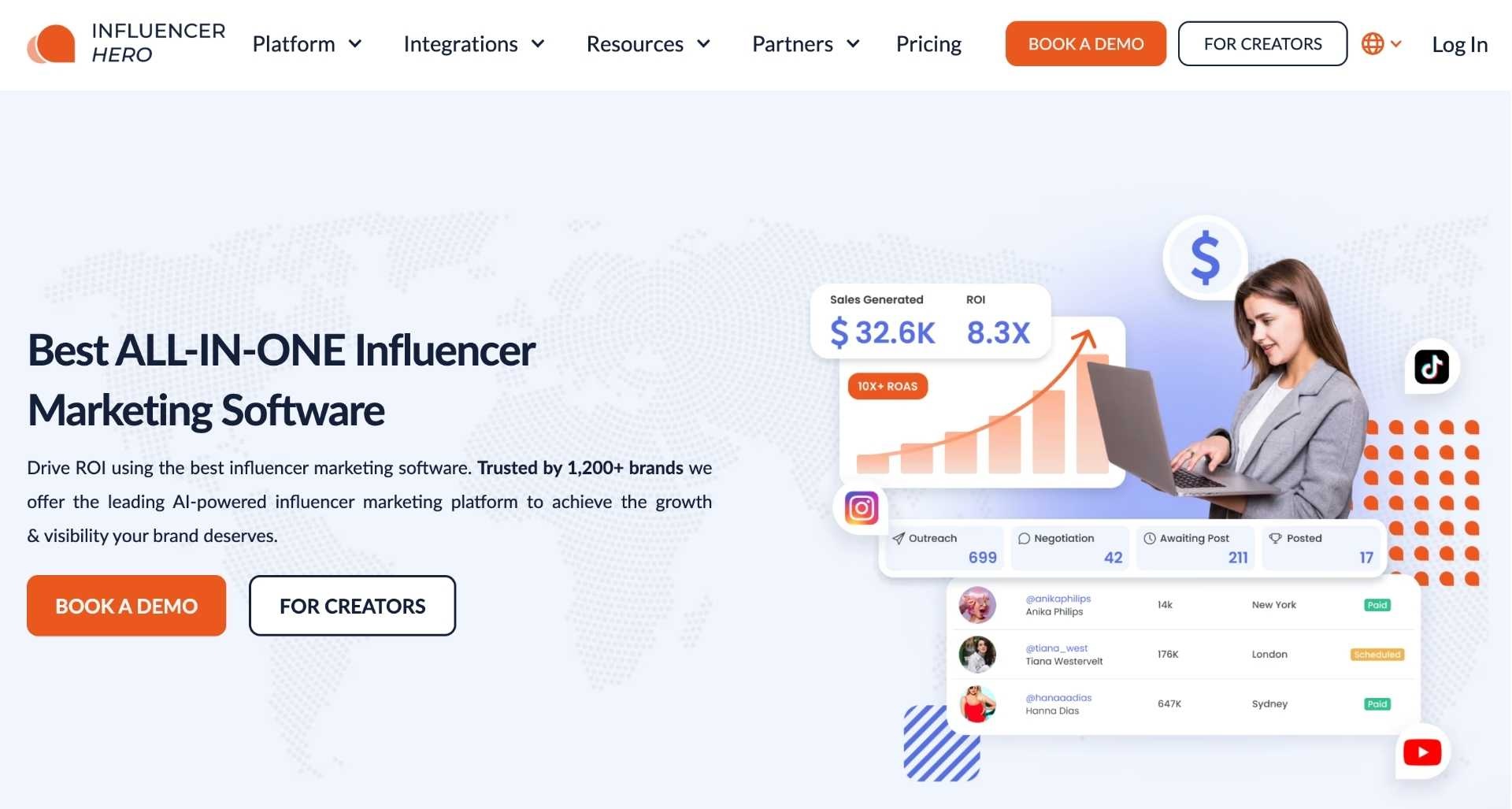
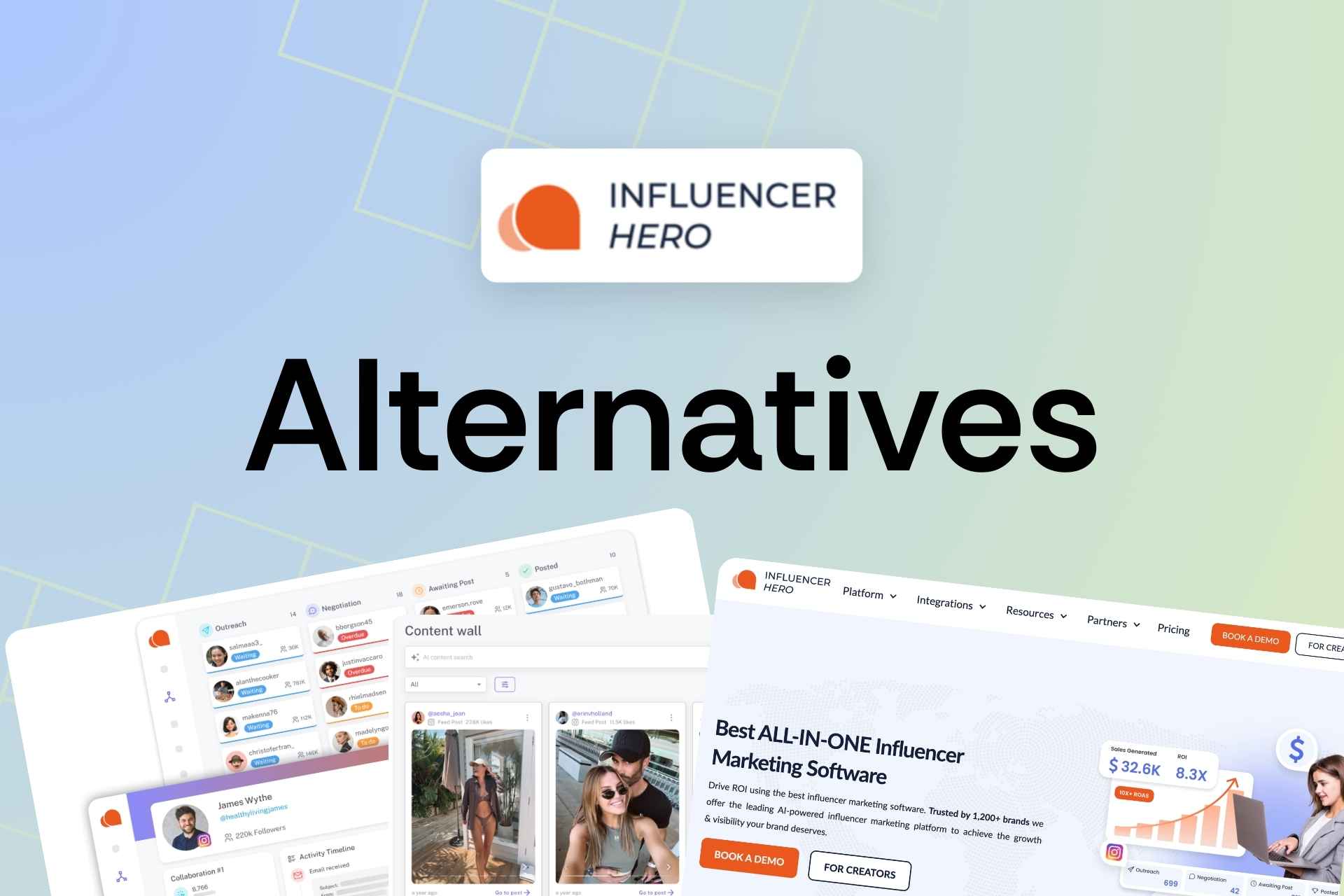
Influencer Hero is an all-in-one influencer marketing platform aimed at growing DTC brands, eCommerce teams, and agencies that want to centralize discovery, outreach, gifting, affiliate tracking, payouts, and reporting. Its positioning is especially strong around campaign-centric CRM workflows and making high-volume influencer programs easier to run without enterprise-level pricing.
Key Features
- Influencer discovery: Influencer Hero supports creator search with granular filters, fake follower detection, and lookalike recommendations. Company materials also highlight a large creator database and one-click importing from its Chrome extension.
- Campaign-centric CRM: One of its core strengths is the dealflow-style CRM that organizes outreach, deliverables, contracts, and ROI tracking in structured campaign boards.
- Automated outreach: The platform supports bulk and one-to-one email outreach, AI-assisted copy, reply tracking, and multi-step follow-up sequences.
- Chrome extension: Teams can analyze creators while browsing Instagram, TikTok, and YouTube, then sync profiles into CRM workflows without manual copy-paste work.
- Gifting and eCommerce workflows: Influencer Hero supports Shopify and WooCommerce for product seeding, discount codes, tracked links, sales attribution, and creator-level revenue reporting.
- UGC and reporting: The platform captures influencer content for reuse and offers ROI, click, affiliate, and performance reporting.
- Affiliate tracking and payouts: Teams can manage commission structures, custom links and codes, and payout workflows inside the same system.
- Application pages and storefronts: Brands can create branded sign-up pages and creator-facing application experiences to support inbound recruitment.
- API and integrations: Influencer Hero also offers API access and has recently expanded its integrations significantly.
Platform Coverage
Instagram, TikTok, YouTube, Facebook, Pinterest, Snapchat, X, and Twitch
Pricing
Influencer Hero offers flexible pricing based on outreach volume, with unlimited influencer storage across all plans:
- Standard — $649/month (up to 1,000 reachouts/month)
- Pro — $1,049/month (up to 5,000 reachouts/month)
- Business — $2,490/month (up to 10,000 reachouts/month)
- Custom / Agency — Tailored pricing
Reviews
5.0/5.0 (Capterra)
Standout Features
- Campaign-centric CRM: Influencer Hero’s strongest differentiator is its dealflow-style campaign CRM, which is built to manage many creators and many moving parts without forcing teams into a marketplace workflow.
- Chrome extension for real-time discovery: Teams can analyze creators and import them directly into campaigns while browsing platforms like Instagram, TikTok, or YouTube, speeding up the discovery process.
- Influencer brand followers: Identify creators who already follow or engage with your brand, helping improve outreach relevance, increase response rates, and drive more authentic micro-influencer collaborations.
Joinbrands vs Influencer Hero
Joinbrands is simpler and more transactional, which works well for brands that mainly want fast creator hiring and quick UGC production. Influencer Hero is more of a full campaign operating system, with stronger CRM, automation, outbound outreach, and affiliate workflows. For teams that want to build repeatable creator acquisition and management processes rather than buying creator deliverables one job at a time, Influencer Hero is the more scalable option.
3. Aspire
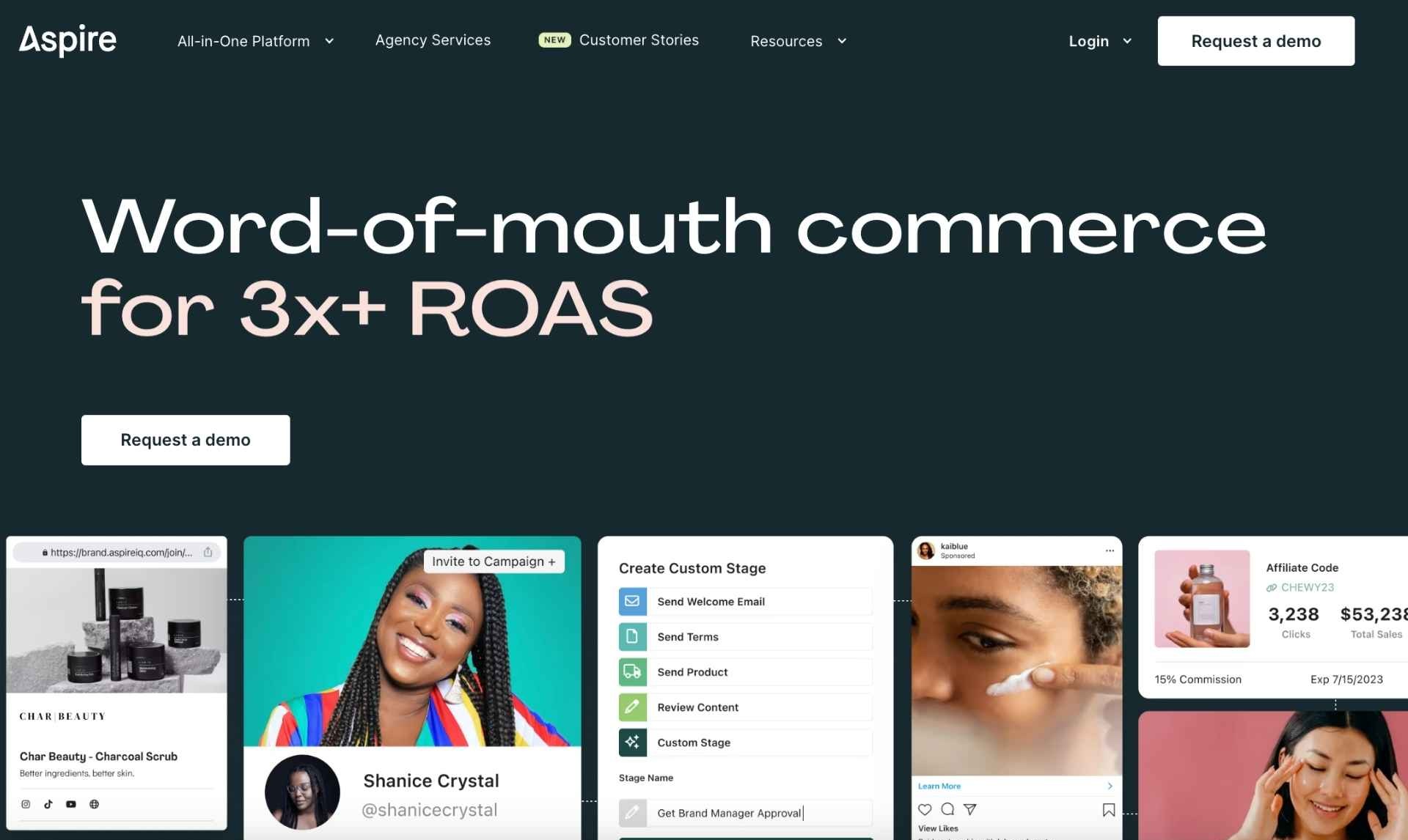
Aspire is an influencer marketing platform for eCommerce brands that combines creator discovery, workflow automation, content approvals, gifting, affiliate tracking, and reporting. A major part of its value proposition is balancing outbound discovery with inbound recruitment through its large creator marketplace, while also leaning on first-party platform data to improve trust in creator insights.
Key Features
- Creator discovery with first-party data: Aspire supports creator search by channel, demographics, keywords, and engagement metrics, and emphasizes first-party data connections with major social platforms rather than relying only on scraped public data.
- Lookalike and customer-based discovery: Brands can identify creators similar to top performers and even match customers to potential influencers through commerce data.
- Large inbound creator marketplace: Aspire pairs outbound search with a marketplace of 1M+ creators who can apply directly to campaigns, reducing manual sourcing.
- Application pages and recruitment workflows: Brands can launch branded sign-up pages, collect creator details and concepts, and route applicants into campaign pipelines.
- Campaign workflow automation: Aspire supports invites, contracts, briefs, approvals, post tracking, and automated follow-ups when creators stall at specific stages.
- Content approvals and rights management: Teams can review draft content before it goes live and manage usage rights within briefs and contracts.
- Gifting and fulfillment: Shopify-connected product seeding lets creators select from approved catalog options while brands manage budget controls and fulfillment inside Aspire.
- Sales tracking and creator stores: Aspire supports codes, links, commissions, and CreatorStores that live on a brand’s Shopify site, which is useful for commerce-led creator programs.
- Strong support model: Aspire pairs software with implementation and client success support, which is often a deciding factor for lean internal teams.
Platform Coverage
Instagram, TikTok, Pinterest, YouTube, and Facebook
Pricing
Aspire starts with tiered pricing and can be customized, with a mid-tier quote of about $2,300/month for a use case involving multiple team members and up to 500 creators in CRM.
Reviews
4.0 /5.0 (Capterra)
Standout Features
- Word-of-mouth commerce positioning: Aspire stands out by combining influencer marketing, affiliate programs, ambassadors, customer referrals, and UGC in one platform instead of treating them as separate tools.
- Inbound creator marketplace: Its ability to let creators apply in-platform is a real differentiator for brands that want to supplement outbound prospecting with inbound recruitment.
- Strong commerce and content loop: Aspire’s product seeding, affiliate sales tracking, and content reuse workflow make it especially useful for ecommerce brands that need both awareness and attributable revenue.
Joinbrands vs Aspire
Joinbrands is generally easier for getting UGC and smaller creator jobs live quickly, especially if a brand prefers a marketplace-led workflow. Aspire is broader and more operational, with stronger automation, affiliate infrastructure, creator marketplace depth, and end-to-end campaign management. For ecommerce teams that want creator marketing tied to product seeding, affiliate revenue, and reusable content across multiple campaign types, Aspire is usually the more robust platform.
4. SARAL
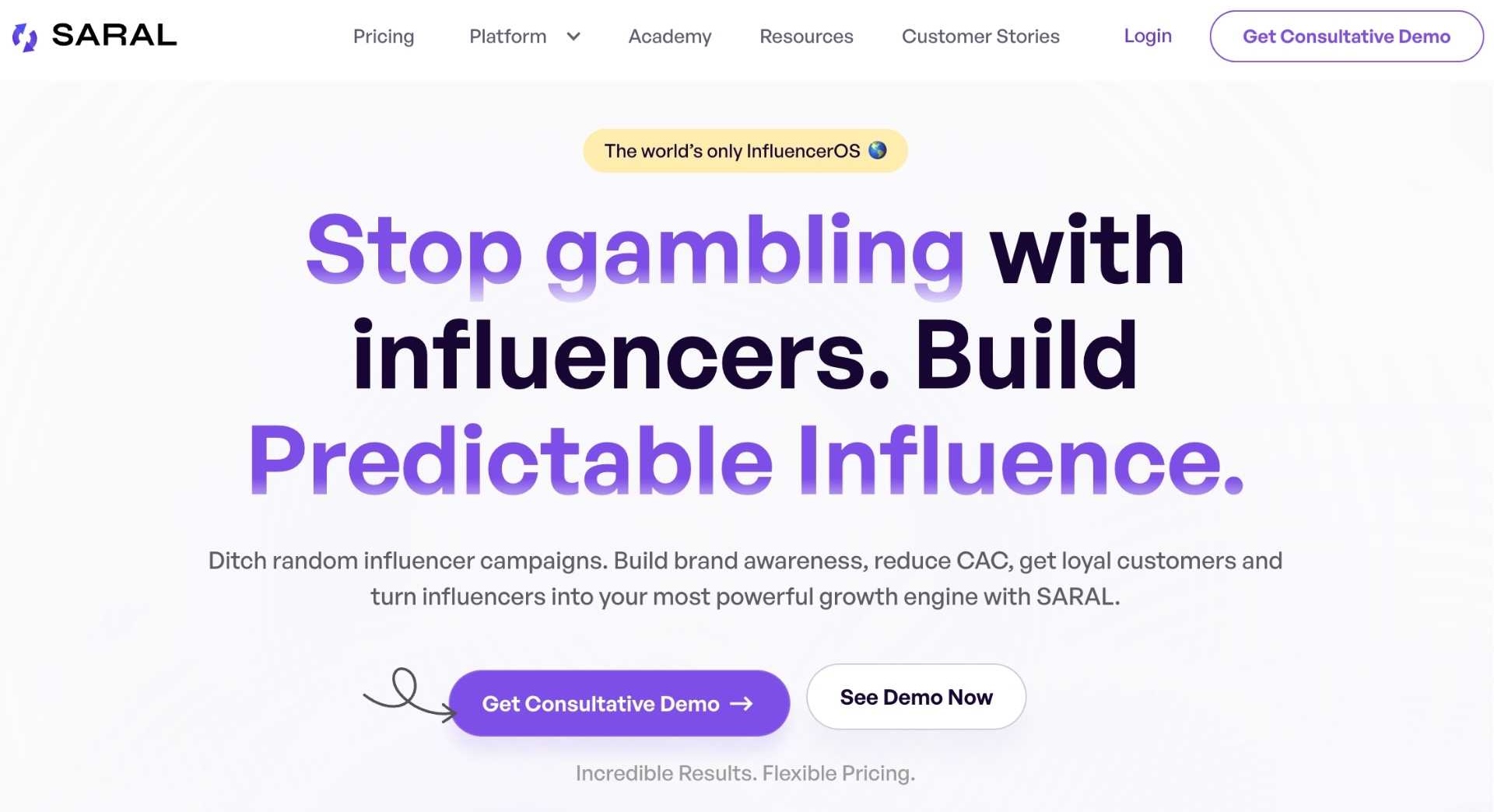
SARAL is an influencer marketing platform built mainly for consumer and eCommerce brands that want a simpler, more operationally efficient way to run seeding, affiliate, ambassador, and relationship-led creator programs. Its positioning is less enterprise-heavy than many platforms in the category, and much more focused on helping lean teams build predictable, ROI-oriented influencer workflows without relying on spreadsheets and fragmented tools.
Key Features
- Discovery across major creator channels: SARAL lets brands search a large creator dataset without waiting for creators to opt in, with keyword-based search, similar-creator discovery, and list-building workflows.
- Automated outreach: The platform is built around scaling email outreach, organizing creator replies, and moving prospects through relationship stages without manual tracking.
- Creator relationship management: SARAL includes a CRM with custom stages, tags, fields, and conversation history so teams can manage creators like a true pipeline rather than one-off contacts.
- AI assistant (SIA): SIA helps with discovery, outreach, follow-ups, product shipping, and workflow automation, making SARAL more AI-enabled than its “simple platform” branding might suggest.
- Ambassador and application workflows: SARAL helps brands capture applications, accept or reject creators, and turn customers or followers into ambassador-style creator programs.
- Affiliate and ROI tracking: The platform supports tracked links, discount codes, and reporting that ties creator activity to sales and ROAS.
- Chrome extension: SARAL’s extension helps teams save creators directly while browsing supported social platforms.
- Straightforward operations model: The official site emphasizes unlimited email accounts, unrestricted outreach, and pricing tied mainly to how many new influencers a team wants to search and save each month.
Platform Coverage
Instagram, TikTok, and YouTube.
Pricing
There are different plans:
- Starter: $3.6k/quarter
- Business: $4.5k/quarter
- Professional: $7.5k/quarter
Reviews
4.7/5.0 (G2)
Standout Features
- Operator-friendly simplicity: SARAL’s biggest differentiator is that it is intentionally built to be easier to use than enterprise influencer software, which makes it attractive to DTC teams that need speed over complexity.
- Chrome extension for faster prospecting: Customer feedback repeatedly highlights the Chrome extension as a practical feature that speeds up creator identification and qualification.
- Search-and-save pricing model: SARAL’s pricing logic is unusual in this category because it is tied to search/save volume rather than adding fees for users, outreach, or managed influencer counts.
Joinbrands vs SARAL
Joinbrands is stronger for brands that want a creator marketplace with faster job posting and easier access to ready-to-hire creators for UGC. SARAL is stronger for teams that want to run outreach themselves, build long-term influencer relationships, and manage a larger outbound pipeline from one system. In other words, Joinbrands is more transactional, while SARAL is more workflow-driven for brands building repeatable influencer acquisition and ambassador programs.
5. Influencity
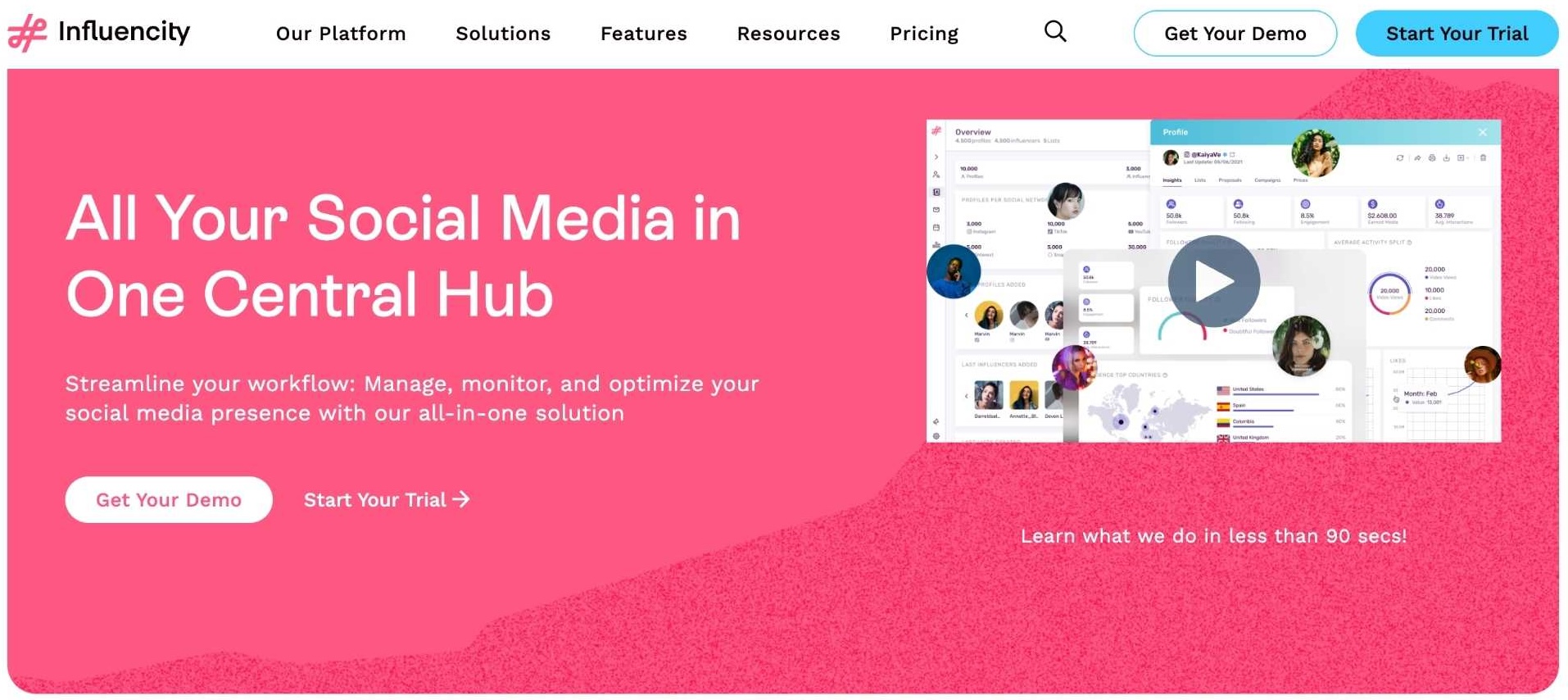
Influencity is an end-to-end influencer marketing platform for brands and agencies that want broad creator discovery, campaign management, reporting, and workflow visibility in one place. A major part of its appeal is that it uses public data rather than relying only on opt-in creators, which makes it attractive for teams that want larger search coverage without moving into enterprise pricing too quickly.
Key Features
- Large-scale creator discovery: Influencity positions its platform around searchable public creator data, deep filters, audience insights, and profile-level analysis. Official materials now reference a database of 350M creators, while the provided materials frame its advantage as broad discovery without opt-in limits.
- Influencer CRM and list management: Teams can organize creators by country, campaign type, or theme, then manage them inside a visual IRM workflow.
- Campaign management boards: Influencity supports tasks, deadlines, approvals, and progress tracking in a more operational interface than many discovery-first tools.
- Email outreach and tracking: The platform supports automated outreach, email templates, follow-ups, and reply/open/click tracking.
- Casting Calls and recruitment pages: Influencity has invested in branded recruitment workflows that let creators apply through structured campaign pages rather than relying entirely on cold outreach.
- Reporting and campaign monitoring: Brands can combine manual and automated reporting, track posts through rules such as hashtags or mentions, and export campaign data.
- AI assistant and forecasting: Influencity has been pushing AI more actively, particularly for email generation, workflow prompting, predictive analytics, and campaign planning.
- Broader social and social-listening footprint: Beyond influencer workflows, Influencity also promotes Social Hub and monitoring features for broader social management and listening use cases.
Platform Coverage
Instagram, TikTok, YouTube, and X/Twitter
Pricing
- Professional Plan: $318/month or $3,816/year
- Business Plan: $798/month or $9,576/year
- Enterprise Plan: Custom pricing
- Auto-Tracker Add-On: $660/year (for 50 influencers)
Reviews
4.3 / 5.0 (G2)
Standout Features
- All-in-one scope beyond influencer marketing: Influencity stands out by combining influencer discovery and campaigns with social management and social listening in the same platform.
- Flexible subscription model: A public free trial, self-serve cancellation, and upgrade flexibility make it notably more accessible than platforms tied to rigid annual contracts.
- Broad feature depth for agencies and in-house teams: The Business and Enterprise positioning suggests a stronger fit for teams that need multiple campaigns, report sharing, and cross-functional visibility.
Joinbrands vs Influencity
Joinbrands is more specialized for creator sourcing and UGC production through a marketplace model. Influencity is broader and better suited to brands that want outbound discovery, campaign execution, reporting, and even adjacent social media workflows in one platform. For brands comparing software depth rather than just creator access, Influencity gives more operational control, while Joinbrands keeps the workflow simpler for fast-turn creator collaborations.


6. NeoReach
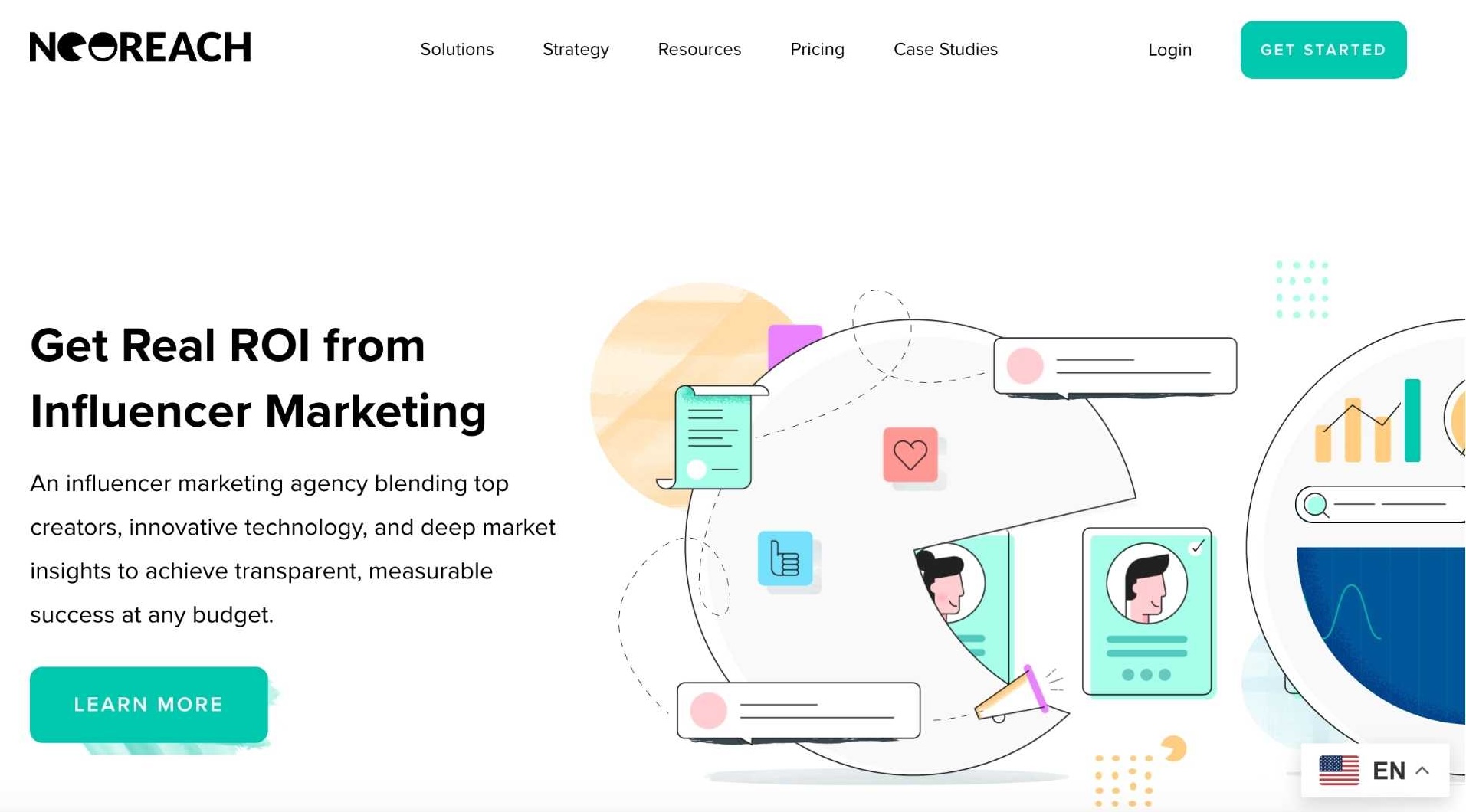
NeoReach is an influencer marketing platform built for enterprise brands and agencies that need large-scale creator discovery, campaign execution, and performance analytics. The platform is widely used for data-driven influencer campaigns, with a strong focus on paid media integration, audience insights, and ROI measurement across global programs.
Key Features
- Advanced influencer discovery: NeoReach provides access to a large global database with detailed filters for audience demographics, engagement, past brand collaborations, and platform-specific metrics.
- Paid media and whitelisting support: The platform allows brands to run paid amplification campaigns using influencer content, including whitelisting and boosting workflows.
- Campaign management: Teams can manage influencer campaigns end-to-end, including contracts, deliverables, timelines, and approvals.
- Fraud detection and audience quality analysis: NeoReach includes tools to identify fake followers, suspicious engagement, and audience authenticity.
- Custom reporting and dashboards: Brands can create detailed reports with KPIs like impressions, engagement, conversions, and ROI, often tailored for enterprise stakeholders.
- API and data integrations: NeoReach supports integrations with internal BI tools, CRM systems, and paid media platforms for deeper analysis.
- Dedicated account management: Many plans include strategic support, helping brands plan and optimize influencer campaigns at scale.
Platform Coverage
Instagram, TikTok, YouTube, Facebook, Twitter (X), Pinterest, and Snapchat.
Pricing
NeoReach uses custom enterprise pricing, typically based on campaign scale, number of users, and feature requirements. Contracts are generally annual, with pricing often positioned in the higher tier of the market.
Reviews
4.5 / 5.0 (G2)
Standout Features
- Fraud Detection API: NeoReach’s fraud detection is one of its clearest differentiators for enterprise teams that want stronger validation before approving creators or reporting on campaign quality.
- API-first infrastructure: NeoReach goes further than many creator platforms in offering API access for internal workflows, custom dashboards, and enterprise reporting use cases.
- Paid media plus influencer execution: Unlike creator marketplaces that focus mostly on sourcing and content delivery, NeoReach also supports paid amplification and broader performance marketing execution.
Joinbrands vs NeoReach
Joinbrands is better suited to brands that want a simpler marketplace workflow for UGC, influencers, and creator hiring with lower entry friction. NeoReach is a much more enterprise-oriented option, with stronger fraud detection, API access, paid media support, and custom infrastructure for brands that need larger-scale campaign operations. For most DTC teams, Joinbrands feels easier to launch with, while NeoReach is the stronger fit when governance, reporting depth, and enterprise customization matter more.
7. Heepsy
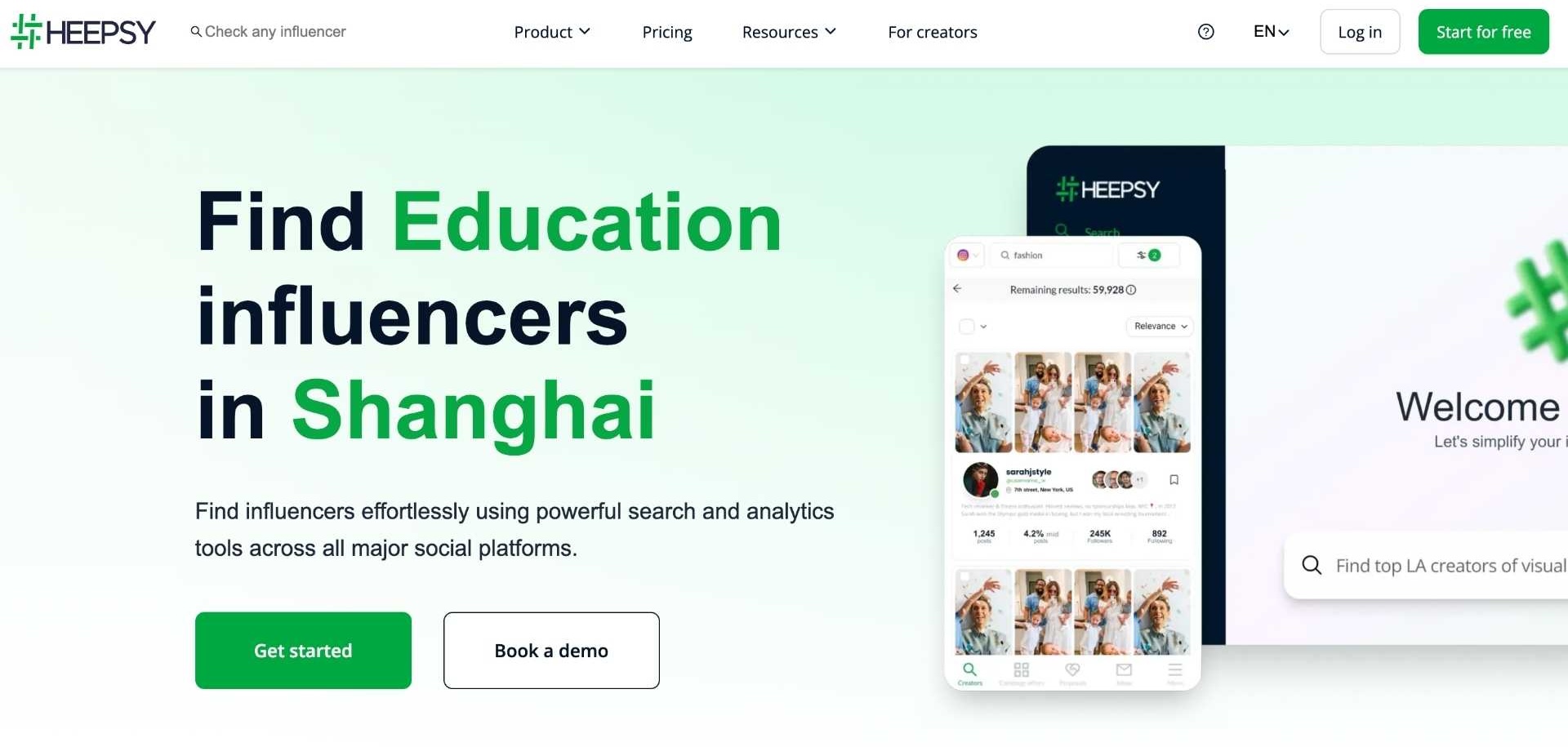
Heepsy is an influencer marketing platform focused on discovery, outreach, and campaign tracking, particularly for eCommerce brands and agencies. It is known for its large influencer database, intuitive filters, and relatively accessible pricing compared to enterprise tools.
Key Features
- Influencer discovery with advanced filters: Heepsy allows filtering by niche, location, engagement rate, audience demographics, and follower authenticity.
- Fake follower detection: The platform includes audience quality scoring to help brands avoid influencers with inflated metrics.
- Bulk outreach and email templates: Teams can send outreach emails at scale and manage communication workflows directly within the platform.
- Campaign tracking: Heepsy tracks influencer content, engagement, and (on higher plans) sales performance.
- CRM pipeline: A Kanban-style workflow helps teams track influencer stages from outreach to payment.
- Shopify integration: Advanced plans support affiliate tracking, discount codes, and revenue attribution.
- Lookalike search: Users can find creators similar to top-performing influencers.
Platform Coverage
Instagram, TikTok, YouTube, and Twitch
Pricing
Heepsy offers monthly and annual plans, with tiers such as Plus and Advanced. Pricing typically starts around $49–$149/month for lower tiers, while the Advanced plan (~$369/month) includes sales tracking and deeper analytics.
Reviews
4.5 / 5.0 (G2)
Standout Features
- Strong filtering for creator vetting: Heepsy’s audience, authenticity, and niche filtering are a major reason brands consider it when creator search quality matters more than marketplace convenience.
- Visual CRM pipeline: The board-style workflow is a practical differentiator for small teams that want more structure than spreadsheets without buying heavier enterprise software.
- Advanced-plan ecommerce tracking: Shopify and WooCommerce sales tracking, discount codes, and affiliate reporting make Heepsy more useful than pure discovery tools for ecommerce-led campaigns.
Joinbrands vs Heepsy
Joinbrands is more marketplace-led, so it is usually easier for brands that want to hire creators quickly and get UGC delivered with less manual prospecting. Heepsy gives brands more direct control over search, outreach, and campaign pipeline management, which makes it better for teams that want to build their own creator lists and run influencer recruitment themselves. Joinbrands is usually the simpler option for fast content production, while Heepsy is the better fit for hands-on discovery and outreach.
8. Skeepers
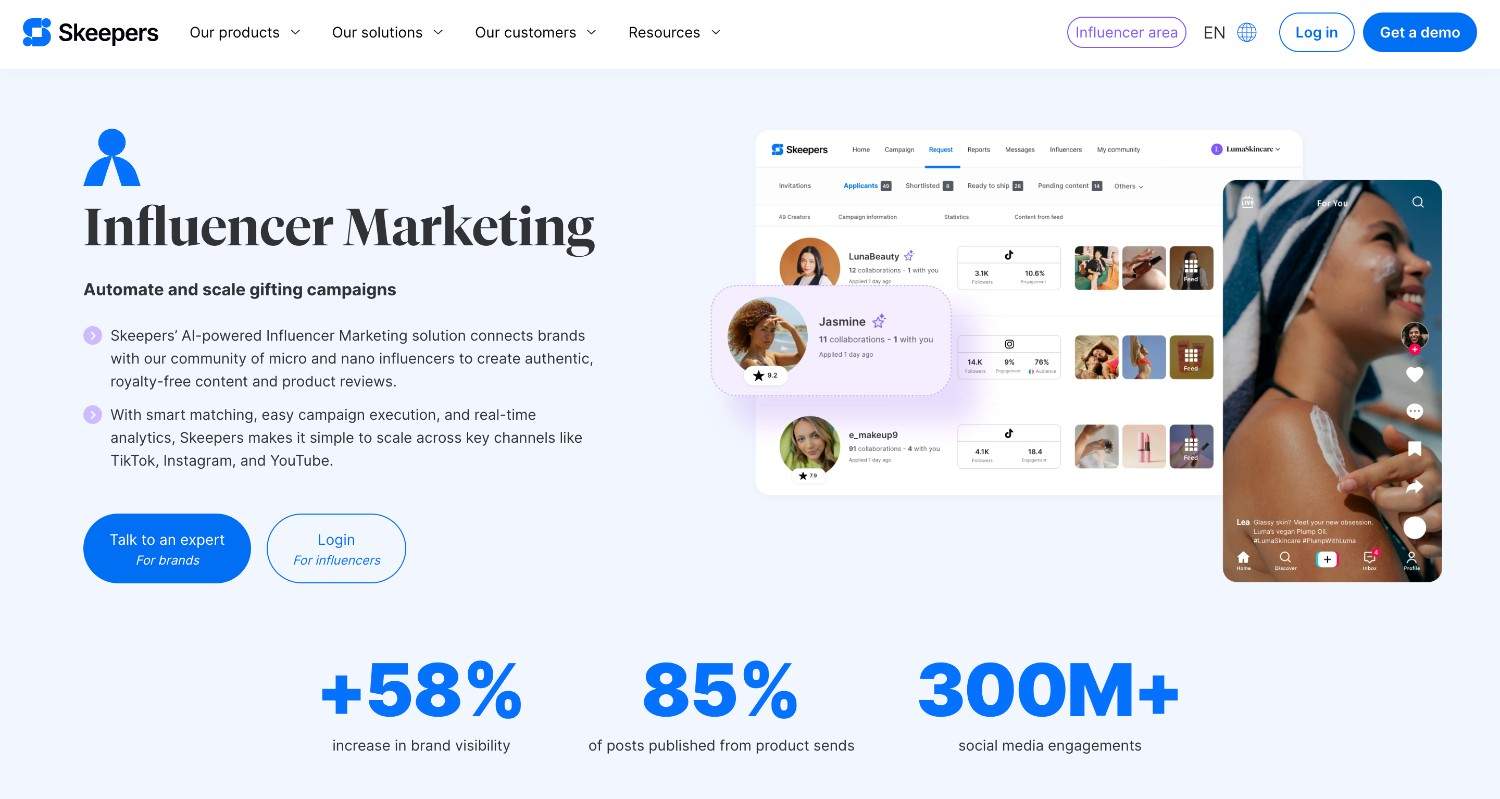
Skeepers is a user-generated content (UGC) and influencer marketing platform designed to help brands collect, manage, and activate creator content at scale. It combines influencer campaigns with ratings, reviews, and customer content to support broader marketing strategies.
Key Features
- UGC and influencer campaigns: Skeepers focuses on generating authentic content from creators and customers for use across marketing channels.
- Creator recruitment: Brands can recruit influencers through a managed network and structured campaign workflows.
- Content collection and management: All influencer-generated content is stored and organized for reuse in ads, social media, and eCommerce.
- Ratings and reviews integration: Skeepers connects influencer content with product reviews to improve social proof.
- Performance tracking: Tracks engagement, reach, and campaign-level performance.
- Multi-channel content activation: Brands can reuse influencer content across websites, ads, and email campaigns.
Platform Coverage
Instagram, TikTok, YouTube
Pricing
Skeepers uses custom pricing, typically based on modules (UGC, influencer marketing, reviews) and campaign scale. Contracts are usually annual.
Reviews
4.7/5.0 (G2)
Standout Features
- Long-term UGC usage rights: The ability to reuse creator content across multiple media for up to 20 years is a meaningful differentiator for ecommerce and performance teams.
- Gifting-first campaign model: Skeepers is especially strong for automated product-send campaigns rather than traditional paid influencer recruitment.
- Product reviews plus social UGC: It combines creator content and review generation in a way that is useful for brands that want both awareness assets and ecommerce trust signals.
Joinbrands vs Skeepers
Joinbrands is more flexible if a brand wants a broader creator marketplace covering UGC, influencers, affiliates, and multiple job formats from one platform. Skeepers is more specialized around micro/nano gifting campaigns, review generation, and long-term content reuse, which can be a better fit for brands prioritizing seeding efficiency and owned-content value. Joinbrands is the broader creator marketplace, while Skeepers is the more specialized gifting-and-UGC engine.
9. Upfluence
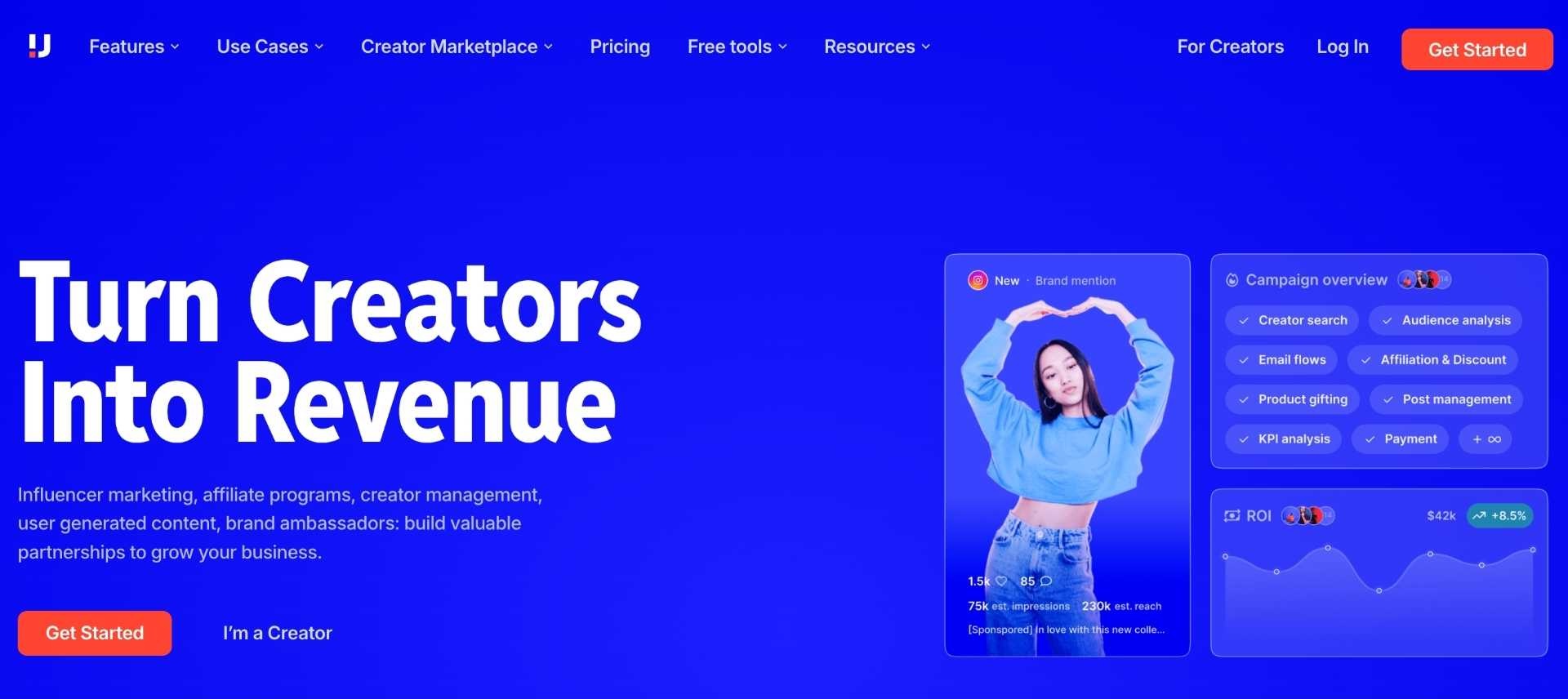
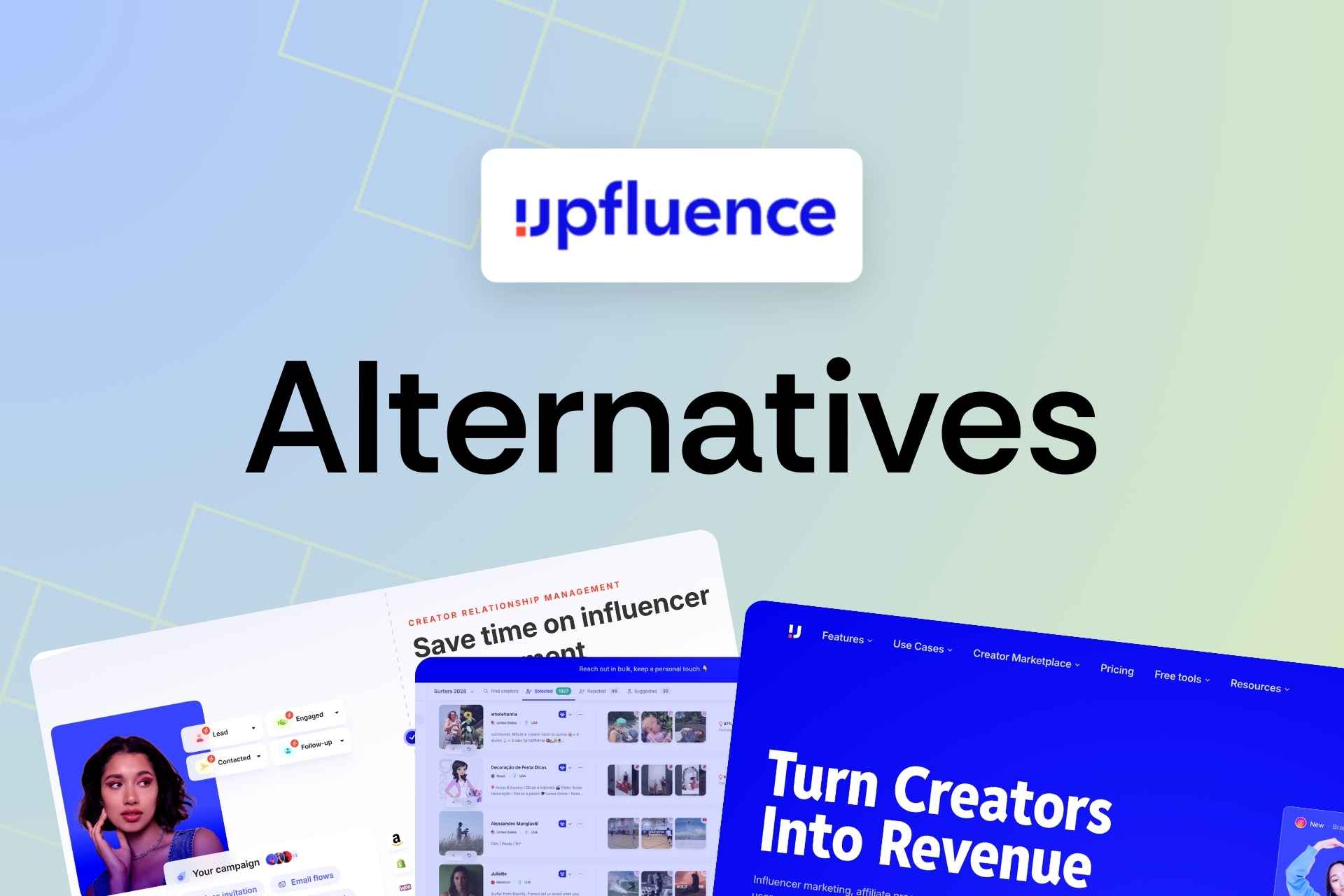
Upfluence is an all-in-one influencer marketing platform designed for eCommerce brands that want to combine influencer discovery, outreach, affiliate marketing, and sales tracking. It is particularly strong for Shopify and Amazon integrations.
Key Features
- Large influencer database: Access to over 12M influencers with detailed audience and engagement data.
- AI-powered outreach: Automated email workflows and campaign assistance through AI tools.
- CRM and campaign management: Manage influencer relationships, track communication, and oversee campaign progress in one place.
- Affiliate and sales tracking: Track conversions, clicks, and revenue generated by influencers.
- Shopify and Amazon integration: Identify customers who are influencers and track sales directly from campaigns.
- Social listening: Monitor trends and identify high-performing content.
- Bulk payments: Manage influencer payouts securely within the platform.
Platform Coverage
Instagram, TikTok, YouTube, Facebook, Twitch, Pinterest, and blogs.
Pricing
On average plans start around $2,000/month ($24,000 yearly)
Reviews
4.3 / 5.0 (Capterra)
Standout Features
- Customer-to-creator matching: Upfluence’s ability to identify creators from an existing customer base is one of its clearest differentiators for ecommerce brands.
- Modular platform structure: The split between Search & Contact, Campaign Manager, and Payments gives larger teams more flexibility than one-size-fits-all plans.
- Strong ecommerce integrations: Shopify and Amazon support make Upfluence particularly relevant for brands that care about attributable sales and affiliate-style creator programs.
Joinbrands vs Upfluence
Joinbrands is easier for fast UGC and creator hiring, especially for smaller teams that want a more marketplace-led workflow. Upfluence is much more operational and ecommerce-focused, with stronger CRM, outbound outreach, affiliate tracking, customer-to-creator matching, and sales attribution. If Joinbrands is the easier content-first option, Upfluence is the better fit for brands that want creator marketing tied closely to ecommerce performance.
10. Traackr
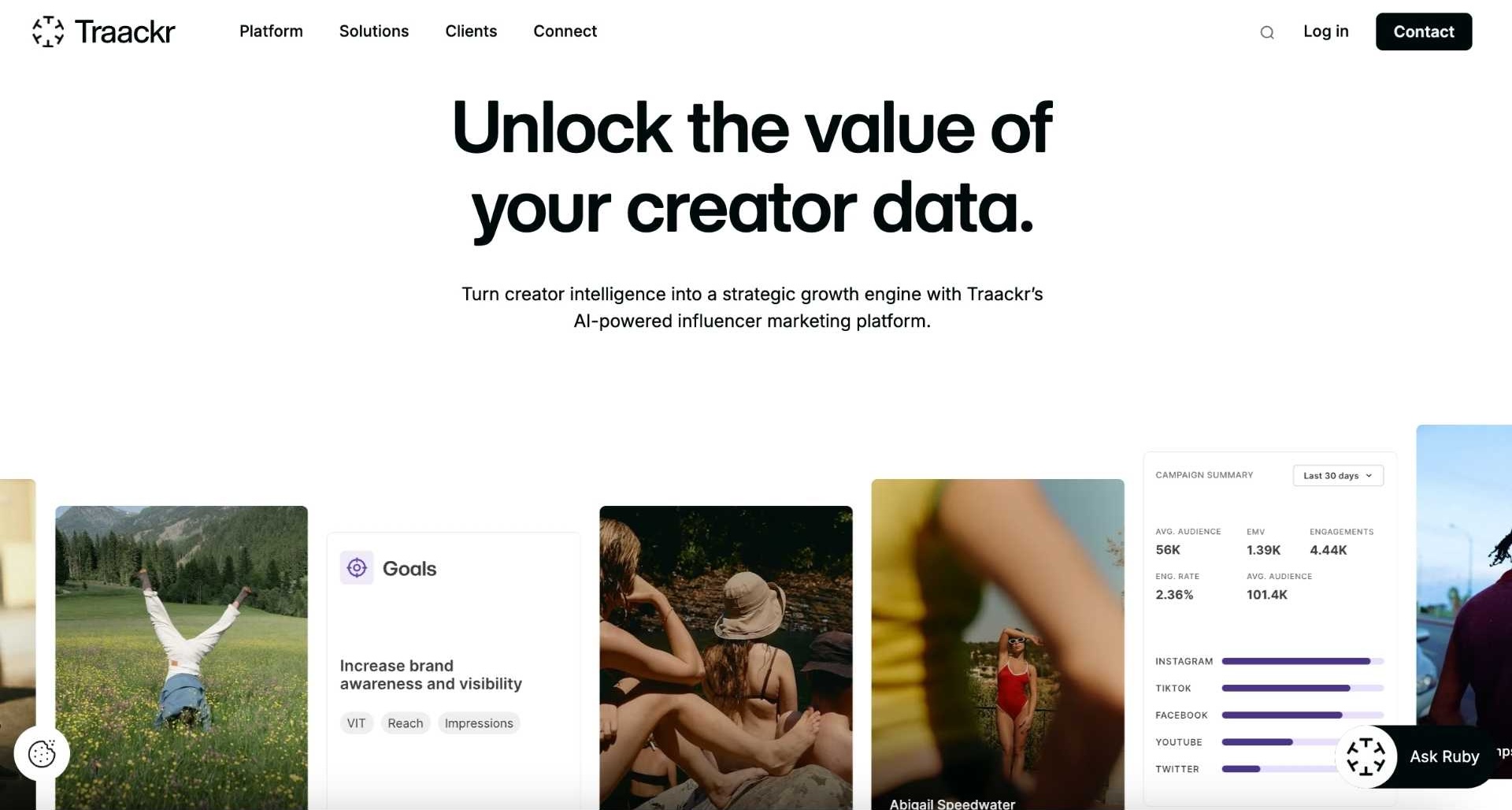
Traackr is an enterprise influencer marketing platform focused on performance benchmarking, budget optimization, and ROI tracking. It is widely used by global brands that need detailed analytics and strategic insights across large-scale campaigns.
Key Features
- Influencer discovery: Access to millions of influencers with advanced filtering based on performance history and audience data.
- Campaign management: Manage outreach, relationships, and campaign workflows in a centralized CRM.
- Advanced reporting: Tracks cost-per metrics (CPC, CPE, CPV) and provides detailed ROI analysis.
- Benchmarking tools: Compare campaign performance against industry standards and competitors.
- Budget optimization: Helps allocate spend across creators based on expected performance.
- UGC tracking and reuse: Collect and repurpose influencer-generated content.
- Affiliate and payments: Manage commissions and payouts within the platform.
Platform Coverage
Instagram, TikTok, YouTube, Facebook, Pinterest, and Twitter (X).
Pricing
Plans usually start at $32,500/year.
Reviews
4.3/5.0 (G2)
Standout Features
- Brand Vitality Score: Traackr’s proprietary brand benchmark is one of the most distinctive metrics in the category for teams that need creator marketing tied to broader brand performance.
- Budget Optimization Calculator: It helps brands allocate spend by creator using historical performance and benchmark data rather than relying only on negotiation instinct.
- Cost-per metrics dashboard: Traackr’s focus on CPC, CPE, CPV, and similar cost-efficiency metrics makes it especially attractive to performance-minded enterprise teams.
Joinbrands vs Traackr
Joinbrands is more accessible for brands that want quick creator hiring, UGC production, and simpler workflows without enterprise complexity. Traackr is built for larger programs where benchmarking, budget optimization, cross-market reporting, and performance efficiency are the priority. Joinbrands is the more practical option for fast execution, while Traackr is the better fit for brands that need deeper measurement and a more strategic enterprise layer.
Final Thoughts
Joinbrands works well for brands that prioritize speed, simplicity, and access to a ready pool of creators for UGC and product-based collaborations. However, as influencer programs grow in complexity, many teams begin to look for platforms that offer stronger CRM capabilities, deeper analytics, more flexible outreach workflows, and better integration with ecommerce and affiliate tracking systems.
The alternatives covered in this guide highlight how the influencer marketing software landscape varies depending on business needs, from marketplace-driven tools to full-scale campaign management platforms. Some solutions are better suited for fast content production, while others are designed for long-term creator relationships, performance tracking, and scalable operations, making it important for brands to align platform choice with their internal workflows and campaign goals.