

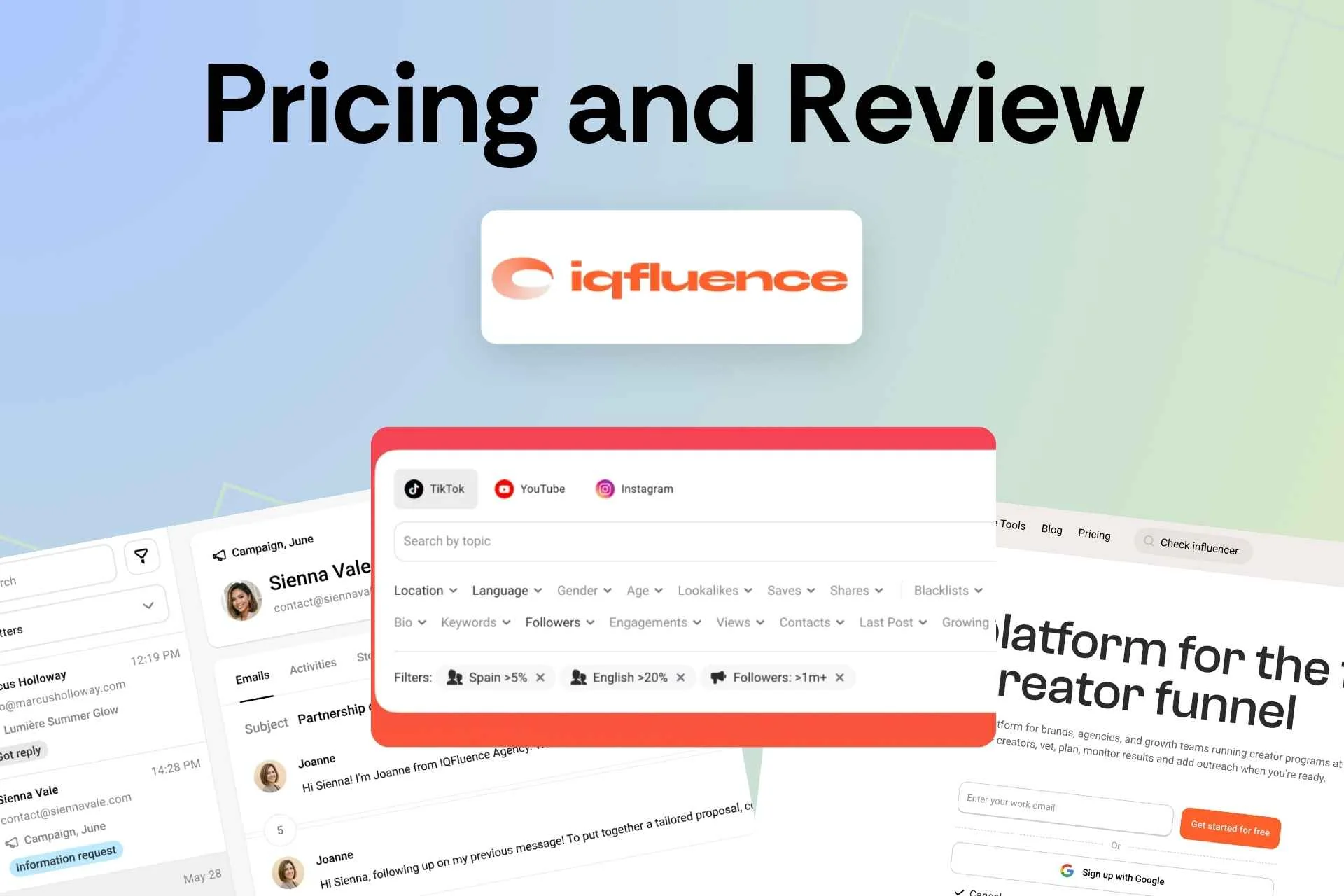
IQfluence Pricing Explained: Plans, Features & Review
Discovery tools compete on one number, and IQfluence leads with a big one: 375 million creators, more than Modash or HypeAuditor claim. It publishes three prices, runs a seven-day trial with no card, and sells cold-email infrastructure as a separate add-on for teams who want to work the list rather than just build it. The database is the pitch, but the more useful questions are what the plan limits actually are, how reliable the numbers attached to each profile really are, and whether every product on the pricing page has actually shipped. In this article, we break down IQfluence pricing, key features, reviews, limitations, and the best IQfluence alternatives to consider.
IQfluence Pricing
Three tiers, all published, with a 20% discount for annual billing. Starter is $295 a month, or $236 annually, and includes search across the full 375-million database, 50 audience overlap checks, 200 profile analyses, 200 email unlocks, and 100 tracked creators. Advanced is $545 a month, or $436 annually, doubling most of it: 100 overlaps, 500 profile analyses, 500 email unlocks, 400 tracked creators, plus priority support and early access to new features. Business sits at roughly $1,300 a month with custom limits on everything. Outreach is not included at any tier — it is a paid add-on priced per plan, at $49, $99 and $199 a month respectively, with a discount on annual billing. That structure matters more than the headline number, because the thing that runs out first is rarely search: it is email unlocks and profile analyses, and on Starter you get 200 of each. A team briefing fifty creators a month will burn through that quickly, and the jump to Advanced is $250 a month. One caveat worth carrying into a sales call: IQfluence's own blog describes the plan limits differently from its pricing page, citing 350 reports and 350 emails on Starter and 800 on Advanced. Get the current limits confirmed in writing.
Free Trial
Seven days, no credit card required. That is short for a tool whose value depends on database coverage, so plan the week rather than browsing it. Spend day one on the only question that matters: run your real searches, in your real categories and countries, at the follower tiers you actually book, and see how many usable creators come back. A 375-million index sounds inexhaustible until you filter to micro creators in one country in one niche. Day two, spend a handful of your profile analyses on creators you already know well — people whose real engagement and audience you can verify independently — and compare what the platform reports against what you know. That single check tells you more about whether the data is worth $295 a month than any feature tour. Leave the audience overlap tool for last; it is genuinely useful, but only once you trust the profile data underneath it.
Contract
Monthly and annual billing are both offered, with 20% off for paying yearly. Three things are worth settling before you sign. First, what happens when you hit a limit mid-month: do unused email unlocks roll over, can you buy a top-up, or are you pushed to the next tier? Second, the outreach add-on — confirm it is live and fully available on your plan, because IQfluence's own blog has described outreach as coming soon while the pricing page sells it as a paid extra, and those two statements cannot both be current. Third, the API, which is priced separately on a pay-as-you-go basis; if you intend to pull data into your own systems, get that quoted alongside the subscription rather than after it.
IQfluence Overview
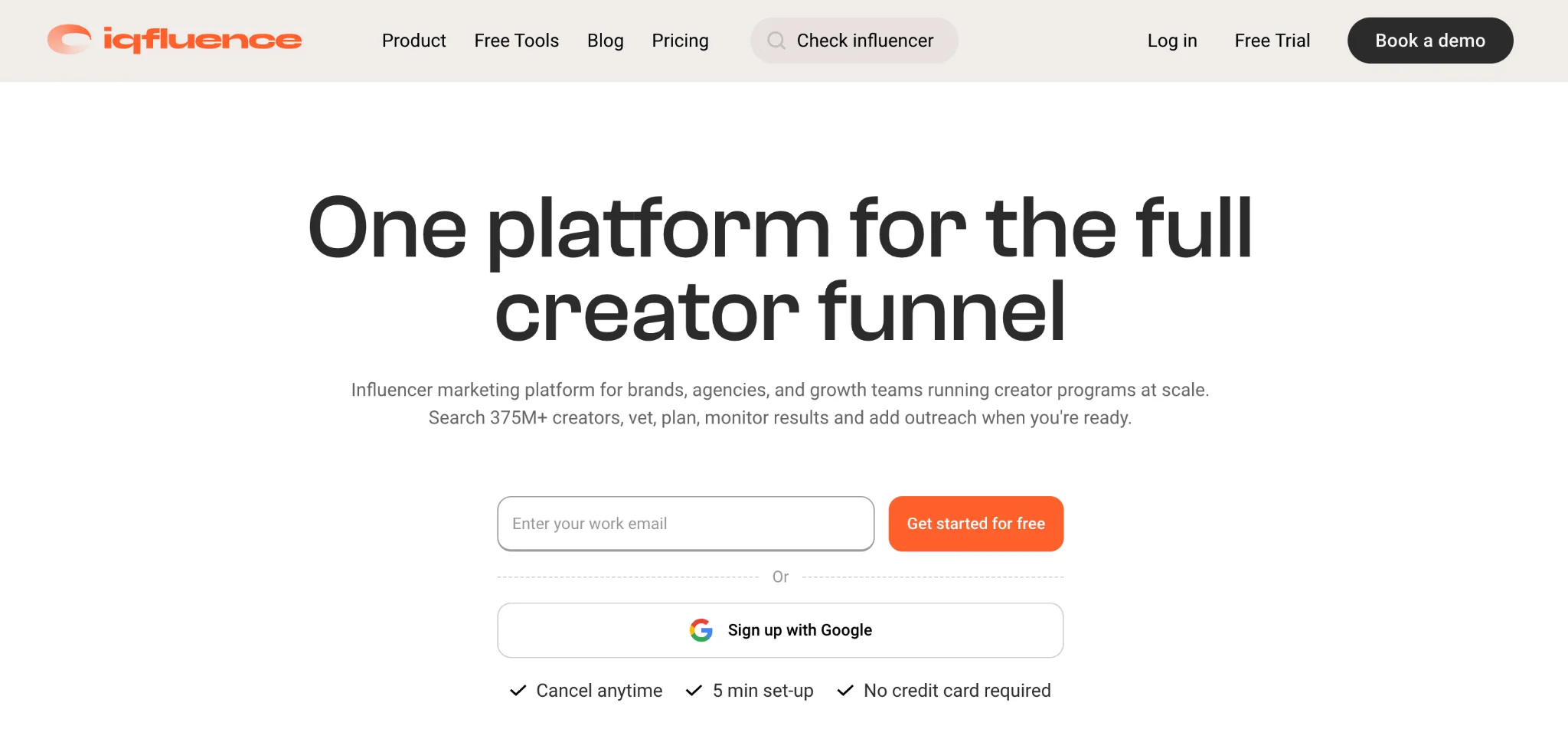
IQfluence is a creator discovery and analysis platform covering Instagram, TikTok and YouTube, built around a database it puts at more than 375 million profiles — larger than the figures Modash and HypeAuditor publish, and weighted toward micro creators in the 10,000 to 100,000 follower range. The workflow runs discovery first: 13-plus filters covering location, language, gender, age, interests, brand affinity and lookalikes, narrowing the index before you spend anything on individual profiles. Each profile analysis then returns 35-plus metrics, including a machine-learning audience quality breakdown that splits followers into real people, mass followers, influencers and suspicious accounts. Above that sit the planning tools: audience overlap analysis, which flags when two creators on your shortlist share the same followers and you would be paying twice for one audience; a media plan builder that exports to Google Sheets; and campaign monitoring with reply rate, view rate and cost-per-click, per-result and per-acquisition figures. Lookalike matching finds creators resembling ones already working for you. An outreach add-on layers cold-email infrastructure on top — isolated sending servers, account rotation, warm-ups, bulk verification and Gmail and Outlook integration. Named clients skew toward agencies and mid-market brands, including Narrative, South Next Group, 110 Industries, OML and Buzzbassador.
Key Features
375M+ Creator Database
The largest published index in this comparison set, spanning Instagram, TikTok and YouTube, with particular depth in micro creators — the tier where most brands actually spend.
13+ Discovery Filters
Location, language, gender, age, interests, brand affinity and lookalike filters narrow the index before you spend credits on individual profiles, which is what keeps the plan limits workable.
35+ Metrics Per Profile Analysis
Each analysed profile returns a full picture rather than headline follower counts, including growth patterns and engagement quality.
ML Audience Quality Scoring
Followers are split into real people, mass followers, influencers and suspicious accounts, giving you a fake-follower read without paying for a separate audit tool.
Audience Overlap Analysis
Shows where shortlisted creators share the same followers — the check that stops you buying the same audience three times and calling it reach.
Media Plan Builder With Sheets Export
Shortlists become a costed plan that exports to Google Sheets, which is where most of this work ends up being approved anyway.
Campaign Monitoring
Reply rate, view rate and CPC, CPR and CPA are tracked in-platform, so performance sits next to the discovery data rather than in a separate spreadsheet.
Outreach Add-On
A paid extra covering isolated sending servers, human-monitored account rotation, unlimited warm-ups, bulk email verification and hundreds of sender accounts with Gmail and Outlook integration.
Best For
IQfluence is built for teams whose bottleneck is finding and qualifying creators at volume rather than managing relationships. Its own positioning names agencies handling five to fifteen client brands, DTC and consumer brands, and growth and acquisition teams — and the product reflects that. The audience overlap tool and media plan builder are planning features for someone assembling a costed shortlist for approval, not for a brand booking three creators a quarter. The micro-creator depth suits programs that work a long tail rather than a handful of large names, and the outreach add-on suits a team running cold email at a scale that justifies dedicated sending infrastructure.
It is a weaker fit for brands wanting an end-to-end platform: there is no gifting workflow, no contract management, no creator payouts. Discovery, analysis, planning and outreach are what you get, and everything after the creator says yes happens somewhere else. It is also a poor fit for anyone needing networks beyond Instagram, TikTok and YouTube, or for a small brand where $295 a month against 200 email unlocks is hard to justify.
IQfluence Reviews
5.0 out of 5 stars
Capterra (5 reviews)
Five reviews is not a sample you can lean on, so read the substance rather than the score. The praise is consistent and specific: a large database with filters that actually narrow it, an interface people find easy, a lookalike feature reviewers single out, and real time savings on the identification work. Several note the company ships fixes based on feedback, which counts for something in a young product. The criticism is equally specific and more useful. Pricing is described as high relative to competitors. The blacklist function has glitched. Some niche categories come back thin — the 375-million figure does not guarantee depth in your particular corner.
And two of the complaints go to the heart of what you would be buying: performance data is estimated rather than verified, and the numbers are not confirmed by creators themselves. IQfluence acknowledges this openly on its own blog, describing its data as directionally correct. That is a fair and unusually honest framing, and it is also the reason to spend part of your trial checking the platform's numbers against creators you already know.
IQfluence Standout Features
Audience Overlap Is the Underrated One
Most platforms sell you discovery and leave you to discover, later and expensively, that four of your six creators share the same followers. Running overlap before the media plan is approved changes what you buy, not just what you know, and very few tools at this price put it front and centre.
The Vendor Says Its Data Is Directional
Publishing that the numbers are estimates not verified by creators is a rare piece of honesty in a category built on confident dashboards. It tells you exactly how to use the tool: for shortlisting and sizing, with your own verification before the money moves.
Outreach Infrastructure, Not Just an Outreach Tab
Isolated servers, account rotation, warm-ups and bulk verification is deliverability engineering rather than a mail-merge feature. For a team sending real volume, that distinction is the difference between landing in an inbox and landing in spam.
IQfluence Limitations
Outreach Costs Extra, and Its Status Is Unclear
Cold email is an add-on at $49 to $199 a month on top of the subscription, and the vendor's own blog has described outreach as coming soon while the pricing page sells it. Confirm what is live on your plan before you budget for it.
The Plan Limits Are Stated Two Different Ways
The pricing page and the company blog give different numbers for profile analyses and email unlocks. Whichever is current, get it in writing — those meters, not the database size, are what you will actually run out of.
Estimated Data, Not Verified
Performance figures are modelled rather than confirmed by creators, which the vendor states plainly. Treat outputs as a shortlisting signal, and verify anything a large budget rests on.
Discovery, Not End-to-End
There is no gifting, contracting, content approval or payout workflow. IQfluence finds and qualifies creators; running the program is another tool's job, and another line on the budget.


Is IQfluence Worth It?
If discovery and qualification are where your time goes, IQfluence makes a strong case: the largest published database in its peer group, real depth in micro creators, filters that narrow it usefully, and planning tools — audience overlap especially — that most competitors either lack or charge more for. The vendor's candour about data being directional is a point in its favour rather than against it. The reservations are the meters rather than the database, the outreach add-on's unclear status, a review record too small to lean on, and the fact that everything after the creator agrees happens somewhere else. Teams wanting one platform end to end, or a lower entry price, should weigh it against:
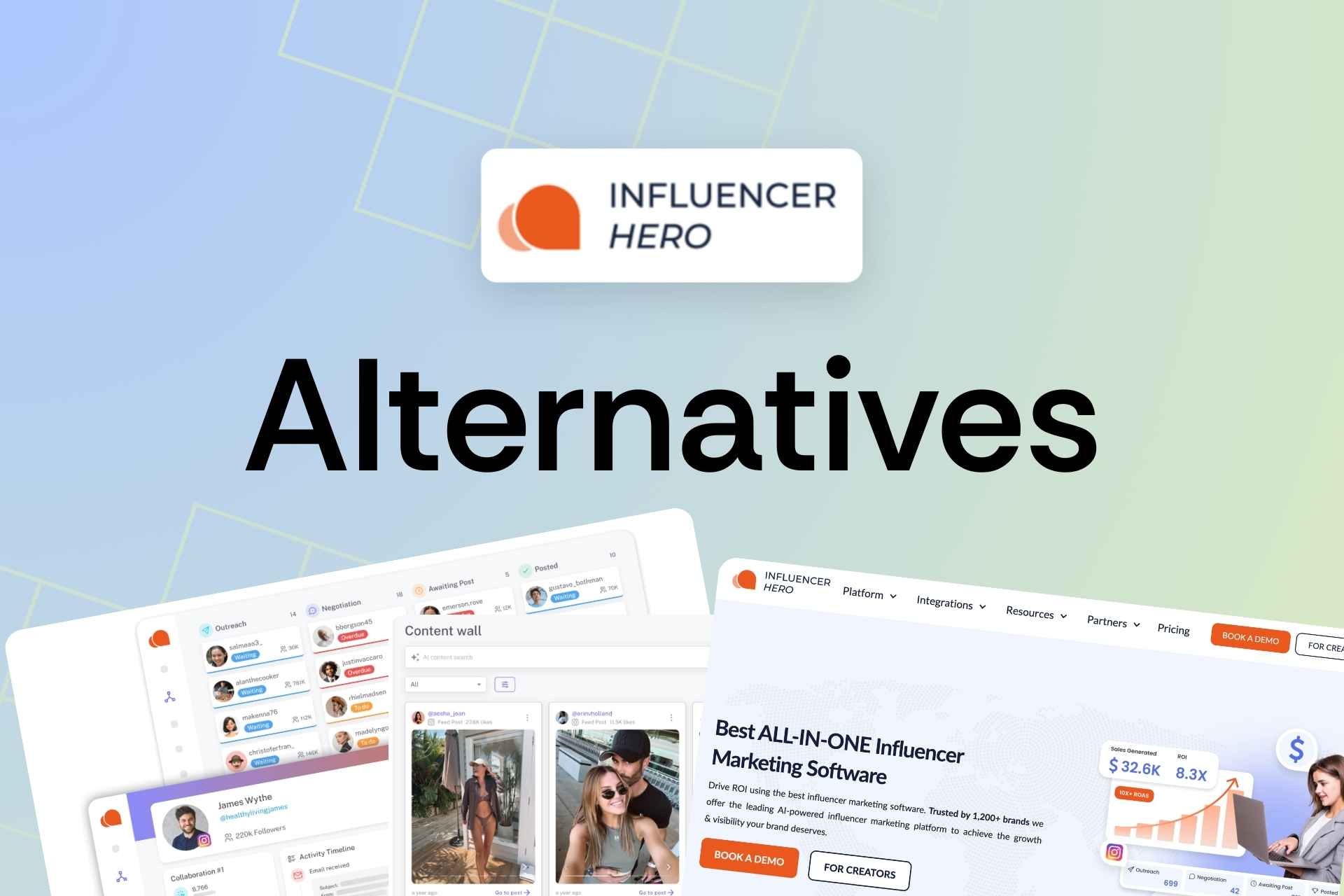
- Influencer Hero — an all-in-one influencer marketing platform pairing creator database search across eight networks with built-in outreach, influencer CRM, gifting, affiliate tracking and creator payouts, so discovery and delivery sit in the same tool.
- Afluencer — a marketplace where brands post collaborations and creators apply, turning recruitment inbound instead of running cold email against a purchased list.
- Influencity — discovery and analytics with campaign management and audience insights, aimed at agencies handling several brands at once.
- Heepsy — a lighter, lower-priced search tool for brands that need filtering and basic audience checks without planning or outreach infrastructure.
- Kolsquare — European-focused discovery and measurement with strong compliance and reporting features for brands running regulated campaigns.
Final Thoughts
Do the seven days properly and this decision makes itself. Run your actual searches, in your actual categories, and count the usable creators — then spend a few profile analyses on people whose audiences you can verify yourself and see whether the numbers hold up. If the depth is there and the data matches reality in your niche, IQfluence is a capable, well-built discovery tool with planning features above its weight class. If your searches come back thin, no database figure changes that. Two things to settle before signing rather than after: which set of plan limits is current, since the vendor publishes two, and whether the outreach add-on is fully live on your tier. Neither is a red flag on its own, but both cost money to get wrong.