

Ifluenz Pricing Explained: Plans, Features & Review
Software pricing in this category almost always starts with a monthly fee, which is exactly the wrong shape for a brand that runs two Instagram campaigns a year. Ifluenz takes the opposite approach: nothing to subscribe to, nothing to commit to, and a commission taken only when money actually moves to a creator. The Geneva-based platform works on briefs rather than searches, so instead of digging through a database you post what you want and wait for creators to come to you. That flips the usual workflow, and it comes with trade-offs worth understanding before the first campaign. In this article, we break down Ifluenz pricing, key features, reviews, limitations, and the best Ifluenz alternatives to consider.
Ifluenz Pricing
There is no subscription, no seat fee, and no plan to choose. Ifluenz is pay-as-you-go, and the platform earns through a commission applied to each payment processed to a creator. The standard rate is 15 percent, which sits on top of whatever the creator charges, so a $500 collaboration costs $575 in practice. That rate drops to 5 percent for brands committing to at least $10,000 in spend, a threshold that changes the arithmetic considerably for anyone running a sustained program rather than a one-off post.
Because everything is transactional, the platform costs nothing while you are planning, comparing, or sitting idle between campaigns, which is genuinely useful for seasonal brands. The flip side is that the cost never stops scaling with spend: at 15 percent, a $20,000 program hands over $3,000 in fees, which would fund a full year of most subscription-priced platforms.
Free Trial
The question does not really apply, because there is nothing to trial. Creating an account and posting a campaign brief costs nothing, and no money changes hands until a brand approves a proposal and funds a collaboration. In practice that makes Ifluenz the cheapest possible way to test whether marketplace-style sourcing produces workable creators for your category, since the entire evaluation can be done for the price of a single small collaboration.
Contract
There is no contract, no minimum term, and no cancellation to process. Brands can run one campaign, disappear for six months, and come back without penalty. The only commitment worth negotiating is the reduced commission tier, which requires committing to at least $10,000 in spend, and that is the conversation to have before scaling up rather than after, since the difference between 15 and 5 percent on a real budget is substantial.
Ifluenz Overview
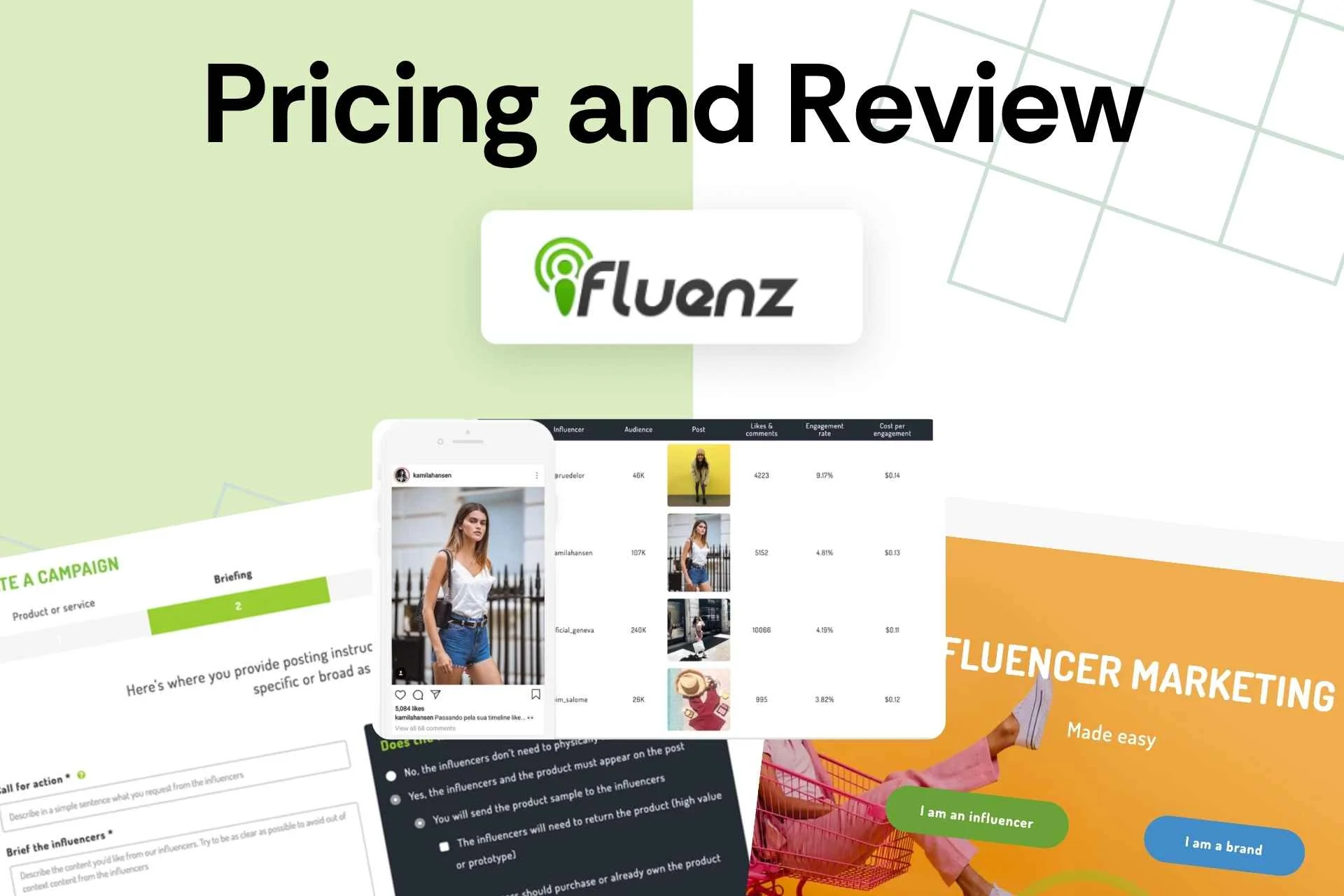
Ifluenz is an Instagram-focused collaboration marketplace operated by a Swiss company, built to connect brands with creators willing to produce sponsored posts. Its defining characteristic is the direction of travel: rather than searching a creator database and sending influencer outreach, brands complete a form describing the campaign, the deliverable, and the kind of influencer they want, and the brief then surfaces in the feeds of matching creators, who submit proposals with their rates. The brand reviews applicants, negotiates, approves the content before it goes live, and only then releases payment. Everything runs through the platform, which is where the commission is applied. The whole system is designed around simplicity rather than depth, and it shows in both directions.
Key Features
Brief-Based Campaign Creation
Brands describe the campaign through simple forms covering goals, deliverables, and influencer criteria, which means launching does not require knowing which specific creators you want before you start.
Inbound Creator Proposals
Matching creators see the brief in their feed and apply with their own rates, so the shortlist assembles itself rather than requiring hours of outreach that may never get a reply.
Mood Board
Brands upload reference images to communicate the visual style they expect, and can also supply content for creators to repost under defined usage limits, which keeps campaign output closer to brand guidelines without a lengthy briefing call.
Content Approval Before Payment
Deliverables are reviewed and approved before funds are released, giving brands a checkpoint that direct DM arrangements never provide.
In-Platform Negotiation
Rates and deliverables are agreed inside the platform rather than over email, keeping the commercial terms and the creative brief attached to the same record.
Escrow-Style Payment Handling
Payments are processed by the platform rather than sent brand-to-creator, which removes invoicing friction for small collaborations and gives both sides a defined process.
Basic Campaign Reporting
Reporting covers likes, comments, engagement rate, and cost per engagement, which is enough to compare creators against each other on a single campaign but not enough for program-level analysis.
Country-Level Targeting
Influencer criteria include location at country level, along with follower and category filters, which works for broad market targeting but not for city or regional campaigns.
Best For
Ifluenz suits small brands, early-stage D2C companies, and marketing teams of one that run occasional Instagram collaborations and cannot justify a monthly software subscription for a handful of posts a year. It also works for brands testing whether influencer marketing produces anything at all, since the cost of finding out is limited to one collaboration. Agencies, brands running multi-platform programs, and any team that needs audience-quality data, granular targeting, or reporting that ties content to revenue will find the platform too thin, and at sustained spend the commission stops being the cheaper option.
Ifluenz Reviews
2.8/5.0 (Trustpilot)
The rating comes from a very small number of reviews, so it should be read as a signal rather than a verdict, but the direction of that signal is worth noting because the themes are consistent rather than scattered. Complaints centre on responsiveness: unanswered emails, refund requests left hanging, and collaborations where the creator did not deliver what was agreed. That last point matters most, because a marketplace's core job is to make a stranger's commitment enforceable, and when that breaks the platform's escrow and approval steps are the only recourse. Independent commentary is kinder about the product itself, describing a clean interface and a sensible campaign creation flow while flagging thin influencer data and sparse reporting.
The practical read: keep first collaborations small, use the approval step deliberately, and do not rely on the platform's data alone to vet a creator.
Ifluenz Standout Features
No Subscription at All
Charging nothing until a collaboration is funded is rare in a market that defaults to monthly licences. For a brand running three campaigns a year, that structure alone can be worth more than any feature, because the alternative is paying twelve months for three months of use.
The Brief Comes to Creators
Reversing the outreach direction removes the single most time-consuming part of small-scale influencer marketing. Instead of sending fifty messages and getting eight replies, the brand publishes once and reviews what arrives.
A Mood Board Built Into the Brief
Attaching visual references and repostable assets to the brief itself is a small feature with an outsized effect on output quality, since most creative misses in creator campaigns trace back to a brief that described the product but not the look.
Ifluenz Limitations
Instagram Only
There is no TikTok, YouTube, Pinterest, or anything else. For a brand whose audience has moved to short-form video elsewhere, that single constraint rules the platform out regardless of price.
The Commission Overtakes the Savings
At 15 percent, spend of roughly $10,000 a year already costs more in fees than an entry-level subscription platform, and unlike a subscription the fee keeps climbing with every campaign.
Thin Creator Data and Coarse Targeting
Audience quality signals are limited and location targeting works only at country level, so vetting for fake followers, audience demographics, or regional relevance has to happen outside the platform.
Reporting Stops at Engagement
Likes, comments, and cost per engagement describe reach, not results. There is no affiliate tracking, no conversion attribution, and no way to tie a collaboration to revenue without building that measurement yourself.


Is Ifluenz Worth It?
For a small brand running occasional Instagram collaborations, Ifluenz is defensible on structure alone: no subscription, no commitment, and a workflow that turns sourcing into a posting exercise rather than an outreach grind. The problems appear as ambition grows. Spend enough and the commission costs more than software would; look beyond Instagram and the platform has nothing to offer; try to prove ROI and the reporting runs out. The service complaints add a further reason to keep early collaborations small. If any of that describes where your program is heading, these alternatives are worth a look:
- Influencer Hero — an all-in-one platform covering creator discovery across eight networks, automated influencer outreach, CRM, gifting, affiliate tracking, and ROI reporting on published plans.
- Afluencer — a brand-creator marketplace with the same inbound application model but broader platform coverage and an active creator community behind it.
- Collabstr — a marketplace where creators list fixed-price packages, so brands buy deliverables directly without negotiating rates.
- Insense — a UGC and creator-ads platform pairing content production with paid social whitelisting for performance teams.
- Ainfluencer — a free-to-use marketplace with in-app negotiation and campaign management aimed at smaller brands.
Final Thoughts
The honest summary is that Ifluenz solves an access problem rather than a marketing one. It gets a small brand from nothing to a live Instagram collaboration quickly, cheaply, and without a contract, and for a team taking its first steps that is genuinely valuable. What it does not do is help you build a program: no multi-platform reach, no meaningful creator data, no path from a post to a sale. Treat it as a way to run experiments rather than infrastructure to grow on, and plan the migration before the commission starts costing more than software would.