

GRIN vs Upfluence vs Influencer Hero: Pricing, Features, and Platform Comparison
The main difference between GRIN and Upfluence is that GRIN is more focused on creator relationship management, gifting, and content reuse, while Upfluence is stronger for affiliate-driven eCommerce programs with Shopify and Amazon tracking. Influencer Hero positions itself as the more flexible option, combining CRM automation, outreach, gifting, affiliate tracking, and reporting at a lower starting price. All three platforms help brands and agencies run influencer campaigns more efficiently, but they differ in where they are strongest. GRIN is often the better fit for teams that want deeper workflow control and creator management, while Upfluence stands out for brands that care most about sales attribution and customer-to-creator discovery. Influencer Hero is especially appealing for growing eCommerce teams that want structured campaign workflows, multi-platform coverage, and automation without moving straight into enterprise-level pricing.
In this article, we’ll compare GRIN vs Upfluence vs Influencer Hero on pricing, features, and overall fit to help you choose the best option for your team.
Grin vs Upfluence vs Influencer Hero
Influencer Discovery and Database
GRIN, Upfluence, and Influencer Hero all offer influencer discovery, but they differ in execution and depth. GRIN emphasizes AI-driven discovery with lookalike matching and workflows tied closely to eCommerce use cases, though its database is more dependent on opt-in creators and can feel less consistent in results. Upfluence stands out for scale, with a large database, rich audience insights, and detailed filtering across multiple platforms, making it more robust for pure discovery. Influencer Hero focuses less on database size and more on usability, combining practical filters, fake follower detection, and Chrome extension workflows to move efficiently from discovery to outreach.
Suggestion: Choose Upfluence if discovery depth is your top priority, GRIN if you want discovery tied to eCommerce workflows, and Influencer Hero if speed and usability matter most.
Influencer Outreach
Each platform supports outreach, but with different levels of automation. GRIN integrates outreach into its broader CRM with email syncing and inbound creator applications, making it well-suited for structured relationship management. Upfluence enables bulk outreach and AI-assisted messaging, though automation may become more manual once conversations begin. Influencer Hero offers the most advanced automation, with multi-step sequences, AI personalization, and scalable outreach workflows designed for high-volume campaigns.
Suggestion: Go with Influencer Hero for scalable and personalized outreach automation, GRIN for integrated CRM-driven outreach, and Upfluence for simpler bulk outreach tied to campaigns.
CRM and Campaign Management
The biggest differences appear in how campaigns are managed. GRIN is designed for full lifecycle creator management, with strong CRM features, creator portals, and workflows tailored to product-heavy brands. Upfluence provides solid campaign management with affiliate tracking and relationship tools, but can feel less flexible in execution. Influencer Hero stands out with its campaign-centric approach, offering campaign boards, bulk actions, and automation that make managing large creator volumes more efficient.
Suggestion: Pick GRIN for deep relationship management, Influencer Hero for campaign automation at scale, and Upfluence for a balanced but more commerce-focused CRM.
Reporting and Analytics
All three platforms provide reporting, but their focus differs. GRIN delivers strong visibility into ROI, conversions, and gifting performance, though customization can be limited. Upfluence is the most commerce-focused, with detailed tracking of sales, conversions, and attribution across Shopify and Amazon. Influencer Hero offers a balanced reporting suite with real-time dashboards and exportable insights that work well for both campaign tracking and stakeholder reporting.
Suggestion: Choose Upfluence for sales attribution, GRIN for operational performance tracking, and Influencer Hero for balanced, easy-to-use reporting.
Product Gifting
GRIN leads in product gifting with tightly integrated workflows for product selection, fulfillment, and tracking, making it ideal for DTC brands running large-scale seeding campaigns. Upfluence also supports gifting but ties it more closely to affiliate performance and revenue tracking, particularly for Shopify and Amazon sellers. Influencer Hero includes gifting as part of its overall workflow, offering solid functionality but with the same depth as GRIN’s infrastructure.
Suggestion: Choose GRIN for advanced gifting workflows, Upfluence for gifting tied to affiliate sales, and Influencer Hero for a simpler all-in-one approach.
UGC Collection
UGC capabilities vary significantly across platforms. Influencer Hero enhances its offering with AI-Powered UGC Search, allowing brands to quickly find influencer-generated content using keywords, visuals, captions, or campaign context. This makes it easier to identify high-performing content, reuse top UGC, and streamline discovery for paid ads, social media, and eCommerce use cases. In addition, Influencer Hero provides automatic content collection and tagging, giving teams a practical and efficient way to manage UGC without overly complex workflows. GRIN remains the strongest platform for UGC reuse, offering a centralized content library, Story capture, and built-in media rights management. Upfluence includes content tracking but does not position UGC as a core strength compared to its commerce-focused features.
Suggestion: Choose GRIN if UGC reuse is a top priority, Influencer Hero for a balanced approach with AI-powered discovery, and Upfluence if UGC is not your primary focus.
Pricing
Pricing is one of the clearest differentiators. GRIN is positioned for larger brands, with higher starting costs and annual commitments tied to more advanced workflows. Upfluence is somewhat more affordable but still requires annual contracts and is best suited for established teams. Influencer Hero offers the most accessible pricing, with transparent tiers and lower entry points, making it easier for growing brands to adopt.
Suggestion: Choose Influencer Hero for affordability without compromising quality, with the same or even better features, and Upfluence or GRIN for enterprise-level programs with larger budgets.


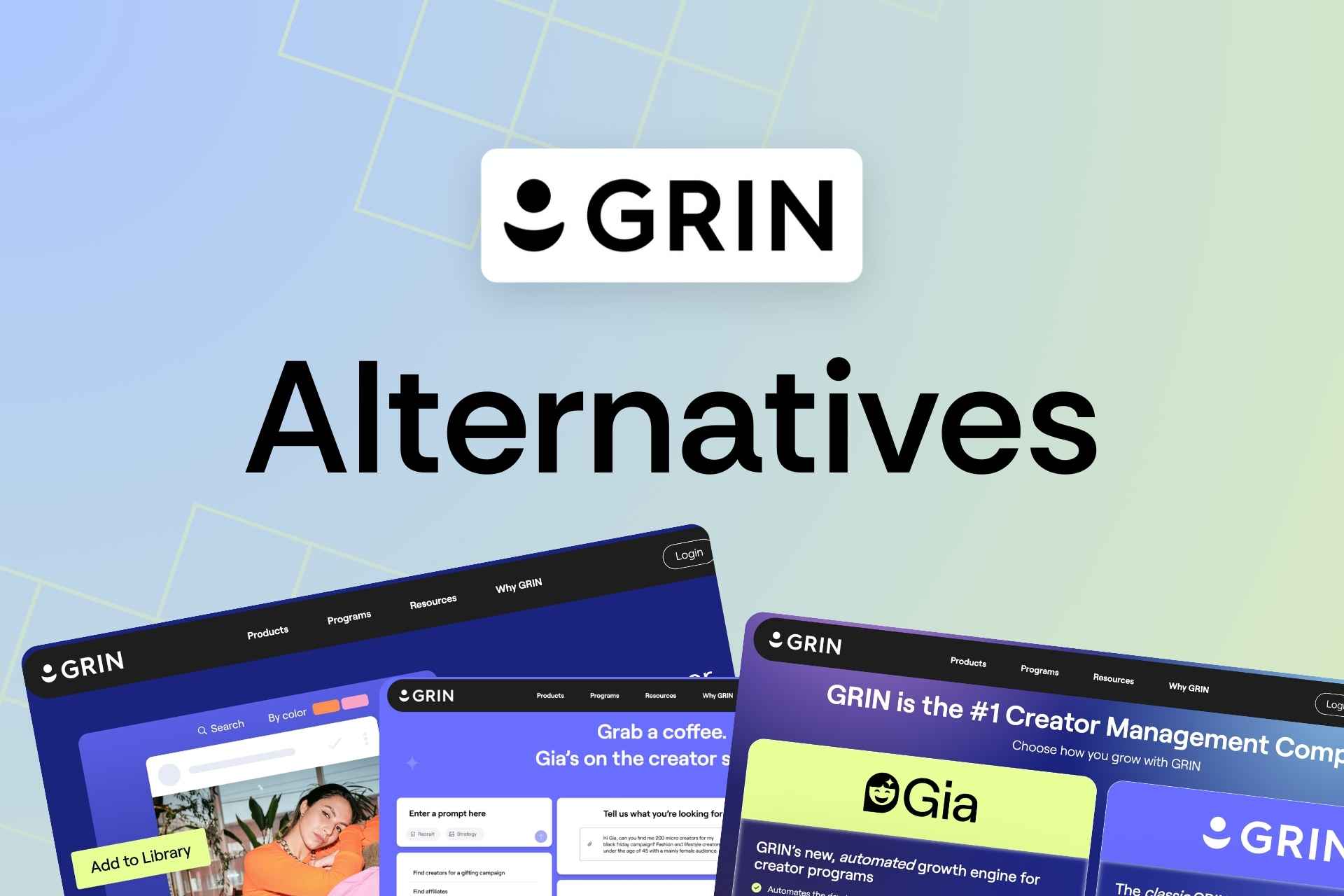
Grin Overview
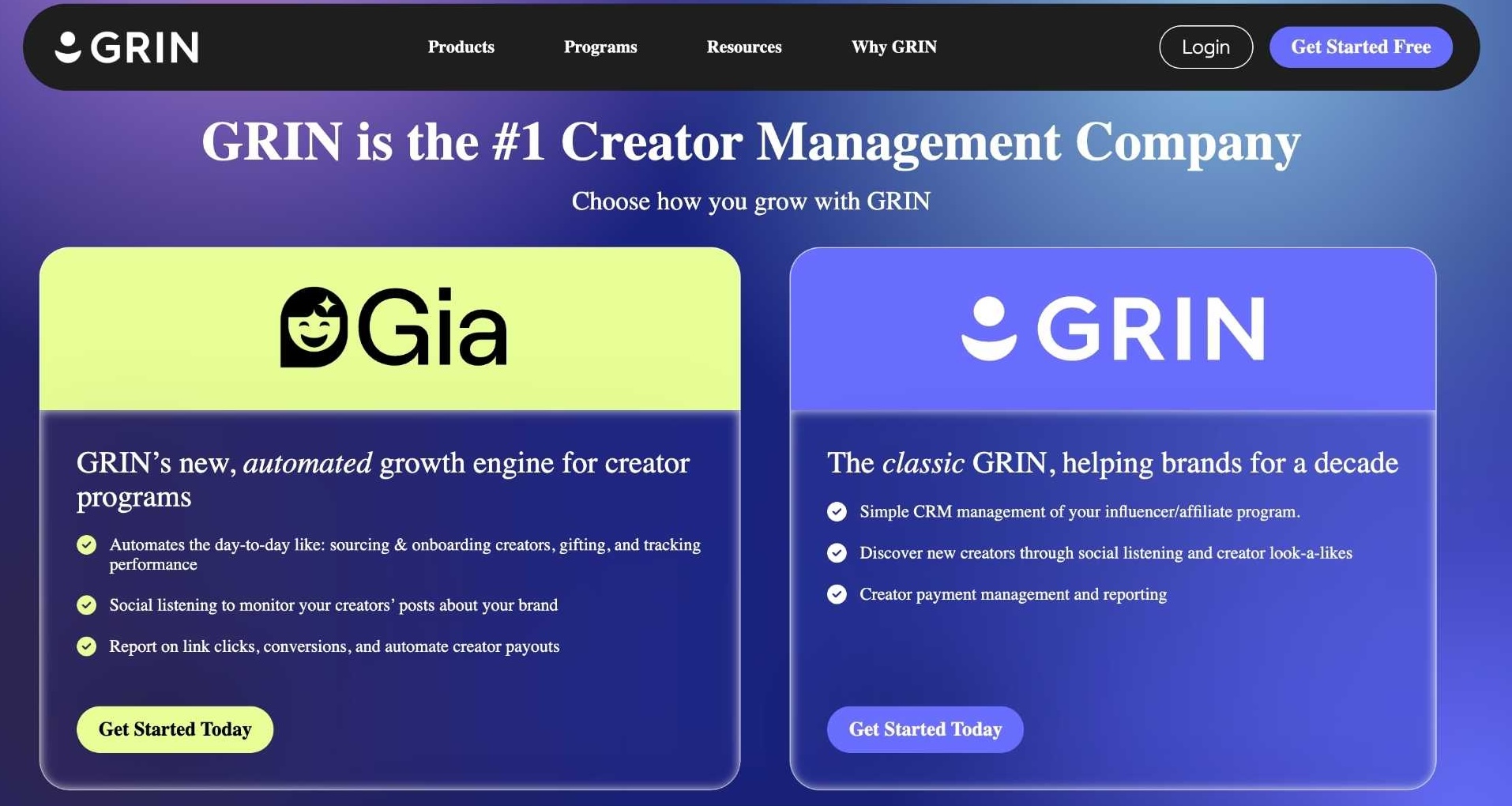
GRIN is an influencer marketing platform built primarily for eCommerce brands that want to manage discovery, outreach, gifting, affiliate tracking, content collection, and payments in one workflow. For influencer discovery specifically, it combines keyword search, lookalike matching, browser-based creator capture, and customer-advocate identification so teams can find both new creators and existing brand fans from a single system. GRIN’s main appeal is that it connects creator sourcing directly to execution, so the same platform used to find creators can also handle product seeding, contracts, payments, and performance tracking.
Key features
- Influencer discovery: AI-powered keyword and lookalike search helps teams find creators by niche, audience data, engagement, and brand fit.
- Creator CRM: GRIN lets teams organize creators with tags, notes, statuses, and custom pipelines so relationship management is not split across spreadsheets and inboxes.
- Email outreach: Built-in outreach supports personalized campaigns with Gmail, Outlook, and Klaviyo-connected workflows, plus open, click, and reply tracking.
- Creator portals: Each creator can receive a personalized workspace for briefs, deliverables, discount codes, contracts, uploads, and payment status updates.
- Product gifting: GRIN automates seeding through connected storefronts, product selection, order tagging, shipping tracking, and fulfillment visibility inside campaigns.
- Affiliate tracking: Brands can assign links and codes, track commission-based performance, and connect creator activity to attributed revenue.
- Creator payments: In-platform payments through PayPal reduce the manual work involved in paying creators and tracking payout status.
- UGC library: Content is stored in a central library, including Stories, so teams can search, manage, and reuse creator assets more easily.
- Media rights management: GRIN includes built-in workflows for securing content usage rights when creators are booked, which is valuable for repurposing content later.
- Application pages: Branded landing pages help brands collect inbound creator applications and keep their pipeline full with warmer leads.
- AI assistant: GRIN’s Gia assistant is positioned as an AI layer for finding creators, drafting outreach, following up, and tracking campaign activity more efficiently.
Platform coverage
GRIN supports Instagram, TikTok, YouTube, X, Twitch, and Snapchat, though its strongest workflows are centered on the major commerce-driven channels rather than every platform equally.
Standout features
- eCommerce-native workflow: GRIN’s biggest differentiator is how tightly it connects creator marketing to storefront operations like gifting, discount codes, fulfillment, and attributed sales.
- Creator-friendly portals: Instead of forcing creators into a complicated backend, GRIN gives them personalized portals for contracts, briefs, uploads, and payment visibility, which helps streamline collaboration at scale.
- UGC plus rights management: The combination of a searchable content library, Story capture, and built-in usage rights makes GRIN especially strong for brands that want to repurpose creator content across ads, email, and ecommerce pages.
Limitations
- Pricing can be a barrier: Annual commitments and higher starting costs than many SMB-focused tools.
- Discovery quality is not always consistent: Some users report irrelevant matches, duplicate results, and weaker curated recommendations than expected from a premium platform.
- Reporting still has gaps for some teams: Reviews point to limited customization and disagreements with how some metrics are calculated, especially for teams that want deeper report flexibility.
- Technical issues come up repeatedly: Bugs, slow loading, unreliable uploads, and occasional integration friction appear often enough in user feedback to be worth noting for buyers evaluating implementation risk.
- Best fit is still eCommerce: Several users note that the platform is most compatible with Shopify-centric setups, so non-eCommerce or non-Shopify teams may not get equal value from every work.
Integrations
- Shopify: Connects product catalogs, gifting, creator orders, discount codes, and sales attribution so influencer campaigns tie directly to store performance.
- WooCommerce: Supports product seeding, order management, and campaign fulfillment for brands running creator programs on WooCommerce instead of Shopify.
- PayPal: Enables in-platform creator payments and commission payouts, reducing manual finance work for influencer teams.
- Klaviyo: Syncs email workflows more closely with creator outreach and relationship management inside GRIN’s communication system.
- Gmail / Outlook: Lets teams run outreach from their own email environment while tracking opens, clicks, and replies within GRIN’s workflow layer.
Pricing
Annual pricing starts at $25,000/year (approx. $2,050/month)
Reviews
4.5/5.0 (G2)
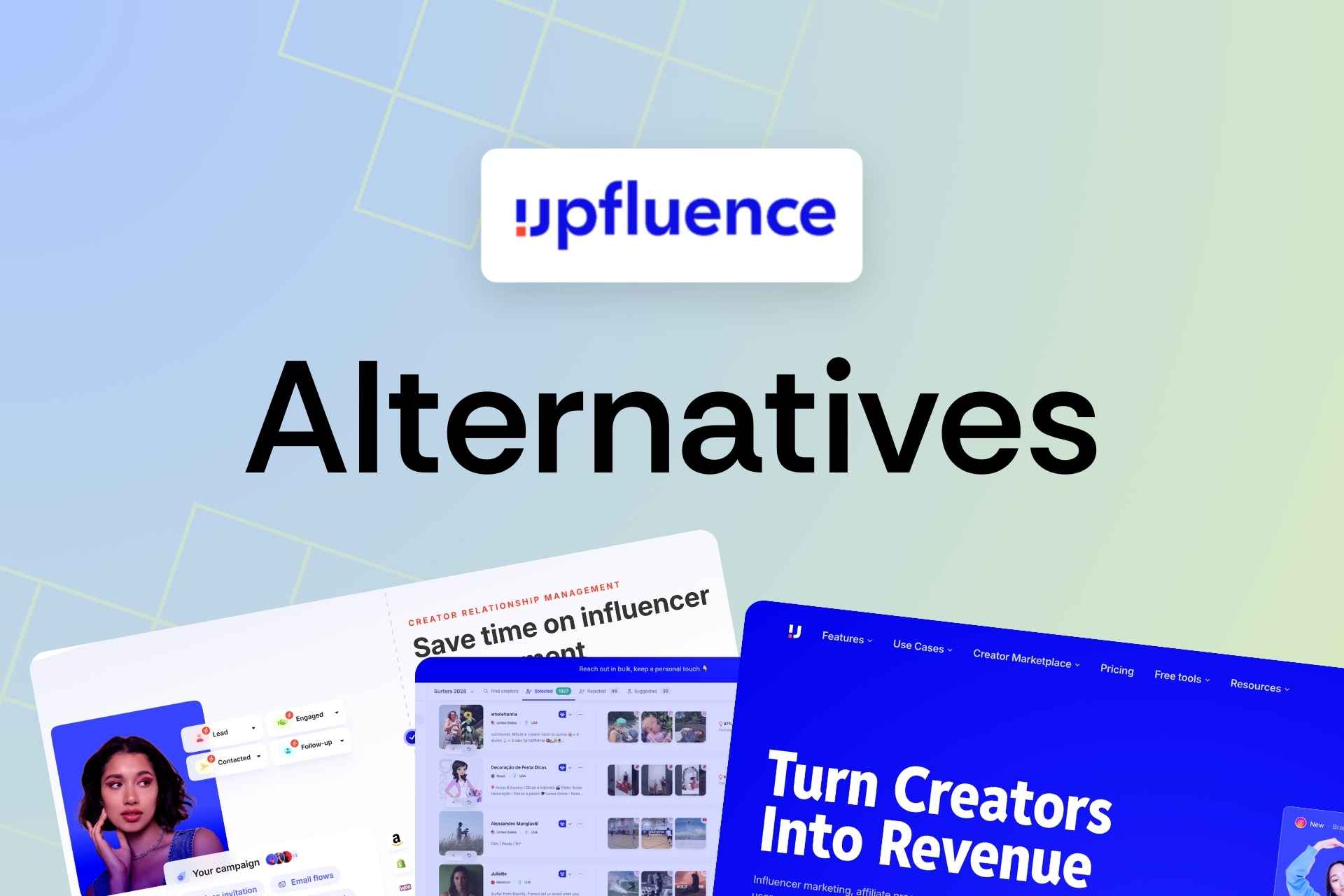
Upfluence Overview
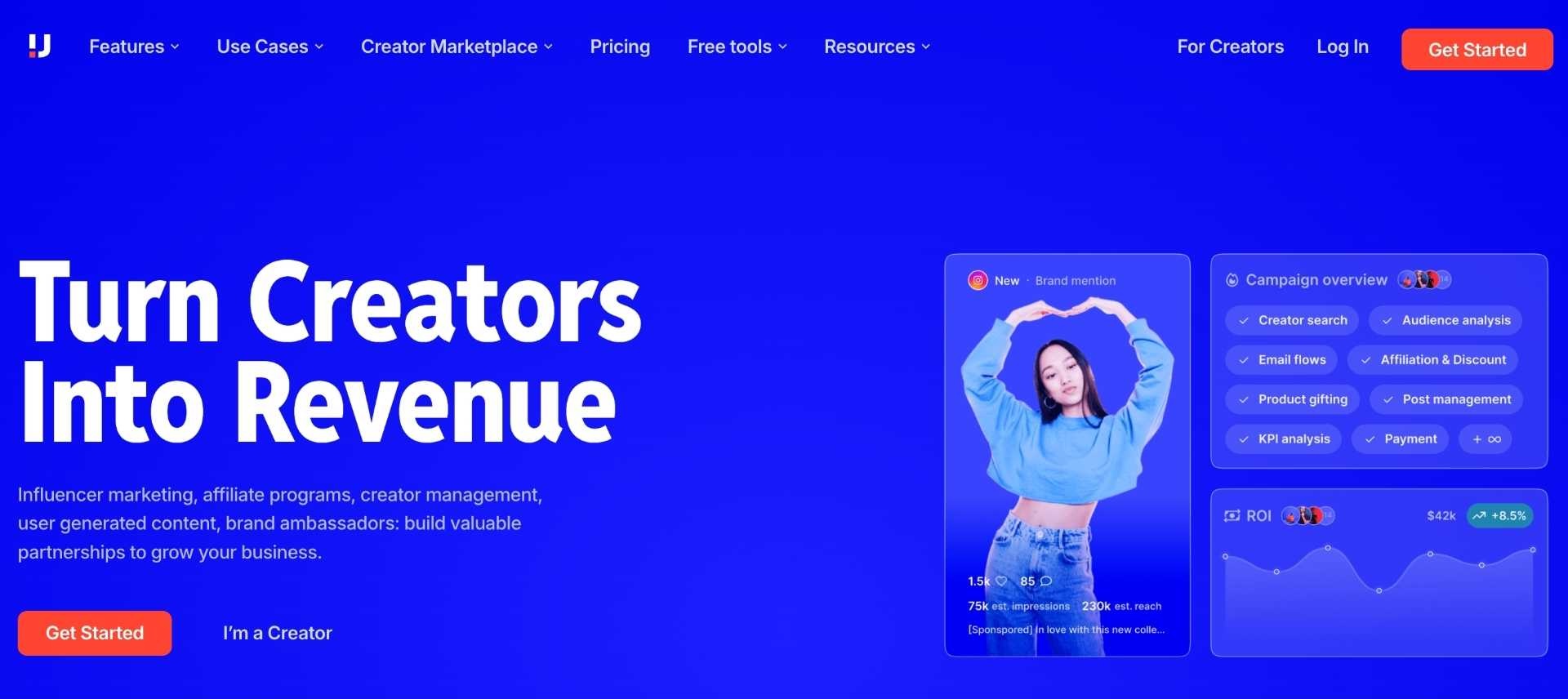
Upfluence is an influencer marketing and affiliate platform built for brands that want discovery, outreach, campaign management, gifting, affiliate tracking, and sales attribution in one place. On the discovery side, it helps teams search a large creator database with filters for niche, location, audience demographics, engagement, and estimated pricing, while also identifying influencers already inside a brand’s customer base through its eCommerce integrations. That makes it especially relevant for eCommerce teams that want to turn existing customers into creators or affiliates, not just source new influencers from scratch.
Key features
- Influencer discovery: Search a 12M+ creator database using filters such as niche, location, follower size, engagement rate, and audience demographics to shortlist relevant creators faster.
- Customer-to-creator identification: Its Shopify integration can surface existing customers who are also influencers, giving brands a lower-friction way to recruit advocates who already know the product.
- Bulk outreach: Upfluence supports bulk emailing and follow-up workflows so teams can contact creators at scale rather than handling every pitch manually.
- AI campaign assistance: Jaice AI helps with campaign setup and messaging, including modifying outreach copy for specific campaigns.
- Creator CRM: The platform centralizes creator communication, performance history, and relationship tracking so outreach and campaign management stay in one system.
- Campaign management: Teams can manage briefs, creator communication, affiliate codes, links, and compensation models from inside the platform.
- Affiliate management: Upfluence is built to run affiliate programs with custom links, commission tracking, and revenue attribution tied back to creator activity.
- Product gifting: The software supports gifting workflows tied to eCommerce integrations, helping brands send products and connect seeding activity to campaign performance.
- Sales tracking: It tracks campaign metrics such as sales, clicks, impressions, reach, engagement, and individual conversions, with a particularly strong eCommerce attribution angle.
- Bulk payments: Brands can handle creator payouts in-platform, reducing manual finance work when running larger programs.
- Social listening: Upfluence also includes social listening for market research and identifying high-engagement posts tied to brands, topics, or competitors.
Platform coverage
Upfluence supports discovery across Instagram, TikTok, YouTube, X, Twitch, Pinterest, and WordPress blogs, with eCommerce attribution workflows extending into Shopify and Amazon environments.
Standout features
- Customer identification through Shopify: One of Upfluence’s clearest differentiators is its ability to find influencers already inside your customer base, which can improve acceptance rates and make affiliate recruitment more efficient for eCommerce brands.
- Native Amazon attribution: Upfluence is unusually strong for brands that sell on Amazon, with native Amazon affiliate campaign support and performance tracking built into the platform.
- Commerce-first campaign tracking: The platform does more than manage outreach; it ties influencer activity to affiliate codes, product gifting, conversions, and sales, which is where it stands out most versus lighter discovery tools.
Limitations
- Pricing transparency is limited: Upfluence’s public pricing page now pushes custom pricing rather than publishing standard plans, which can make budgeting harder early in the buying process.
- Annual commitment is a common concern: Annual terms and limited cancellation flexibility may be restrictive for smaller teams or brands testing influencer software for the first time.
- Learning curve for new users: User feedback consistently points to onboarding complexity, especially for teams moving from manual workflows into a more feature-heavy platform.
- Campaign setup can feel rigid: Multiple user mention that certain campaign settings are hard to edit once configured, which can slow down iteration mid-campaign.
- May be expensive for smaller brands: Upfluence is better suited to established brands than very small businesses with limited influencer budgets.
Integrations
- Shopify: Identifies influential customers, supports product gifting, generates coupon codes, and tracks sales tied to influencer and affiliate campaigns.
- Amazon Attribution: Lets brands create creator-specific Amazon links, measure campaign performance, and connect creator traffic to Amazon sales outcomes.
- Gmail: Syncs creator outreach with your mailbox so teams can email influencers directly while keeping communication visible inside Upfluence.
- Outlook: Provides the same synchronized outreach workflow for teams that manage influencer communication from Microsoft email environments.
- Klaviyo: Helps identify influencers inside existing mailing lists, enrich their profiles with Upfluence data, and run more targeted CRM and lifecycle flows.
Pricing
Upfluence’s official website currently uses a custom-pricing model, with modules such as Search & Contact and Campaign Manager rather than public self-serve tiers. Pricing starts at $1,276 - $2,000 per month on an annual term.
Reviews
4.3 / 5.0 (Capterra)
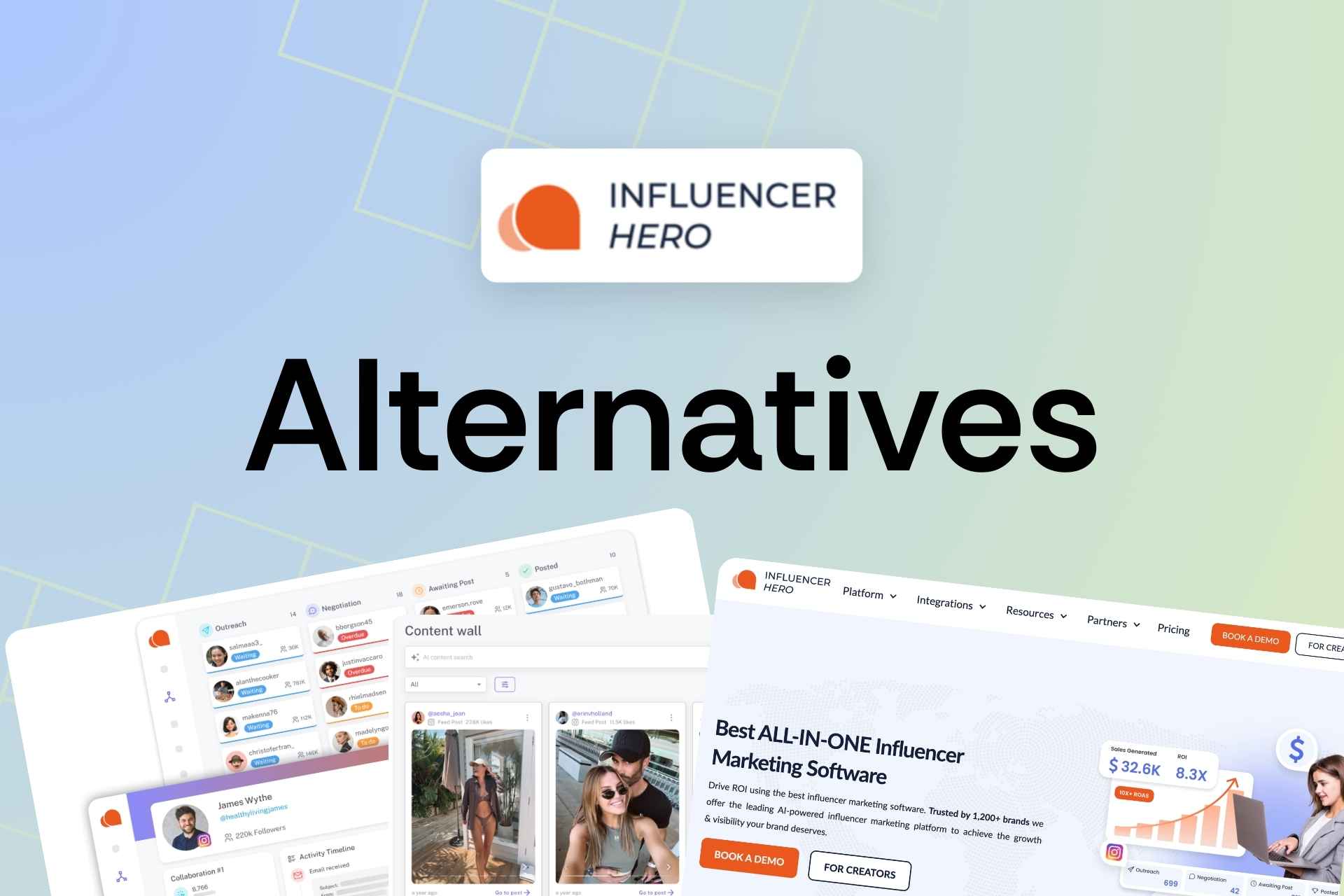
Influencer Hero Overview
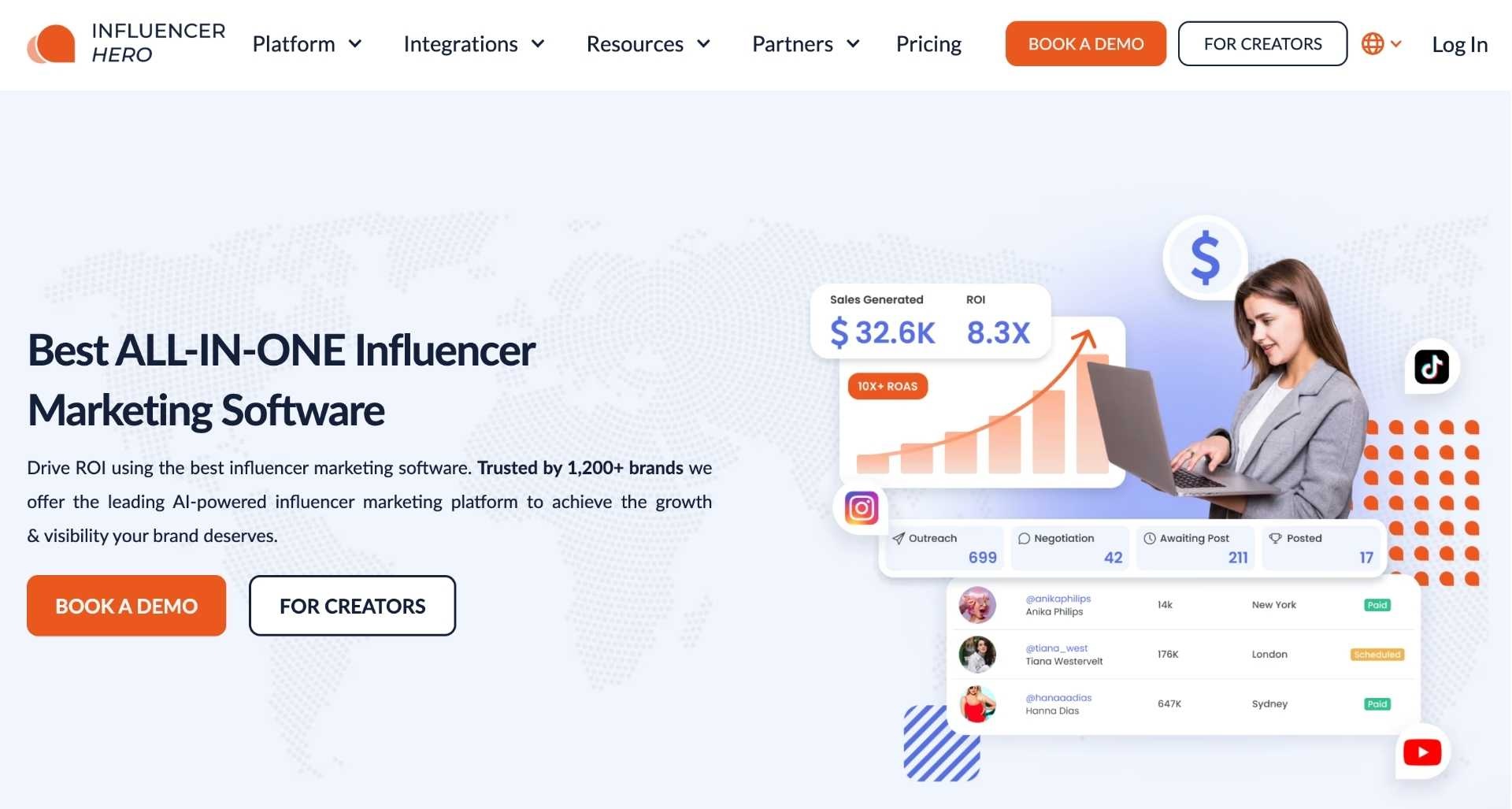
Influencer Hero is an all-in-one influencer marketing platform built for brands that want discovery, outreach, CRM, gifting, affiliate tracking, payments, and reporting in one system. For influencer discovery, it combines advanced filters, lookalike suggestions, fake-follower checks, a Chrome extension, and a large creator dataset that can also be accessed via its API, helping teams move from creator search to campaign execution without switching tools. It is especially geared toward D2C and eCommerce teams that want structured workflows and tighter revenue attribution from creator campaigns.
Key features
- Influencer discovery: Advanced creator search includes filters for demographics, interests, engagement, and follower quality, plus lookalike suggestions and fake-follower detection to help teams shortlist better-fit creators faster.
- Chrome extension: The browser extension lets teams pull creator insights and import profiles directly into workflows while researching creators online.
- Bulk and 1:1 outreach: Influencer Hero supports both one-to-one and bulk outreach, making it easier to run high-volume prospecting without managing everything manually.
- AI-personalized templates: Smart outreach templates and AI-assisted copy help teams personalize messages at scale.
- Drip sequences and reply tracking: Multi-step email flows and reply tracking support more structured follow-up and outreach management.
- CRM and campaign boards: Structured relationship boards track creators across outreach, deliverables, approvals, and ROI stages, which is one of the platform’s core strengths.
- Bulk actions: Teams can approve, decline, email, or update creator statuses in bulk, which is useful for large creator programs.
- Reporting and analytics: The platform provides real-time dashboards for ROI, clicks, affiliate sales, and content performance, along with exportable reports for stakeholders.
- Product gifting: Shopify and WooCommerce integrations support seeding, shipping, and delivery tracking directly from the platform.
- UGC collection: Influencer Hero automatically gathers creator posts and stores them for reuse, with tagging for top-performing assets.
- Affiliate tracking and payouts: Brands can generate custom links and codes, track commissions, and process creator payouts through the platform.
- Application pages and storefronts: Branded signup pages and creator storefront functionality help brands scale inbound creator and affiliate recruitment.
Platform coverage
Influencer Hero supports Instagram, TikTok, YouTube, Facebook, Pinterest, Snapchat, X, and Twitch.
Standout features
- Campaign-centric CRM automation: Its structured boards, bulk actions, and automated follow-ups make it especially strong for teams managing high volumes of creator partnerships at once.
- Multi-platform eCommerce support: Supports Shopify, WooCommerce, and custom setups via embedded scripts, enabling seamless tracking across stores.
- Influencer brand followers: Identify creators who already follow or engage with your brand to boost campaign authenticity and improve outreach success.
Limitations
- No free trial: Influencer Hero does not currently offer a free trial, which may make initial evaluation more difficult.
- Learning curve: The wide feature set can feel dense at first, so new users may need some onboarding to get fully set up.
Integrations
- Shopify: Syncs product catalogs, creates affiliate links and discount codes, supports product gifting from live inventory, and tracks creator-attributed revenue in real time.
- WooCommerce: Lets brands create creator discount codes, track sales and commissions, automate post tracking, and manage gifting from store inventory.
- Klaviyo: Helps identify influencers among contacts and connect creator and referral data with email and SMS segmentation workflows.
- Outlook: Allows teams to send outreach from their own inbox, track campaigns, log replies automatically, and manage follow-ups inside existing Microsoft workflows.
- Slack: Sends real-time notifications for sign-ups, approvals, sales, and campaign activity so internal teams can monitor creator programs without leaving Slack.
Pricing
Influencer Hero offers flexible pricing based on outreach volume:
- Standard: $649/month (up to 1,000 outreaches/month)
- Pro: $1,049/month (up to 5,000 outreaches/month)
- Business: $2,490/month (up to 10,000 outreaches/month)
- Custom / Agency: Custom pricing available
All plans include core features and allow unlimited creators in the CRM.
Reviews
5.0/5.0 (Capterra)
Final Thoughts
GRIN, Upfluence, and Influencer Hero all cover the core needs of influencer marketing teams, but they prioritize different parts of the workflow. GRIN is the strongest fit for brands that want deep creator relationship management, product gifting, and UGC workflows tied closely to eCommerce operations. Upfluence stands out for affiliate-driven programs, customer-to-creator identification, and stronger Shopify and Amazon attribution, while Influencer Hero offers a more accessible all-in-one option with strong automation, campaign workflows, and flexible pricing.
The right choice depends largely on your team’s size, budget, and operational priorities. Brands that need advanced infrastructure and are willing to invest more may lean toward GRIN or Upfluence, while growing teams looking for a more cost-efficient platform with broad functionality may find Influencer Hero more practical. Overall, each platform can support successful influencer campaigns, but the best fit comes down to whether discovery, commerce attribution, CRM depth, or affordability matters most to your business.