

Grin Alternatives: Best Influencer Marketing Platforms
Influencer marketing software has become a core part of how brands and agencies manage creator partnerships, helping teams handle influencer discovery, outreach, campaign management, and performance tracking in one centralized platform. As influencer campaigns become increasingly performance-driven, businesses rely on these tools to manage creator relationships and measure ROI more efficiently.
While GRIN is widely used among eCommerce brands, feedback across various platforms and marketing forums consistently highlights several drawbacks that lead users to explore Grin alternatives. Common concerns include high pricing tied to annual contracts, onboarding complexity that requires significant internal resources, and limited flexibility for smaller teams or agencies scaling influencer programs. As a result, many brands begin evaluating alternative influencer marketing software that offers easier implementation, transparent pricing, and stronger scalability.
To help brands and agencies make an informed decision, this article compares GRIN with ten leading influencer marketing software alternatives, including Upfluence, Influencer Hero, Aspire, Saral, CreatorIQ, Influencity, Captiv8, Tagger Media, Revfluence, and IZEA. The comparison focuses on platform capabilities, usability, scalability, and overall value for D2C brands and marketing teams managing creator partnerships. The following sections break down how each alternative compares to GRIN across key influencer marketing workflows.
Criteria for Suggesting Platform Alternatives:
- Core Features
Evaluation of each platform’s essential capabilities, including influencer discovery, outreach, CRM, campaign reporting, gifting, UGC and content collection, affiliate tracking and payments, storefronts, application pages, and AI-powered tools. - Supported Social Media Platforms
Assessment of how well each platform integrates with major social networks such as Instagram, YouTube, TikTok, Facebook, Pinterest, and many more - Pricing & Contract Flexibility
Comparison of pricing models, subscription costs, and contract requirements to help brands choose solutions that match their budget and scalability needs. - Standout & Differentiating Features
Highlighting unique or innovative functionalities that set each platform apart, such as real-time tracking dashboards, creator benchmarking, TikTok email discovery, or advanced automation tools. - Customer Reviews & User Satisfaction
Analysis of verified user feedback from credible platforms like G2, TrustRadius, Capterra, focusing on usability, reliability, value for money, customer support, and real-world performance.
GRIN Overview
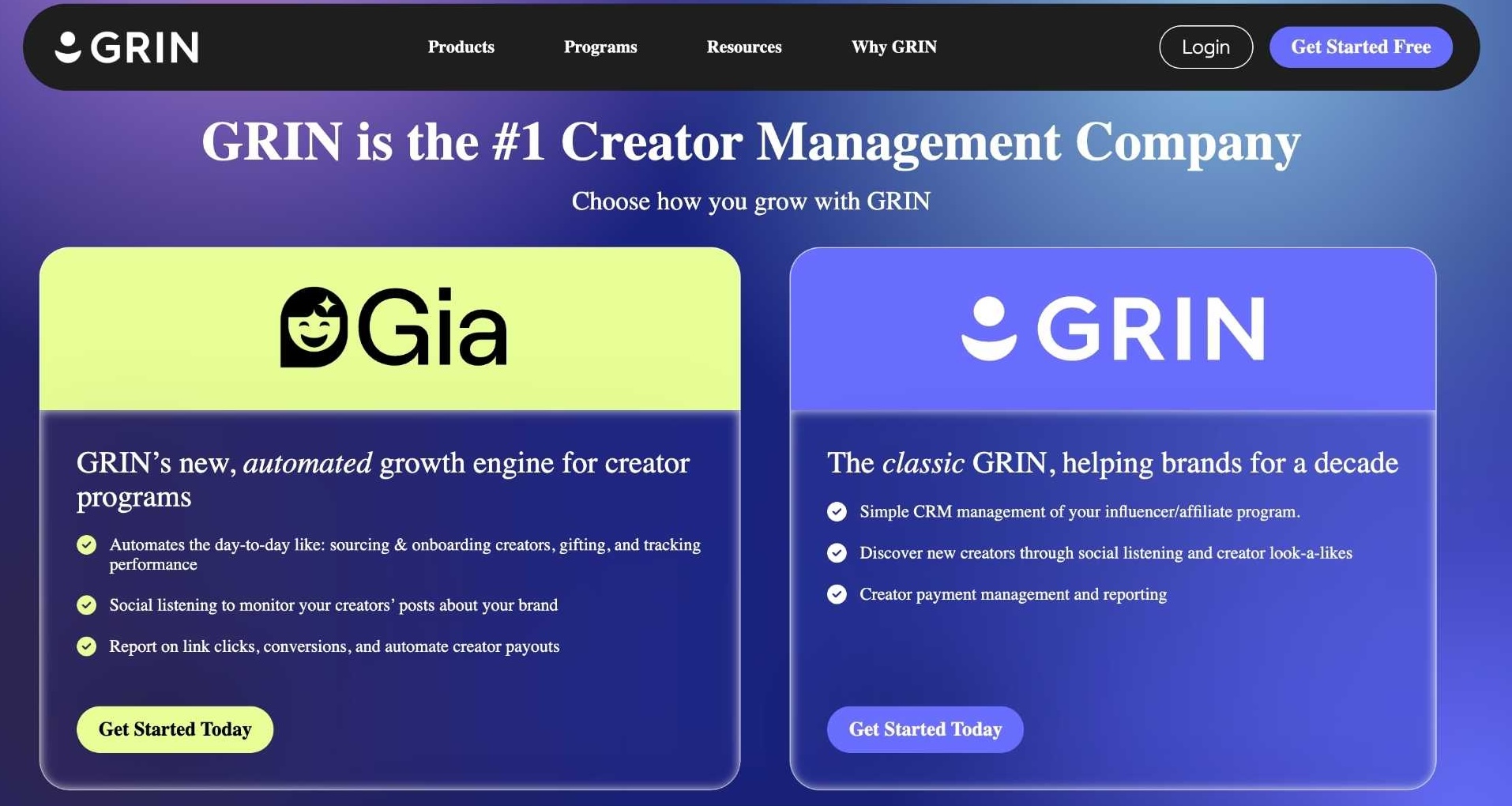
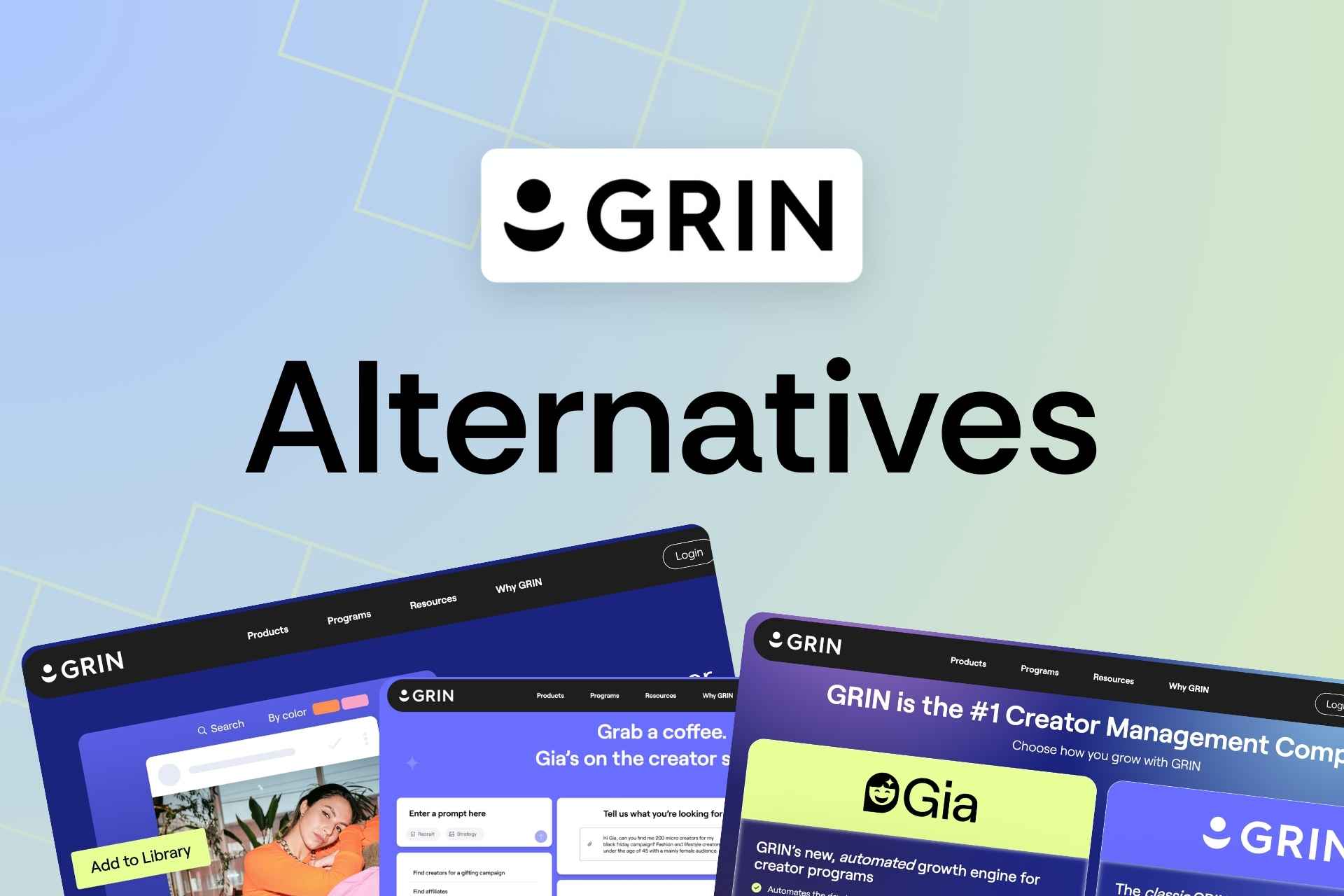
GRIN is an influencer marketing platform primarily built for D2C and eCommerce brands looking to manage creator relationships, product seeding, affiliate tracking, and campaign performance within a single system. The platform positions itself as an end-to-end creator management solution, helping brands move away from manual outreach and fragmented workflows toward scalable influencer programs. GRIN focuses heavily on Shopify-native workflows, CRM-style creator management, and revenue attribution tied directly to influencer campaigns.
Key Features
- Influencer Discovery & AI Creator Search
GRIN provides access to a large creator database combined with AI-powered search capabilities that allow brands to find influencers based on niche keywords, past brand partnerships, audience demographics, and geographic targeting. Teams can quickly identify creators aligned with brand affinity instead of relying on marketplace applications. - Creator CRM & Outreach Automation
The platform functions as a dedicated influencer CRM where brands can segment creators, apply tags, send bulk outreach emails, and manage communication workflows directly inside the platform. This replaces manual DM outreach and enables scalable campaign activation. - Product Seeding & Shopify Integration
GRIN integrates directly with Shopify, allowing brands to generate product orders, send gifting campaigns, and assign discount codes or affiliate links without leaving the platform. Orders can be pushed automatically through Shopify APIs, removing manual fulfillment steps. - Affiliate Tracking & Revenue Attribution
Brands can assign custom links and discount codes to creators while tracking conversions, commissions, and revenue generated per influencer. Performance data connects influencer activity directly to sales outcomes. - Content Management & Media Library
GRIN automatically aggregates creator content—including Stories, Reels, and TikTok videos—into a centralized content library where teams can track engagement metrics and download assets for paid ads or repurposing. - Contracts, Briefs & Workflow Management
Campaign briefs, deliverables, contracts, and media usage rights can be handled inside activation workflows, allowing creators to accept terms digitally while brands track deliverables and posting status. - Payments & Creator Wallet
GRIN includes a built-in payment system integrated with PayPal, enabling brands to pay creators, manage commissions, and automatically handle tax documentation such as 1099 forms.
Platform Coverage
GRIN supports influencer campaign management across major social media platforms, including:
- TikTok
- YouTube
- Twitch (creator partnerships & tracking support)
Pricing
GRIN does not publicly list pricing on its website, but based on verified industry sources:
- Starting Cost: Approximately $25,000 per year
- Billing Model: Annual contract (typically 12 months)
- Monthly Equivalent: ~$2,000–$2,100/month billed annually
- Users Included: Around 5 user seats
- Creator Limit: Unlimited creators
- Onboarding: Dedicated onboarding manager (2–4 weeks typical setup)
GRIN generally offers customized enterprise-style pricing rather than tiered public plans, with costs increasing based on integrations, team size, and workflow requirements.
Reviews
- G2: 4.6 / 5
GRIN Standout Features
- Shopify-Native Creator Commerce Integration
GRIN allows brands to generate influencer product orders directly inside the platform and sync fulfillment automatically through Shopify APIs, making it especially attractive for eCommerce-driven influencer programs. - Instagram Stories Capture & Performance Tracking
Unlike many platforms, GRIN automatically captures and stores Instagram Stories within the campaign dashboard while tracking impressions and engagement during the 24-hour live window—preventing loss of performance data. - AI Creator Discovery & Workflow Automation (Recent Release)
GRIN’s AI creator search enables teams to generate influencer lists based on demographic, psychographic, and brand affinity inputs, helping lean marketing teams automate creator sourcing and campaign recruitment.
Limitations (Why Users Look for GRIN Alternatives)
High Cost Barrier for SMBs and Agencies
With pricing typically starting around $25K annually, many mid-sized brands and growing agencies find GRIN difficult to justify compared to newer platforms offering similar functionality at lower entry costs.
Long-Term Contracts With Limited Flexibility
Users frequently mention mandatory annual agreements, which reduce flexibility for teams wanting to test influencer marketing software before committing long term.
Complex Onboarding & Resource Requirements
While powerful, GRIN often requires dedicated internal ownership during onboarding and setup, making adoption slower for lean marketing teams without specialized influencer operations staff.
Limited Cross-Channel Marketing Beyond Influencer Workflows
Some users note that GRIN is heavily optimized for Shopify-based influencer programs, which can make it less suitable for agencies managing non-eCommerce clients or broader creator marketing strategies.
These limitations explain why many brands actively compare GRIN with alternative influencer marketing software platforms offering faster onboarding, flexible pricing, or wider campaign functionality.
10 Best Influencer Marketing Platform Alternatives:
| TOOL | REVIEWS | BEST FOR | TRIAL INFO | PRICING | ||
|---|---|---|---|---|---|---|
1 |
|
⭐ | Ecommerce influencer discovery | Book Demo | Pricing | Website |
2 |

|
⭐ | Influencer CRM & automation | Book Demo | Pricing | Website |
3 |

|
⭐ | Influencer partnerships | Book Demo | Pricing | Website |
4 |

|
⭐ | Influencer outreach | Book Demo | Pricing | Website |
5 |

|
⭐ | Enterprise influencer marketing | Book Demo | Pricing | Website |
6 |

|
⭐ | Campaign management | Book Demo | Pricing | Website |
7 |
|
⭐ | Enterprise influencer campaigns | Book Demo | Pricing | Website |
8 |
|
⭐ | Influencer marketing & Social media analytics | Book Demo | Pricing | Website |
9 |
|
⭐ | Influencer discovery & video content strategy | Book Demo | Pricing | Website |
10 |
|
⭐ | Influencer marketplace | Book Demo | Pricing | Website |
1. Upfluence
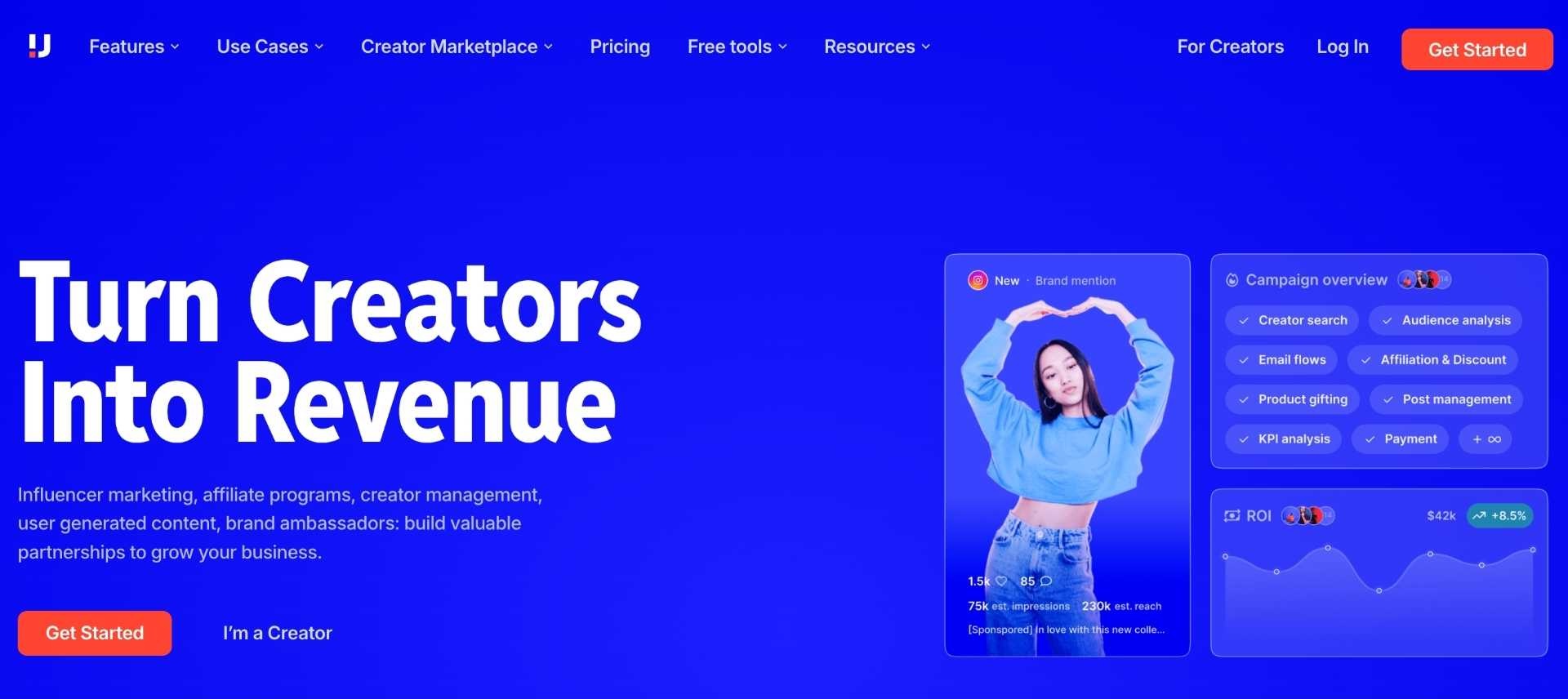
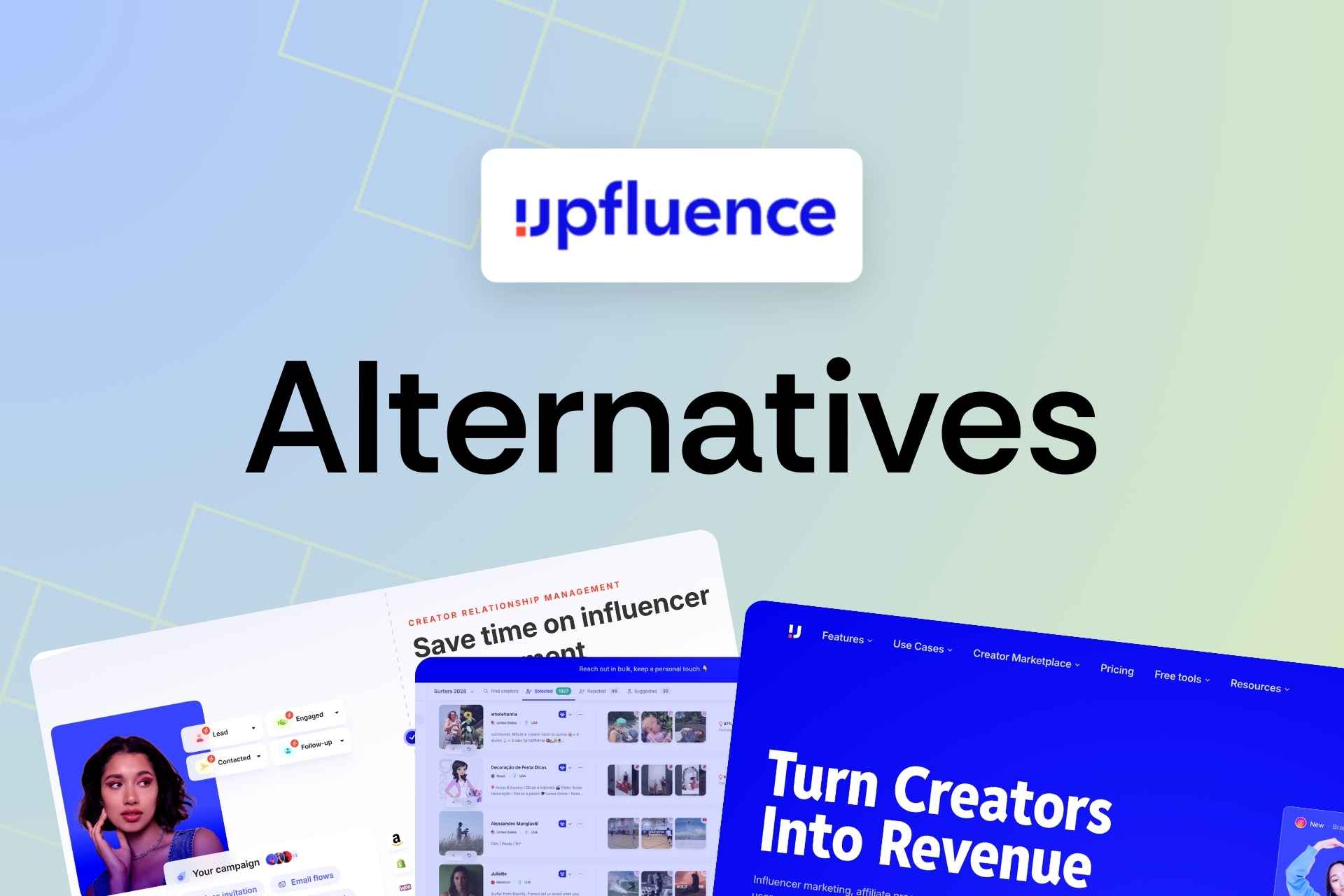
Upfluence is an influencer marketing platform designed for eCommerce brands that want to combine influencer discovery, affiliate marketing, and creator relationship management within one system. The platform is particularly known for integrating influencer data directly into sales workflows, allowing brands to identify customers and influencers already purchasing their products. It is widely adopted by Shopify and Amazon-focused brands scaling performance-driven influencer programs.
Key Features
- Influencer Discovery Database
Upfluence provides access to a large influencer database searchable by audience demographics, engagement metrics, location, keywords, and past brand collaborations. - CRM & Relationship Management
Brands can manage influencer communication, campaign stages, notes, and historical collaborations through a centralized influencer CRM. - Affiliate & Discount Code Tracking
The platform enables automated affiliate link generation and discount code tracking tied directly to influencer-driven revenue. - Customer-to-Creator Identification
Upfluence can identify influencers already present within a brand’s customer database, helping teams activate existing brand advocates. - Campaign Workflow Automation
Outreach emails, follow-ups, payments, and campaign tracking can be managed within automated workflows.
Platform Coverage
- TikTok
- YouTube
- Twitch
- Blogs
Pricing
- Custom pricing model
- Typically starts around $2,000/month (~$24,000/year)
- Annual contract required
- Enterprise-level customization based on integrations and usage
Reviews
4.3 / 5.0 (Capterra)
Standout Features
- Live Customer Data Integration
Upfluence connects directly with eCommerce platforms to identify influencers already purchasing from your store, enabling highly authentic partnerships. - Amazon & Shopify Creator Activation
Brands can recruit influencers directly from marketplace buyers and manage affiliate performance tied to product sales. - Integrated Affiliate + Influencer Workflow
Influencer campaigns and affiliate programs operate within the same dashboard, reducing reliance on external tracking tools.
GRIN vs Upfluence
Both GRIN and Upfluence strongly target eCommerce brands, but their approach differs significantly. GRIN focuses on outbound relationship-building and creator CRM workflows, while Upfluence leans more heavily into data-driven influencer identification using existing customer and sales insights.
Upfluence is often preferred by brands prioritizing affiliate revenue tracking and customer activation, whereas GRIN provides deeper workflow control for product seeding, contracts, and creator lifecycle management. Teams deciding between the two typically evaluate whether discovery or operational campaign execution is their primary need.
2. Influencer Hero
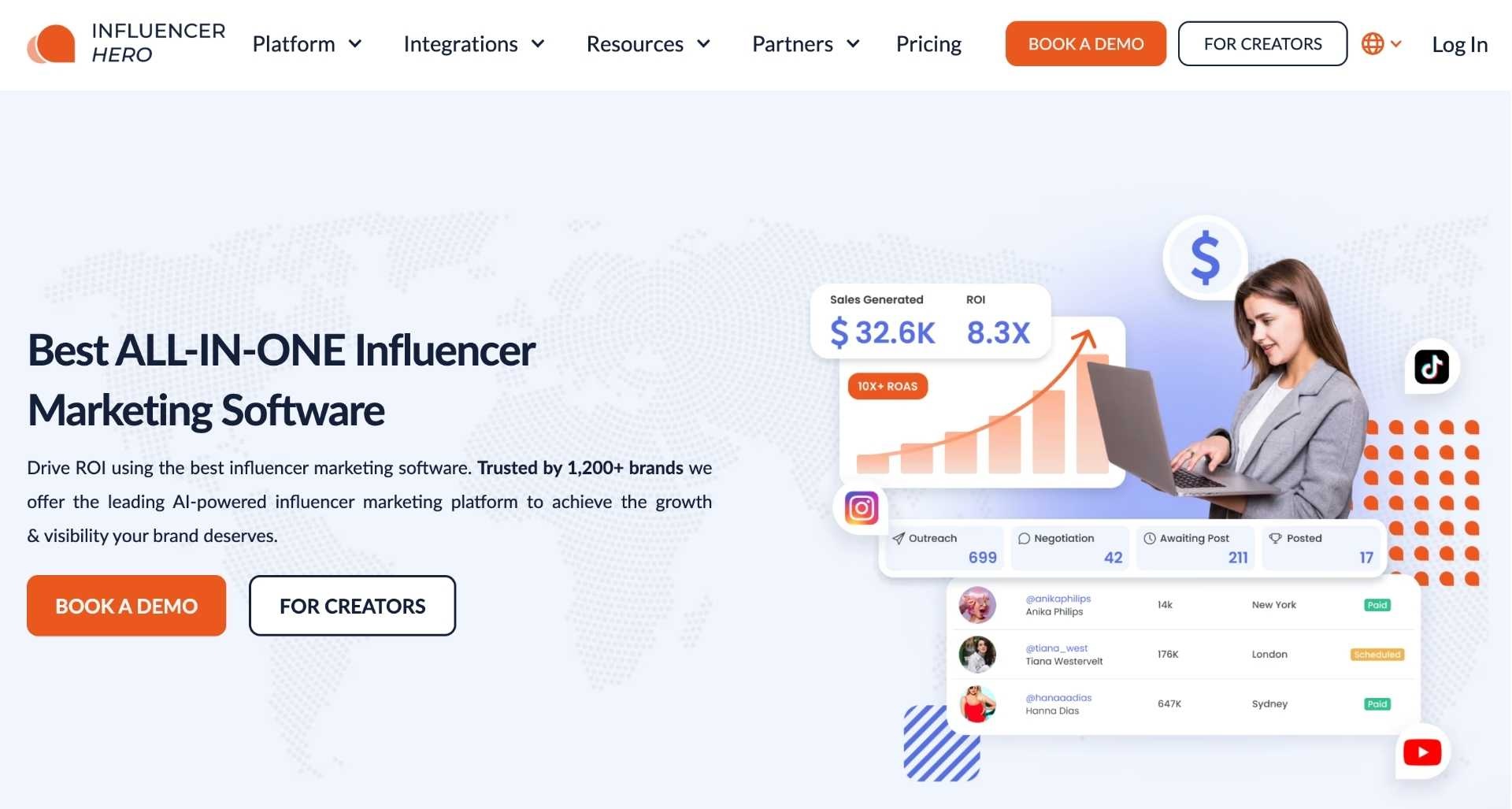
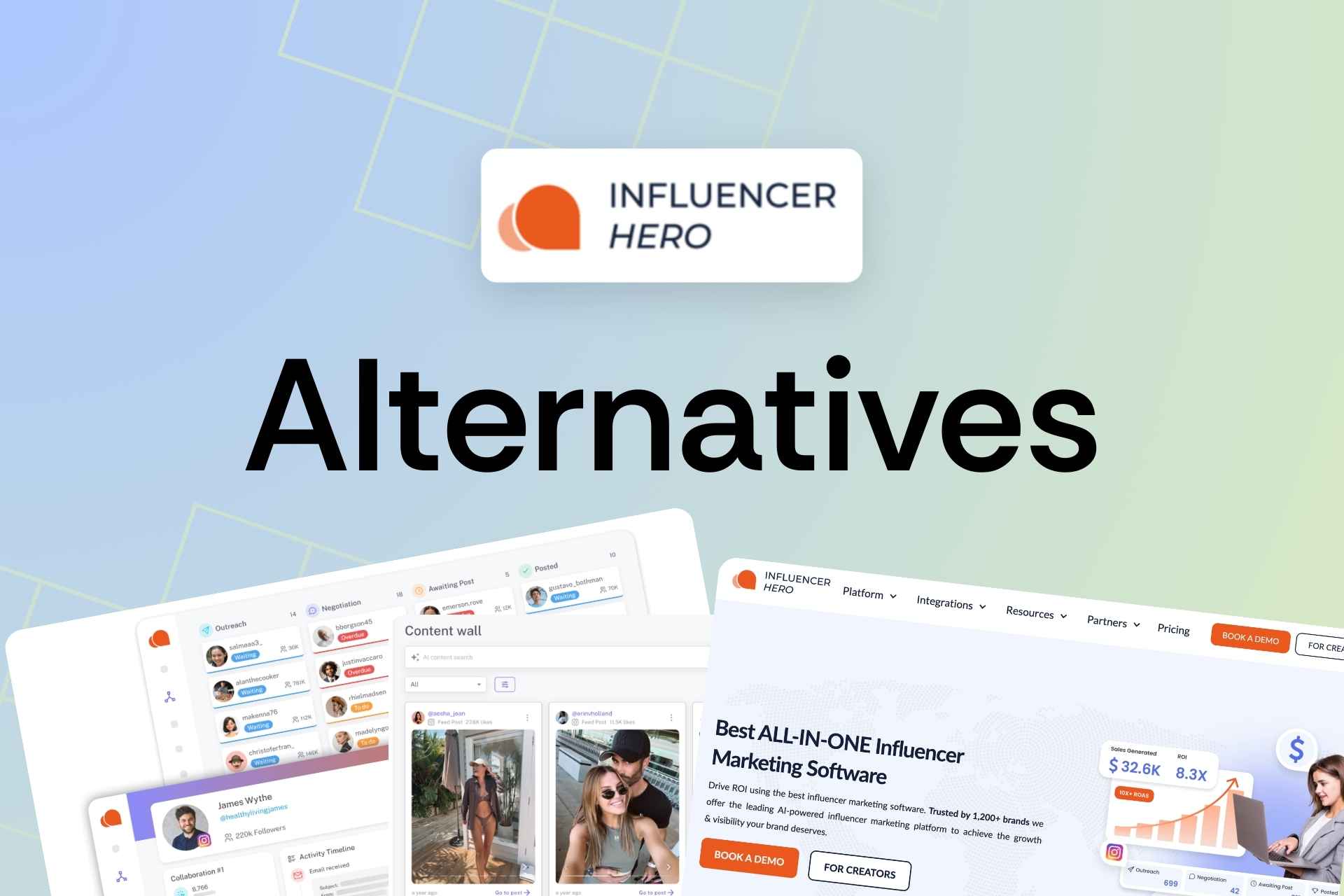
Influencer Hero is an all-in-one influencer marketing software built for D2C brands and agencies looking to manage influencer discovery, outreach, CRM workflows, affiliate programs, and UGC tracking within a single platform. Unlike enterprise tools focused primarily on relationship management, Influencer Hero structures influencer marketing as a performance channel—connecting creator partnerships directly to revenue, content output, and campaign scalability. The platform is increasingly positioned as a flexible alternative to enterprise solutions like GRIN by offering similar end-to-end functionality with faster onboarding and lower contract commitment requirements.
Key Features
- AI-Powered Influencer Discovery
Brands can search a global database of influencers using filters such as niche, audience demographics, engagement quality, and brand relevance to identify creators aligned with campaign goals. - Automated Influencer Outreach
Influencer Hero enables scalable outreach through automated email sequences and follow-ups, including AI-generated personalization based on creators’ recent content activity. - Influencer CRM & Dealflow Management
The platform centralizes influencer relationships through deal pipelines that track communication, deliverables, payments, campaign stages, and performance metrics in one workspace. - Product Seeding & Campaign Management
Brands can manage gifting workflows, track shipments, monitor posting status, and oversee collaboration timelines without relying on external tools. - Affiliate Marketing & Commission Tracking
Built-in affiliate links and discount codes allow brands to track conversions, commissions, and influencer-driven sales directly inside campaign workflows. - UGC Tracking & Content Library
Influencer Hero automatically captures creator content and aggregates UGC assets for reuse across paid ads, social media, and lifecycle marketing campaigns.
Platform Coverage
- TikTok
- YouTube
- Snapchat
- X (Twitter)
- Twitch
Influencer Hero supports cross-channel creator campaigns while maintaining centralized reporting across platforms.
Pricing
Influencer Hero offers flexible pricing based on outreach volume:
- Standard: $649/month (up to 1,000 outreaches/month)
- Pro: $1,049/month (up to 5,000 outreaches/month)
- Business: $2,490/month (up to 10,000 outreaches/month)
- Custom / Agency: Custom pricing available
All plans include core features and allow unlimited creators in the CRM.
Reviews
5.0 / 5.0 (Capterra)
Standout Features
- Outreach-First Influencer Acquisition Engine
Influencer Hero structures influencer marketing similarly to a sales pipeline, enabling brands to automate creator recruitment at scale rather than relying on marketplaces or manual DMs. - Unified Affiliate + Influencer Revenue Tracking
Affiliate links, discount codes, commissions, payouts, and creator performance live within the same relationship dashboard—eliminating the need for separate affiliate tools. - Dealflow Campaign Management System
The platform introduces deal-level tracking that surfaces overdue deliverables, missing posts, or pending approvals, helping teams operationalize influencer marketing like a structured growth channel. - AI-Powered UGC Search
With AI and UGC search, brands can quickly find influencer-generated content based on keywords, visuals, captions, or campaign context. This helps teams reuse high-performing UGC, identify top creators, and streamline content discovery for paid ads, social media, and ecommerce use cases.
GRIN vs Influencer Hero
Both GRIN and Influencer Hero provide end-to-end influencer marketing workflows covering discovery, CRM management, gifting, affiliate tracking, and analytics. However, GRIN is primarily optimized for enterprise Shopify brands operating with dedicated influencer teams, while Influencer Hero focuses on operational efficiency and faster deployment for D2C brands and agencies.
A major difference lies in accessibility and workflow automation. GRIN typically requires annual contracts and structured onboarding, whereas Influencer Hero offers flexible monthly pricing and automated outreach systems designed to help smaller teams scale creator acquisition quickly. Brands often consider Influencer Hero when they want GRIN-level functionality but with lower operational complexity and faster campaign execution.
3. Aspire
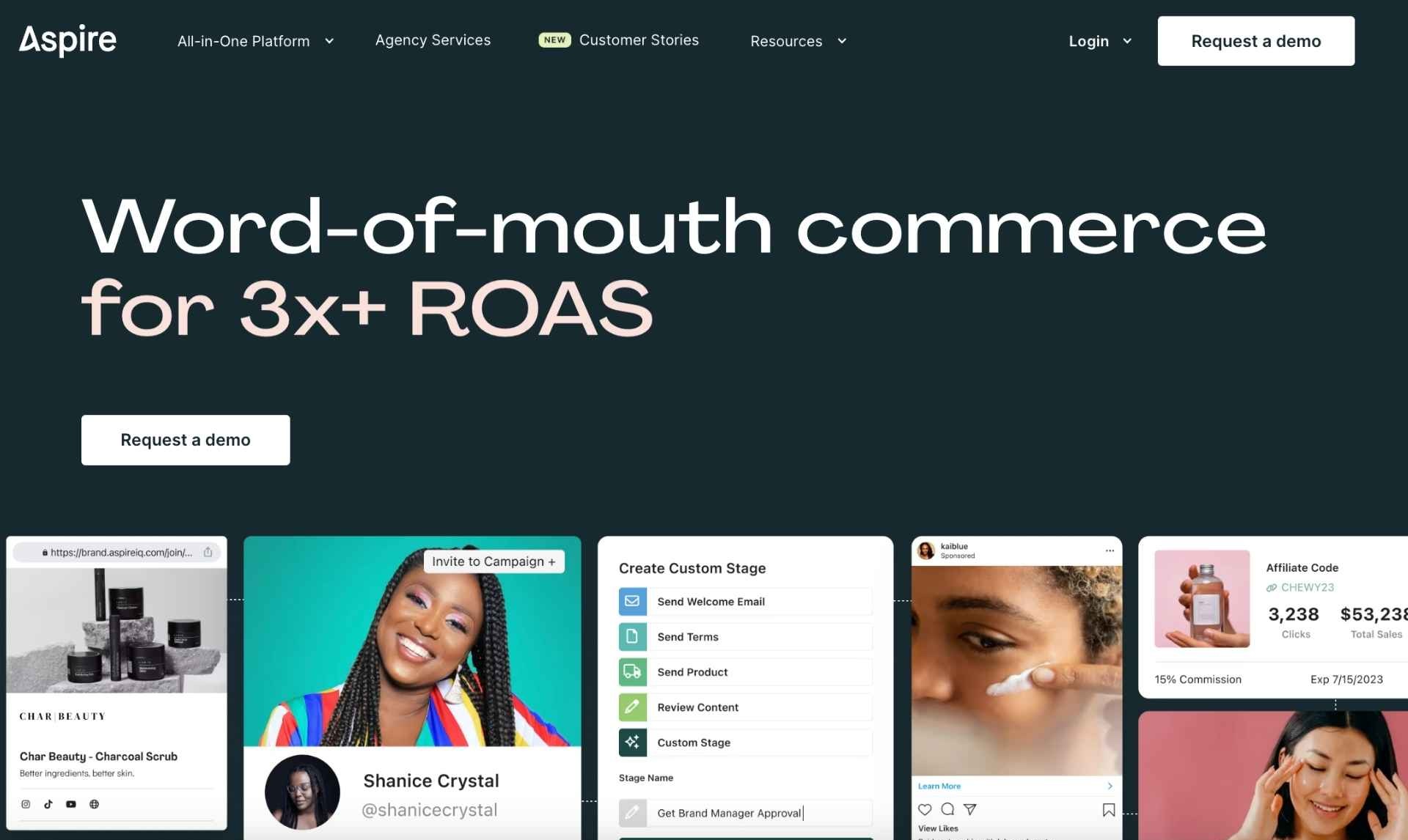
Aspire is an influencer marketing platform focused on relationship-driven creator partnerships and brand ambassador programs. The platform combines influencer discovery with creator marketplaces and long-term collaboration tools, making it popular among consumer brands running ambassador or community-led campaigns.
Key Features
- Influencer Marketplace & Discovery
Brands can recruit creators through both database search and inbound applications. - Campaign Lifecycle Management
Manage collaborations from recruitment to deliverables and reporting in one interface. - UGC Management
Collect and organize creator-generated content for repurposing across paid and organic campaigns. - Affiliate & Ambassador Programs
Supports recurring partnerships and long-term influencer relationships. - Workflow Automation
Automates communication, approvals, and collaboration tracking.
Platform Coverage
- TikTok
- YouTube
Pricing
- Custom pricing
- Typically mid-market to enterprise
- Starts from$2,000/month, with annual agreements.
Reviews
4.0 / 5.0 (Capterra)
Standout Features
- Creator Marketplace Applications
Brands receive inbound creator applications instead of relying solely on outbound outreach. - Ambassador Program Management
Designed specifically for long-term influencer communities and recurring partnerships. - UGC Licensing & Content Rights Tools
Simplifies usage rights approvals for paid media reuse.
GRIN vs Aspire
GRIN emphasizes outbound influencer sourcing and operational automation, while Aspire places stronger focus on community-building and ambassador-style programs. Brands looking for inbound creator recruitment often favor Aspire.
GRIN typically performs better for Shopify-driven performance marketing workflows, whereas Aspire appeals to lifestyle and consumer brands prioritizing creator relationships and brand advocacy.
4. Saral
Saral is a lightweight influencer marketing platform designed mainly for D2C brands running gifting and affiliate-based influencer campaigns. The platform simplifies influencer relationship management with a focus on usability and fast onboarding for lean marketing teams.
Key Features
- Influencer Discovery Tools
Search creators using niche, engagement, and audience filters. - Relationship Tracking CRM
Manage influencer conversations, gifting status, and partnerships. - Product Seeding Automation
Streamlines sending products to creators for collaborations. - Affiliate Tracking
Tracks sales generated through influencer codes and links. - Campaign Performance Dashboard
Provides simplified reporting on influencer ROI.
Platform Coverage
- TikTok
- YouTube
Pricing
- Starter: $3.6k/quarter
- Business: $4.5k/quarter
- Professional: $7.5k/quarter
Reviews
4.7 / 5.0 (G2)
Standout Features
- D2C Gifting Workflow Optimization
Designed specifically for brands scaling product seeding campaigns. - Simple Influencer CRM Interface
Minimal learning curve compared to enterprise platforms. - Affiliate-First Campaign Tracking
Strong alignment with performance-based influencer programs.
GRIN vs Saral
GRIN offers significantly broader enterprise functionality, while Saral focuses on simplicity and speed. Smaller teams often prefer Saral because campaigns can launch quickly without complex onboarding.
However, GRIN provides deeper automation, analytics, and integrations suited for large-scale influencer operations, whereas Saral is optimized for growing brands prioritizing gifting and affiliate collaborations.
5. CreatorIQ
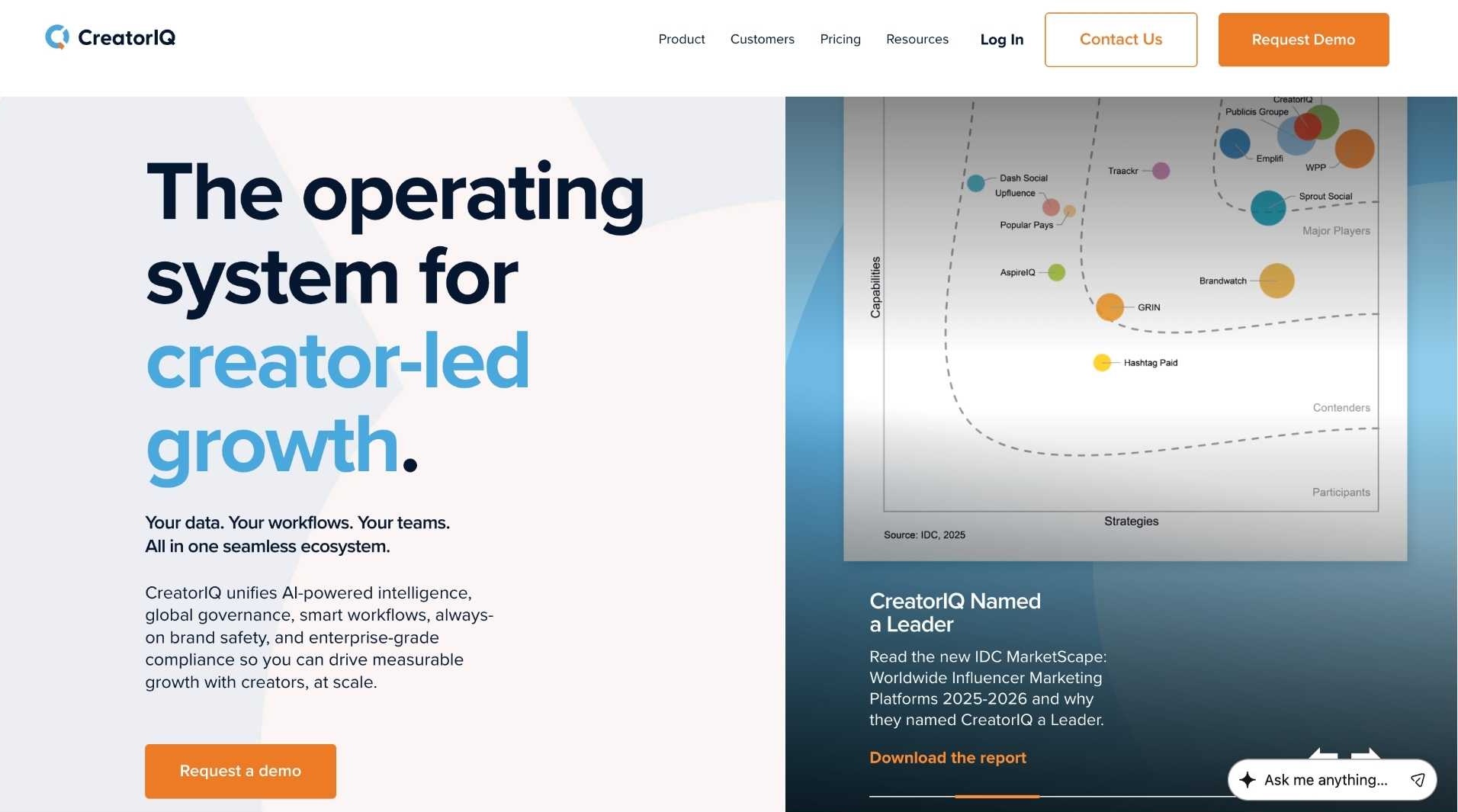
CreatorIQ is an enterprise influencer marketing platform used by global brands and agencies managing large creator ecosystems. The platform focuses heavily on data intelligence, compliance, and large-scale campaign orchestration across global markets.
Key Features
- Enterprise Influencer Discovery
AI-powered discovery supported by first-party social data integrations. - Advanced Influencer CRM
Manage thousands of creator relationships across regions and campaigns. - Campaign & Workflow Automation
Handles approvals, reporting, and collaboration workflows at scale. - Brand Safety & Compliance Tools
Enterprise governance features for global campaigns. - Advanced Analytics & Reporting
Deep performance insights including audience authenticity and ROI tracking.
Platform Coverage
- TikTok
- YouTube
- Twitter/X
- Twitch
Pricing
- Basic Plan: Starts at $35,000/year. Includes 1,000 contact creators per month
- Standard Plan: Starts at $50,000/year. Includes 2,500 contact creators per month
- Professional Plan: Starts at $90,000/year. Includes 5,000 contact creators per month
- Enterprise Plan: Starts at $200,000/year. Includes 7,500 contact creators per month
Reviews
4.4 / 5.0 (Capterra)
Standout Features
- API-Level Social Platform Integrations
Direct partnerships with major social networks provide highly reliable data access. - Enterprise Campaign Governance
Built for compliance, approvals, and multi-market brand management. - Global Creator Intelligence Dashboard
Enables brands to manage creator ecosystems across regions and teams.
GRIN vs CreatorIQ
Both GRIN and CreatorIQ operate in the enterprise segment, but their strengths differ. GRIN is optimized for eCommerce and Shopify-driven influencer commerce, while CreatorIQ focuses on enterprise-scale brand governance and analytics.
CreatorIQ is often chosen by multinational brands managing global campaigns, whereas GRIN tends to serve performance-focused D2C companies prioritizing influencer-driven revenue attribution and product seeding workflows.


6. Influencity
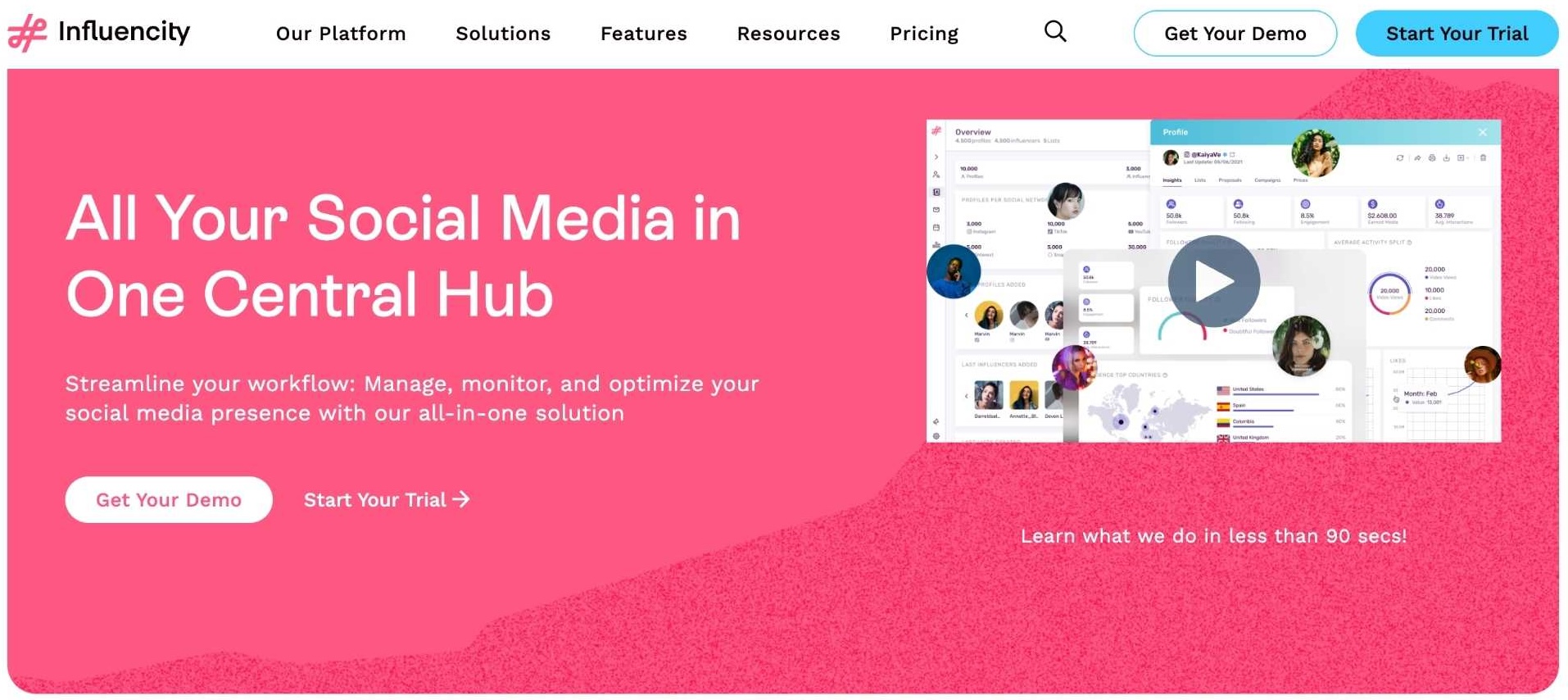
Influencity is an influencer marketing software designed for brands and agencies that prioritize data-driven influencer discovery and campaign analytics. The platform focuses heavily on audience intelligence, creator vetting, and scalable campaign reporting, making it a strong option for teams managing influencer programs across multiple regions. It is commonly evaluated as a GRIN alternative by companies looking for flexible pricing tiers instead of enterprise-only contracts.
Key Features
- Advanced Influencer Discovery
Influencity allows brands to search creators using detailed audience filters including demographics, engagement quality, interests, and geographic data to improve influencer selection accuracy. - Campaign Management Dashboard
Teams can organize influencer collaborations, track campaign progress, and measure results through centralized reporting dashboards. - Influencer Relationship Management
Built-in CRM capabilities help brands manage communication history, influencer segmentation, and collaboration tracking. - Performance & Audience Analytics
Provides deep audience insights including authenticity metrics and follower breakdowns to reduce partnership risk. - Campaign Tracking Automation
Optional tracking add-ons allow brands to monitor influencer performance at scale without manual reporting.
Platform Coverage
- TikTok
- YouTube
- X (Twitter)
Pricing
- Professional Plan: $318/month or $3,816/year
- Business Plan: $798/month or $9,576/year
- Enterprise Plan: Custom pricing
- Auto-Tracker Add-On: $660/year (for 50 influencers)
Reviews
4.3 / 5.0 (G2)
Standout Features
- Audience Quality Analytics (Instagram & TikTok)
Influencity places strong emphasis on audience credibility analysis, helping brands detect fake followers before partnerships begin. - Flexible Tier-Based Pricing Structure
Unlike enterprise-heavy platforms, Influencity enables scaling through structured plans rather than mandatory enterprise contracts. - Analytics-Focused Creator Evaluation
The platform prioritizes influencer vetting and benchmarking, making it particularly useful for performance-driven campaigns.
GRIN vs Influencity
GRIN focuses heavily on operational execution—product seeding, affiliate tracking, and creator workflow automation—especially for Shopify-driven brands. Influencity, by comparison, leans more toward analytics and influencer evaluation rather than commerce execution.
Brands choosing between the two typically decide based on workflow needs: GRIN suits teams managing influencer operations end-to-end, while Influencity appeals to marketers prioritizing discovery intelligence and campaign analytics flexibility.
7. Captiv8
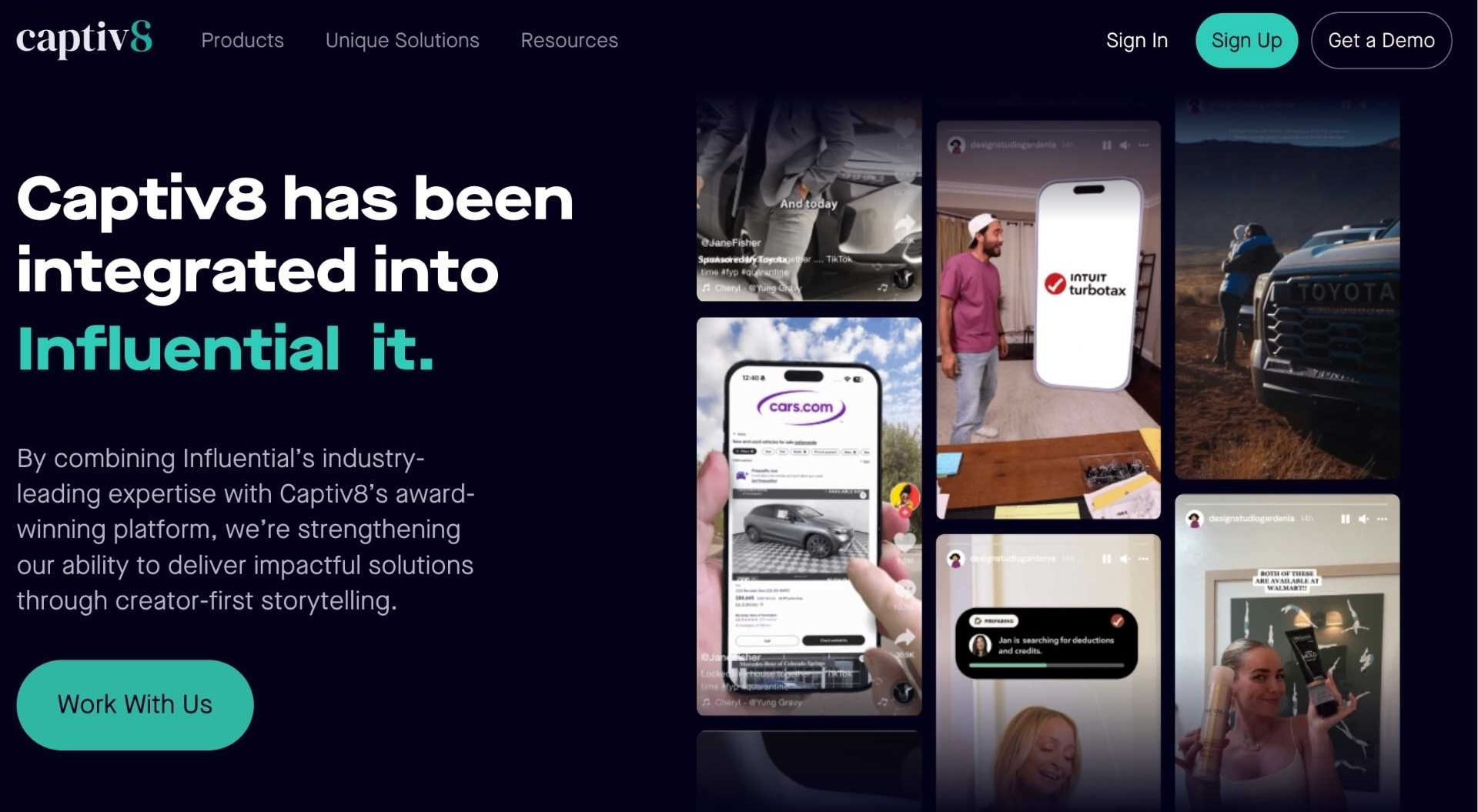
Captiv8 is an enterprise influencer marketing platform built for large brands and agencies running global creator campaigns. The platform emphasizes large-scale influencer discovery, campaign orchestration, and performance measurement across multiple social platforms. It is frequently used by enterprise marketing teams managing high-budget influencer initiatives.
Key Features
- Large Creator Discovery Network
Captiv8 provides access to a broad creator ecosystem, allowing brands to identify influencers across industries and regions. - Campaign Execution & Management
Supports planning, execution, and monitoring of influencer campaigns from onboarding through reporting. - Performance Measurement Tools
Tracks engagement, reach, and campaign outcomes to evaluate influencer ROI. - Influencer CRM Management
Enables collaboration tracking and relationship organization across campaigns. - Enterprise Reporting Capabilities
Built for teams requiring structured reporting across departments or stakeholders.
Platform Coverage
- TikTok
- YouTube
- Snapchat
- Twitch
- X (Twitter)
Pricing
$2000 / month
(Typically enterprise-focused contracts)
Reviews
4.7 / 5.0 (G2)
Standout Features
- Enterprise-Scale Creator Coverage
Designed to support global influencer programs involving hundreds or thousands of creators simultaneously. - Multi-Platform Campaign Measurement
Enables unified performance tracking across emerging and traditional social platforms. - Agency & Enterprise Reporting Infrastructure
Advanced reporting workflows support multi-team collaboration and executive-level campaign analysis.
GRIN vs Captiv8
GRIN is primarily optimized for D2C eCommerce brands managing influencer commerce workflows, while Captiv8 targets enterprise organizations running large-scale brand campaigns. GRIN connects influencer activity directly to revenue and product fulfillment, whereas Captiv8 emphasizes reach, analytics, and campaign scale.
Companies managing influencer marketing as a performance acquisition channel often lean toward GRIN, while enterprise marketing teams prioritizing global visibility and reporting may prefer Captiv8.
8. Tagger Media (Sprout Social)
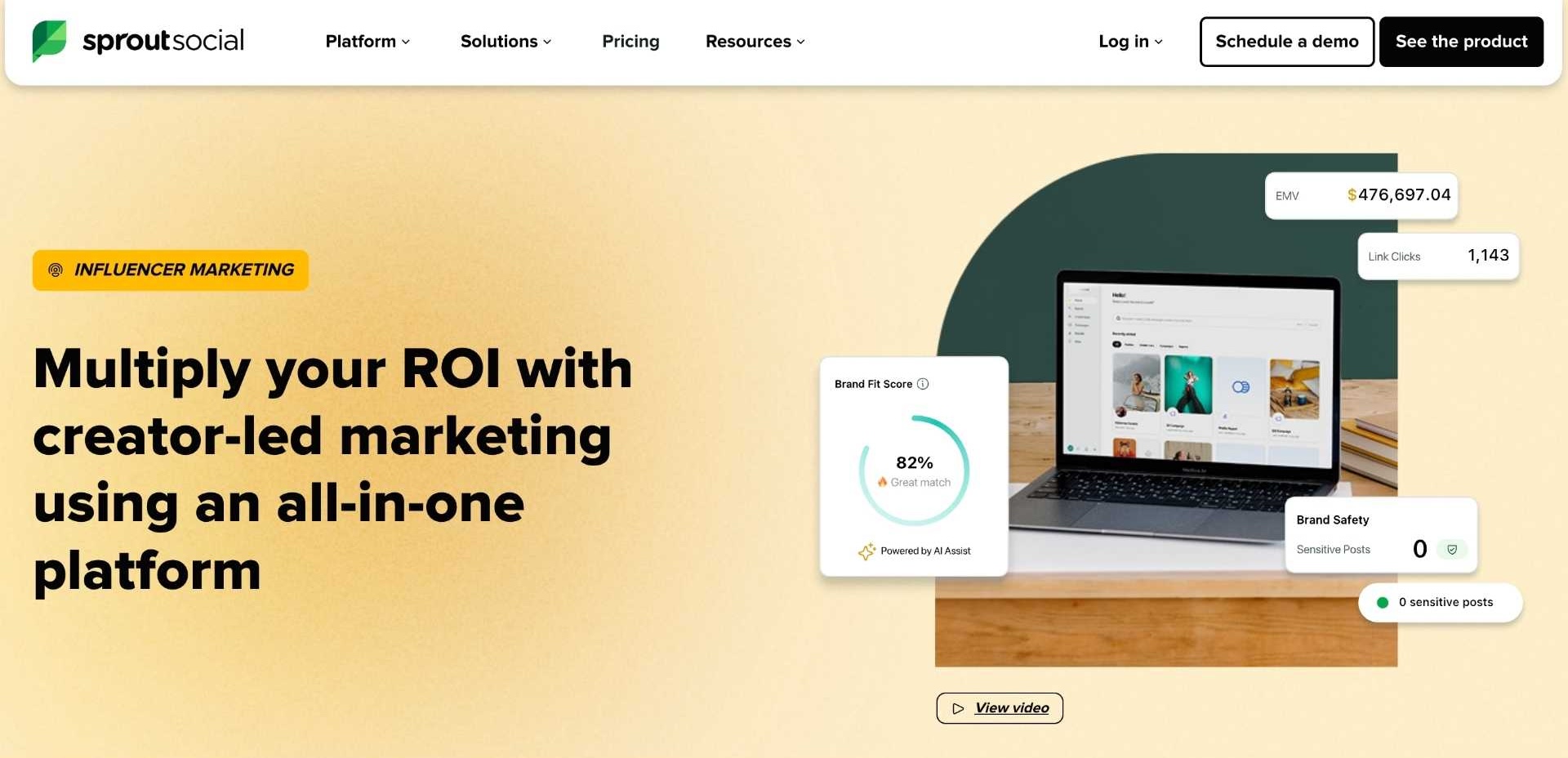
Tagger Media is an influencer marketing platform now integrated into the Sprout Social ecosystem, helping brands combine influencer marketing with broader social media analytics and reporting. The platform is widely used by agencies and enterprise teams seeking unified social and influencer performance insights.
Key Features
- Influencer Discovery & Vetting
Enables brands to identify creators using demographic and performance-based filters. - Campaign Planning & Tracking
Manage influencer collaborations while monitoring campaign KPIs and performance outcomes. - Influencer Relationship Management
Centralized workflows help teams organize creator partnerships and communication. - Social Intelligence Integration
Connects influencer data with wider social media analytics for holistic reporting. - Performance Reporting Tools
Provides campaign insights aligned with marketing ROI goals.
Platform Coverage
- TikTok
- YouTube
- Twitch
- X (Twitter)
Pricing
2.5K / month
Reviews
4.7 / 5.0 (Capterra)
Standout Features
- Sprout Social Integration
Combines influencer marketing with broader social media management and analytics workflows. - Advanced Audience Insights
Enables brands to evaluate creators using detailed audience intelligence. - Cross-Channel Social Reporting
Allows influencer performance to be analyzed alongside organic and paid social performance.
GRIN vs Tagger Media (Sprout Social)
GRIN focuses on influencer marketing as an operational and revenue-driving system, particularly for Shopify brands managing affiliate and product workflows. Tagger Media, in contrast, positions influencer marketing within broader social media strategy.
Organizations already using Sprout Social often benefit from Tagger’s ecosystem integration, while brands focused on influencer commerce execution typically find GRIN better aligned with operational needs.
9. Revfluence
Revfluence represents an earlier influencer marketing platform model centered around managing creator collaborations and campaign execution workflows. It historically focused on structured influencer partnerships and scalable collaboration management for brands running recurring creator programs.
Key Features
- Influencer Discovery & Recruitment
Supports sourcing creators aligned with campaign objectives. - Campaign Collaboration Management
Helps brands coordinate deliverables, partnerships, and influencer communication. - Affiliate & Partnership Programs
Enables tracking of influencer-driven promotional activity. - Content Collaboration Tracking
Allows teams to manage creator deliverables across campaigns. - Performance Monitoring
Tracks campaign execution and influencer participation.
Platform Coverage
Not publicly disclosed
Pricing
- Long form: $3.5k/monthly
- Short form: $4.5k/monthly
- Affiliates: $8.5k/monthly
Reviews
Not publicly disclosed
Standout Features
- Program-Based Campaign Structuring
Designed around long-term influencer collaboration workflows rather than one-off activations. - Affiliate-Focused Campaign Models
Pricing tiers reflect structured influencer and affiliate program execution. - Content Collaboration Management
Emphasis on managing creator deliverables across campaign formats.
GRIN vs Revfluence
GRIN delivers a more modern influencer marketing workflow with strong Shopify integration and revenue attribution capabilities. Revfluence historically focused more on collaboration management rather than commerce-driven influencer execution.
Brands prioritizing measurable sales attribution and automation typically favor GRIN, while Revfluence-style workflows align more closely with structured partnership programs.
10. IZEA
IZEA is one of the longest-standing influencer marketing platforms, offering solutions for influencer discovery, campaign management, and creator collaboration marketplaces. The platform supports both managed services and self-service influencer campaigns for brands and agencies.
Key Features
- Influencer Marketplace Access
Connects brands with creators actively seeking brand collaborations. - Campaign Management Tools
Supports influencer collaboration workflows from recruitment through reporting. - Content & UGC Management
Helps brands organize and reuse creator-generated content. - Creator Payments & Collaboration Tracking
Facilitates influencer compensation and campaign oversight. - Influencer Performance Analytics
Measures campaign outcomes and creator effectiveness.
Platform Coverage
- TikTok
- YouTube
- Snapchat
- Twitch
- X (Twitter)
Pricing
Not publicly disclosed
Reviews
3.9 / 5.0 (G2)
Standout Features
- Marketplace-Driven Creator Discovery
Brands can work with opt-in creators actively looking for partnerships. - Managed & Self-Service Campaign Options
Supports both hands-on and platform-managed influencer programs. - Content Monetization Infrastructure
Long-standing creator payment and collaboration ecosystem.
GRIN vs IZEA
GRIN operates primarily as an influencer CRM and commerce execution platform, whereas IZEA functions closer to a creator marketplace combined with campaign management tools. GRIN emphasizes long-term influencer relationships and operational workflows, while IZEA enables faster creator sourcing through marketplace participation.
Brands focused on scalable influencer operations and affiliate-driven revenue often lean toward GRIN, while companies seeking marketplace-style campaign execution may consider IZEA.
Final Thoughts on GRIN Alternatives
Choosing the right influencer marketing software ultimately depends on how brands and agencies structure their creator programs and operational priorities. While GRIN remains a strong option for eCommerce brands seeking deep workflow automation, Shopify integrations, and end-to-end influencer relationship management, many alternatives now offer comparable capabilities with different strengths. Platforms such as Upfluence and Influencity emphasize data-driven discovery, Influencer Hero and Saral focus on accessibility and streamlined execution, while enterprise tools like CreatorIQ, Captiv8, and Tagger Media cater to large organizations managing global campaigns and complex reporting needs.
Across the comparison, the main differences between GRIN and its alternatives come down to pricing flexibility, onboarding complexity, analytics depth, and campaign scalability. Some platforms prioritize influencer commerce and affiliate tracking, while others focus more on creator marketplaces, analytics intelligence, or social media ecosystem integration. Evaluating GRIN alternatives therefore requires aligning platform capabilities with internal team size, campaign maturity, and long-term influencer marketing goals rather than selecting a solution based solely on feature breadth.